Imagine Waking Up with the Sun... Indoors
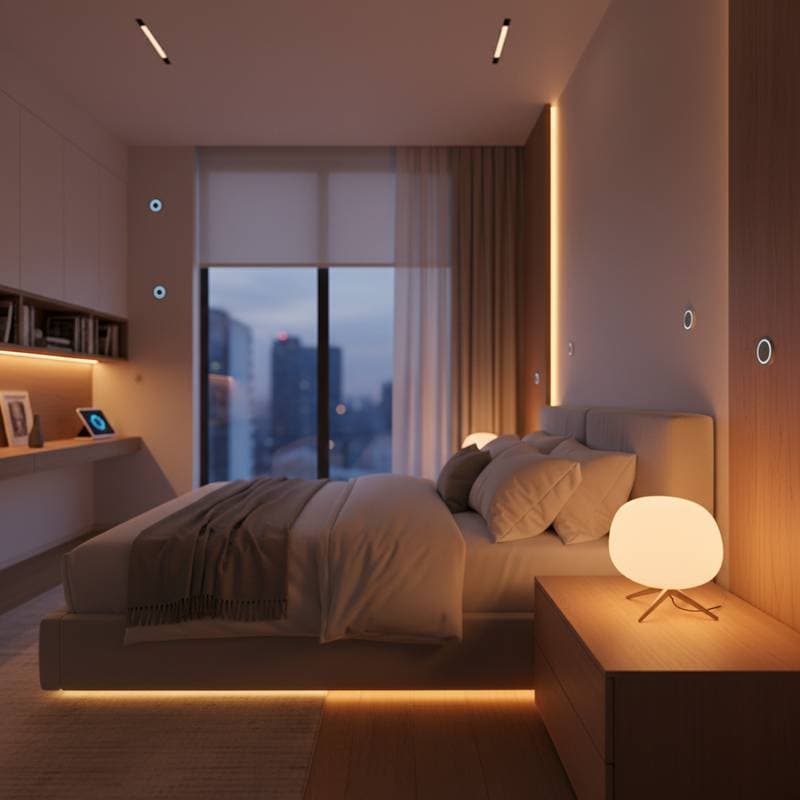
You open your eyes to a soft, golden light that mimics sunrise. The room brightens gradually, and your body awakens gently. You feel alert before your first sip of coffee. At night, the same space glows in calming amber tones that promote rest without straining your eyes. This experience occurs in your home, synchronized with your body’s natural rhythm through circadian lighting.
The Problem Behind Poor Sleep
Many individuals face restless nights, sluggish mornings, and persistent mental fog. The cause often lies not in stress or caffeine, but in light exposure. Standard LEDs and screens emit intense blue-white light well after sunset. This light signals your brain to remain awake, which suppresses melatonin production and disrupts your internal clock. Over time, these effects result in diminished sleep quality, reduced energy levels, and challenges with concentration.
A Smarter Way to Support Sleep
Circadian lighting replicates the natural progression of sunlight within indoor environments. It adjusts color temperature and brightness throughout the day to guide your body toward appropriate states of wakefulness, activity, and relaxation. Warm light in the evening encourages rest, while cooler and brighter tones during daylight hours enhance alertness. The outcome includes a more balanced daily rhythm that fosters improved sleep, emotional stability, and productivity.
This system operates seamlessly once installed. The lighting adapts automatically according to the time of day or user-defined preferences. Whether the goal involves greater focus in a home office or deeper sleep in a bedroom, circadian lighting delivers tangible improvements.
How to Build a Circadian Lighting Setup
1. Start with Smart Bulbs
Smart bulbs provide the simplest starting point, as they adjust color temperature and brightness on demand.
- Budget option: Philips Wiz Smart Wi-Fi Tunable White Bulb, priced at approximately $12. This bulb connects directly to Wi-Fi and enables scheduling of warm or cool tones via a dedicated app.
- Mid-range choice: Nanoleaf Essentials A19 Matter Bulb, available for about $20. It features adaptive lighting capabilities and integrates with Apple Home, Google Home, and Alexa without requiring an additional hub.
- Premium selection: Philips Hue White Ambiance Starter Kit, costing around $120. The kit includes a bridge for advanced automation, voice commands, and precise scheduling options.
These bulbs suit bedrooms and living areas, where lighting transitions prove most beneficial. Program them to increase brightness gradually in the morning or decrease it automatically in the evening.
2. Add Smart Switches and Scenes
For those who wish to retain existing fixtures, tunable smart switches offer a practical alternative. Consider the Lutron Caseta Diva Smart Dimmer, priced at about $70. This device integrates with major platforms and facilitates control over brightness and timing. Establish scenes labeled as morning or evening to manage multiple lights simultaneously.
An effective strategy involves scheduling lights to advance slightly each day. This approach aids in resetting your sleep cycle following travel or periods of late nights. The incremental adjustments allow your body to adapt naturally.
3. Integrate Natural Light Sensors
Incorporating daylight sensors ensures that indoor lighting harmonizes with outdoor conditions. Advanced hubs such as the Aqara Hub M3, priced at around $80, detect ambient brightness and modify indoor settings in response. This functionality avoids excessive illumination on sunny afternoons and upholds consistency during overcast weather.
4. Layer Your Light Sources
Circadian lighting achieves optimal results when distributed across multiple sources rather than relying on a single bulb. Combine overhead fixtures with lamps and under-cabinet strips. For instance, install a Govee Glide Hexa Light Panel Kit in a workspace to deliver energizing daylight tones. Pair it with a LIFX Candle Color Bulb in a bedside lamp for soothing warm illumination.
5. Connect It All Through a Smart Hub
A central hub streamlines automation efforts. Opt for systems that support Matter or Thread protocols to guarantee future compatibility and avoid brand-specific limitations. Devices like the Amazon Echo Hub or Apple HomePod mini coordinate lighting alongside other elements, such as music playback, blind adjustments, or temperature controls.
Practical Considerations
Circadian lighting requires no extensive renovations, though thoughtful planning enhances the process.
- Budget: A basic setup for one room begins at about $50. Whole-home systems range from $300 to $1000, depending on the quantity of fixtures.
- Timeline: Most DIY installations complete in a few hours. For wired dimmers or ceiling-integrated options, engage a licensed electrician.
- Safety: Disconnect power sources prior to replacing switches or fixtures. Verify that bulb wattage aligns with socket specifications.
- Customization: Applications typically permit adjustments from 2000K warm amber to 6500K cool daylight. Test various settings to determine the ideal configuration for each space.
Living with Human-Centric Lighting
After one week of regular use, users frequently note quicker sleep onset and reduced morning grogginess. The system accommodates your body’s inherent timing without imposing rigid schedules. Gradually, enhancements in concentration and emotional equilibrium emerge as the circadian rhythm stabilizes.
To amplify benefits, align lighting controls with thermostat settings. Introduce slightly cooler air in the evening to further stimulate melatonin release. This combination with warm light reinforces cues for superior rest.
Steps to Implement Circadian Lighting
Select one room for initial implementation, such as a bedroom or living area where evenings unfold. Explore the accompanying scheduling applications to refine settings. As advantages become evident, extend the system to additional spaces. For intricate wiring or expansive projects, consult a certified smart home professional. Explore options through platforms like XavageTech Marketplace to obtain quotes from qualified experts.
Frequently Asked Questions
What is circadian lighting? Circadian lighting adjusts indoor illumination to mimic natural daylight cycles, supporting the body’s internal clock for better sleep and energy.
Do I need a full smart home setup? No, basic smart bulbs work independently, but a hub enhances automation and integration.
How quickly do benefits appear? Many notice improvements in sleep within days, with fuller effects after one to two weeks.
Is it energy-efficient? Yes, these systems optimize usage by dimming when full brightness proves unnecessary.
Can it help with seasonal affective disorder? By simulating natural light patterns, it often alleviates symptoms related to reduced daylight exposure.