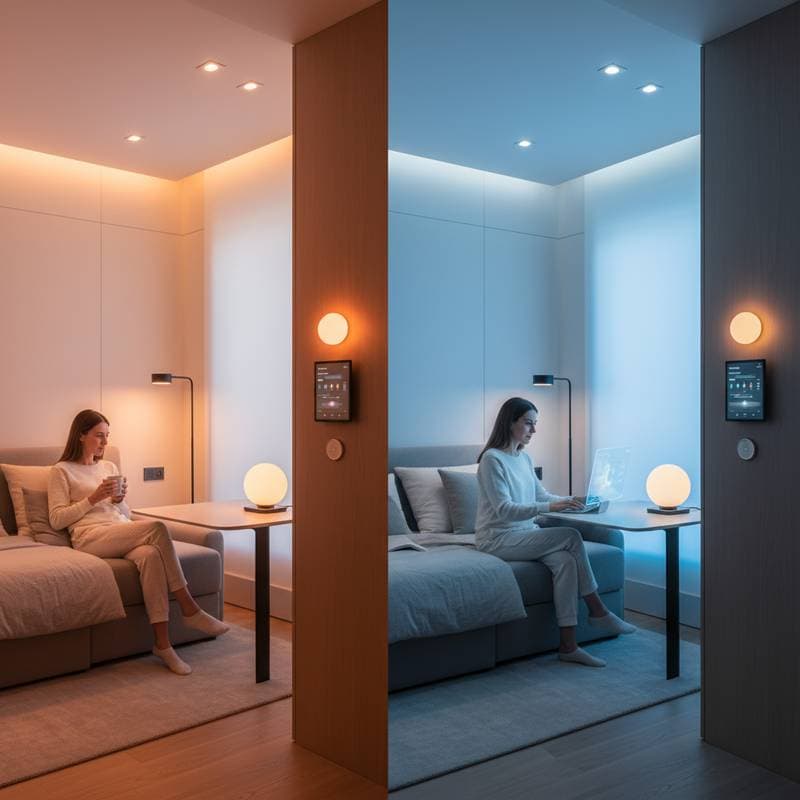
Light That Adapts to Your Body's Natural Sleep Cycle
Dynamic Lighting Matches Your Circadian Rhythm
Smart homes increasingly respond to human needs for living, resting, and recharging. Dynamic lighting emerges as a key advancement, aligning illumination with the circadian rhythm, the internal clock that regulates wakefulness, focus, and sleep. This feature, once considered a luxury, now integrates easily into connected lighting systems. The concept proves straightforward and impactful: illumination that evolves through the day to reinforce natural biological patterns.
Why Light Matters More Than You Think
Light influences far beyond mere visibility. It shapes mood, concentration, and rest quality. Exposure to cool, intense light upon waking triggers hormone release for alertness. Warmer hues in the evening signal relaxation and prepare the body for sleep. Static traditional lighting disrupts these signals. Individuals often endure extended indoor periods under unchanging artificial sources that fail to meet physiological demands. Such misalignment leads to untimely fatigue or difficulty unwinding at night.
Dynamic lighting addresses this issue by coordinating with daylight variations. Smart bulbs and fixtures modify color temperature and intensity automatically. This creates a supportive atmosphere from dawn through dusk, promoting overall health.
The Technology Behind Circadian Lighting
Contemporary circadian lighting relies on smart bulbs, sensors, and automation platforms to replicate daylight shifts. Tunable white LEDs enable transitions from cool blue tones to warm amber shades. Advanced systems incorporate local sunrise and sunset data to synchronize indoor light with outdoor conditions.
Connections to voice assistants or mobile applications permit customization of wake times, work periods, and sleep schedules. The system manages adjustments independently thereafter. This effortless operation attracts technology users and those prioritizing wellness alike.
Real-World Examples
Leading lighting manufacturers offer circadian-compatible solutions. Philips, Nanoleaf, and LIFX produce smart bulbs that alter color temperatures daily. Broader smart home platforms enable lighting integration with other devices. For example, lights can fade in gradually with a morning alarm while a coffee maker activates. At night, illumination dims as the thermostat adjusts for optimal sleep conditions.
Commercial spaces adopt these systems to sustain employee productivity. Research indicates that dynamic lighting exposure enhances concentration and diminishes exhaustion. This residential innovation now shapes office layouts and corporate wellness initiatives.
Everyday Benefits of Circadian Lighting
The primary gain lies in harmonizing surroundings with internal rhythms. Homeowners report several tangible improvements:
-
Improved Sleep Quality
Evening exposure to warm, subdued light stimulates melatonin production, the sleep-inducing hormone. Automated shifts to gentler tones facilitate easier bedtime preparation. -
More Energy in the Morning
Cool, vivid light inhibits melatonin and alerts the brain to daytime. This subtle enhancement supplants abrupt alarms, fostering smoother awakenings. -
Enhanced Focus During the Day
Steady, appropriate lighting sustains vigilance for tasks or learning. Proper intensity and hue minimize eye fatigue and sustain output. -
Mood Support and Seasonal Balance
Systems counter reduced natural light in winter by emulating daylight indoors. This stabilizes emotions and drive throughout the year. -
Energy Efficiency
Integrated sensors lower output in unoccupied areas, conserving power. Wellness pairs with environmental responsibility in these setups.
Overcoming Barriers to Adoption
Clear advantages exist, yet concerns about complexity or expense deter some. Smart bulb costs have declined sharply, and installation simplifies with current interfaces. Systems link via Wi-Fi or hubs, operating autonomously post-setup.
Brand interoperability poses another challenge. Emerging standards like Matter facilitate seamless device collaboration across makers. Enhanced connectivity ensures dependable, versatile performance.
Privacy and oversight remain essential. Reputable providers include local control features, reducing reliance on remote servers. This equilibrium between automation and autonomy fosters trust.
How to Start with Circadian Lighting
Full-home retrofits prove unnecessary to realize advantages. Initiate modestly and scale gradually. Consider these steps:
-
Begin with One Room
Select a primary area like the bedroom or office. Add tunable smart bulbs and test time-based scenes. -
Use Smart Assistants or Apps
Integrate with Google Home, Apple Home, or Alexa. Automate changes via voice or scheduled routines to eliminate manual intervention. -
Link Lighting with Daily Routines
Program gradual morning brightening and evening dimming. Pair with thermostats or audio devices for integrated experiences. -
Experiment with Scenes
Apply cool tones for concentration periods and warm for leisure. Refine combinations to suit personal energy fluctuations. -
Monitor Your Response
Track shifts in rest, attention, and vitality. Tweak configurations to align with individual habits.
Designing Health-First Smart Homes
Circadian lighting exemplifies wellness-oriented technology trends. Innovations adapt to users rather than demanding adaptation. Air quality trackers and adjustable acoustics complement this shift toward health-nurturing environments.
Illumination serves as a pivotal element. It connects digital tools with biological needs, illustrating supportive potential in connected spaces. Beyond ease or style, such systems cultivate peak daily performance and sensation.
Integrating Circadian Lighting into Your Routine
Dynamic lighting invests in sustained comfort and vitality. Maturing technology positions these features as home norms. Synchronization with natural rhythms elevates beyond upgrades to essential health practices.
Commence with a single space, bulb, or sequence. Experiencing adaptive light reveals aligned smart living as inherently attuned to daily existence.