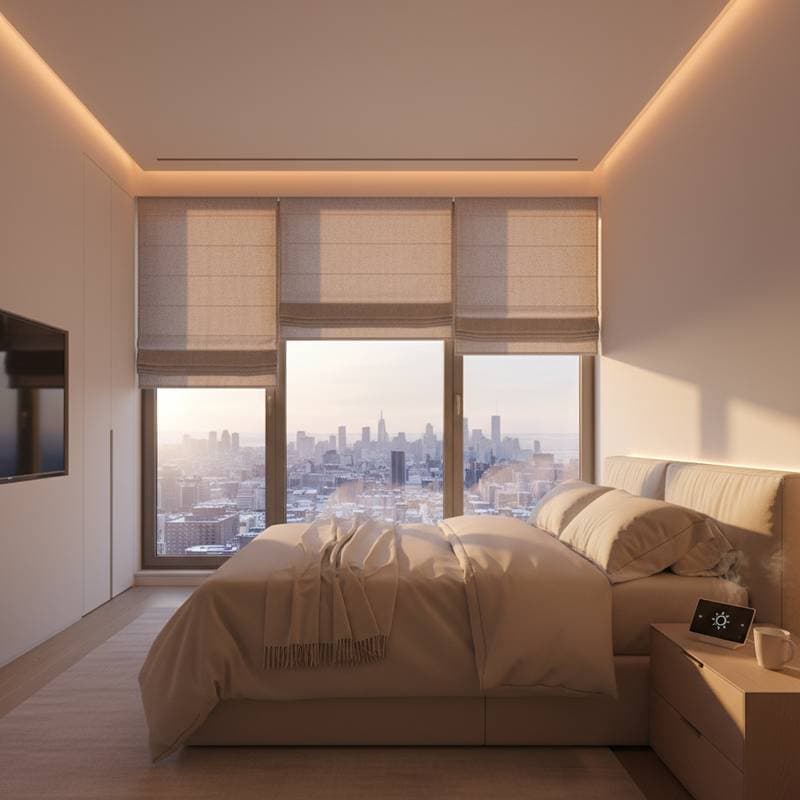
When Morning Light Feels Out of Reach
Picture waking to a dim room while the outside world remains gray. The alarm sounds, yet the absence of sunlight complicates the transition into the day. For numerous individuals, particularly in colder months, this sensation persists and influences mood, concentration, and vitality. This slow beginning extends beyond mere fatigue; it mirrors the impact of light on the body's inherent rhythm.
Seasonal Affective Disorder, abbreviated as SAD, presents a frequent obstacle for those experiencing diminished energy and mood shifts in periods of reduced daylight. Fortunately, smart home innovations, especially smart blinds, offer a means to reintroduce the light essential for well-being. These advanced systems extend beyond basic operation; they align with the circadian rhythm to replicate natural sunlight cycles and alleviate SAD symptoms progressively.
Why Light Matters for Your Mood
The internal clock, termed the circadian rhythm, depends on regular light exposure to govern sleep, wakefulness, and emotional state. Prolonged darkness in mornings and early evening twilight disrupt this alignment. Consequences include exhaustion, challenges with focus, and reduced drive.
Smart blinds, integrated with intelligent lighting or timetable applications, facilitate the recovery of this natural cadence. They permit gradual sunlight entry in the morning and closure in the evening, emulating the day's subtle progression. Such adjustments yield significant improvements in daily sensations.
How Smart Blinds Create a Healthier Light Routine
Smart blinds employ motorized mechanisms linked to a central hub or voice-activated assistant. Schedule them to lift at dawn or imitate sunrise prior to actual daylight. This soft light influx prompts the brain to secrete serotonin, fostering alertness and optimism.
In the evening, automatic descent shields against external illumination from roadways or vehicles, enabling melatonin production for quality rest. Maintaining vivid mornings alongside subdued nights proves vital for mood equilibrium amid seasonal variations.
Insider Tip
Numerous users overlook the compatibility of contemporary smart blind setups with tunable white lighting. Connect blinds and fixtures via platforms such as Alexa, Google Home, or Apple HomeKit to establish scenes that echo the sun's hue variations. Energizing cool tones during mornings enhance vigor, whereas soothing warm shades at dusk promote relaxation. Together, they recreate a full spectrum of daylight irrespective of weather conditions.
Choosing Smart Blinds That Fit Your Lifestyle
Smart blinds vary across cost levels, drive mechanisms, and network capabilities. Selection hinges on window configuration, financial limits, and desired automation extent.
1. Budget Option: IKEA Fyrtur
These battery-operated roller blinds begin at $179 per window. They interface via the IKEA Home Smart gateway and support Google Assistant, Alexa, and Apple HomeKit. Although fabric selections remain constrained, they provide silent function and dependable timetabling for routine applications.
2. Mid-Range Option: SwitchBot Curtain 3
For existing drapes, this adaptation kit automates them starting at $99 per unit. The accompanying application enables dawn activation routines, and integration with the SwitchBot Hub 2 permits synchronization with climate and illumination detectors for real-time modifications.
3. Premium Option: Lutron Serena Shades
Priced from $600 per window, these emphasize fluid movement, near-silent execution, and seamless compatibility with Apple HomeKit and Alexa. The Lutron smart bridge enables sophisticated programming that adapts to daylight fluctuations by season.
All selections accommodate timetabling, verbal directives, and distant operation, with performance elevating through a unified hub. This centralizes oversight of blinds, illumination, and climate controls into a cohesive environment.
Setting Up a Light Routine That Works
Initiate with a basic configuration: program blinds to rise 30 minutes ahead of the wake-up signal. Within days, the body adapts to expect illumination, simplifying natural arousal. For SAD management, regularity surpasses mere brightness.
In sun-scarce areas, combine smart blinds with full-spectrum intelligent bulbs like Philips Hue White Ambiance or Nanoleaf Essentials. These facilitate incremental intensity shifts and duplicate daylight's crisp white quality. The pairing delivers light therapy advantages in a seamless, organic manner.
Advanced Setup Tip
Certain high-end smart blind arrays incorporate ambient light detectors for self-regulating responses to external conditions. They avert excessive brightness in intense afternoons and sustain consistent levels during overcast periods. Paired with rhythm-aligned lighting, this sustains internal clock stability and mitigates mood fluctuations from abbreviated daylight.
Budget, Safety, and Installation Considerations
Smart blind installation generally proceeds with ease, yet preparation involves key factors:
- Power source: Battery variants endure months between recharges. Wired models necessitate professional electrical integration by a certified specialist.
- Connectivity: Weak Wi-Fi at window locations may require signal boosters. Stable links guarantee prompt adherence to routines and instructions.
- Fabric and opacity: Opt for filtering materials to admit light minus harshness. Blackout variants suit sleeping quarters for enhanced repose.
- Budget range: Allocate $150 to $700 per window based on drive sophistication and connectivity. Insulation benefits yield long-term energy efficiencies.
For extensive setups or complex windows, engage certified professionals for precise measurements and assembly. Various platforms provide complimentary assessments for informed decisions.
Integrating Wellness into Daily Spaces
Smart blinds transcend mere enhancements; they function as unobtrusive aids in realigning the body's innate tempo. Allied with strategic illumination and steady programming, they counteract weariness and despondency tied to light scarcity.
Commence in a primary morning area, like a bedroom or workspace. The ensuing uplift in disposition and stamina encourages broader implementation. Utilize reputable technology directories to connect with experts for electrical, automation, and fine-tuning support.
These innovations harmonize ease, utility, and health benefits. Eliminate the pursuit of elusive sunlight or reliance on stark devices. Smart blinds enable residences to reflect daylight's serene cadence, rendering mornings invigorating and nights tranquil throughout the year.
FAQs
Do smart blinds really help with Seasonal Affective Disorder?
Yes. By emulating natural sunlight sequences and optimizing exposure timing, smart blinds assist in circadian regulation and mood elevation over time.