A Kitchen That Handles Its Own Cleanup
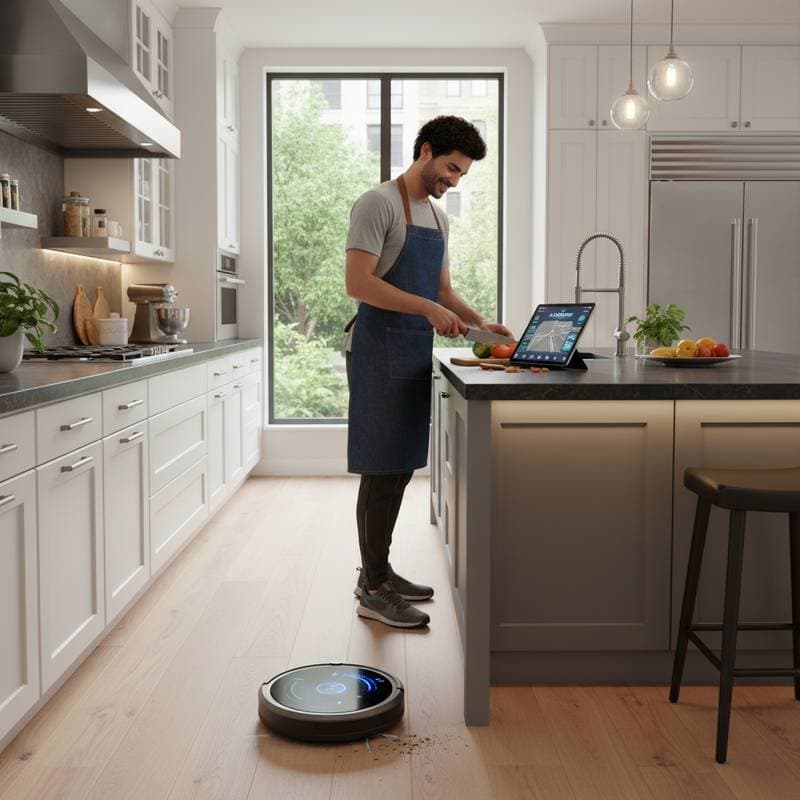
Picture this: You finish preparing dinner with counters wiped down and the dishwasher running smoothly. A glance at the floor reveals scattered flour, crumbs, and a stray sauce splatter. Before reaching for the vacuum or mop, consider that a robot vacuum has already addressed the mess, navigating around your feet during cooking without any disruption. This scenario highlights the advancement of robot vacuums equipped with AI Chef Mode, which deliver uninterrupted cleaning in active kitchens.
Navigating Kitchen Chaos
Cooking combines creativity with inevitable disorder. The process brings joy, yet the subsequent cleanup often detracts from the experience. Earlier robot vacuums frequently bypassed kitchens during use, as they encountered difficulties with dynamic elements like shifting chairs, pets, or human movement. Certain models halted operations awaiting clearance, while others became entangled in cords or rugs.
AI Chef Mode overcomes these limitations through integrated vision systems, sophisticated path planning, and immediate object identification. This enables vacuums to operate discreetly amid activity, providing cleaning that integrates seamlessly into daily routines.
The Intelligence Behind Adaptive Cleaning
AI Chef Mode signifies progress in environmental perception. Rather than adhering to fixed patterns, the vacuum analyzes user behavior in context. During vegetable preparation, for instance, it cleans adjacent areas while steering clear of foot traffic. Upon detecting a dropped item, the device waits for repositioning before returning to the spot.
Supporting technologies include LiDAR for spatial mapping, RGB cameras for visual input, and neural processors for rapid decision-making. These elements allow detection of human proximity, distinction between stationary and mobile objects, and instantaneous route modifications. Select models link with smart appliances, such as stoves or ovens, to pause operations during hazardous moments like opening a heated door and resume when conditions stabilize.
How AI Chef Mode Operates
- Initial Layout Scan: On the debut run, the vacuum surveys the kitchen, noting fixed elements like cabinets and appliances.
- Ongoing Surveillance: Sensors monitor movement and thermal patterns to pinpoint user positions during cooking.
- Flexible Route Adjustment: The system recalibrates paths dynamically, sidestepping active zones while addressing others.
- Targeted Area Return: After shifts in activity, it systematically covers overlooked sections.
- Habit-Based Adaptation: Through repeated use, the vacuum refines schedules and cleaning vigor based on observed patterns.
Technicians advise maintaining uniform lighting for optimal sensor performance. In kitchens with adjustable bulbs, sustain steady illumination to support accurate visual processing during tasks.
Selecting an AI-Equipped Robot Vacuum
Several models stand out in the current selection.
- Affordable Choice: Eufy RoboVac G30 Hybrid, priced at approximately $280. It provides reliable navigation and elementary obstacle sensing, suitable for compact kitchens or apartments.
- Balanced Selection: Roborock Q8 Max+, at about $600. Features include LiDAR navigation, dual brush system, and app-managed zoning. The device recognizes furniture like chairs and adapts paths independently.
- High-End Option: iRobot Roomba Combo j9+, around $1,400. Incorporates advanced recognition akin to AI Chef Mode, automatic emptying, and a mop that retracts as needed. It distinguishes between dry debris and wet spills, preventing internal complications from adhesives.
All options integrate with voice assistants such as Alexa and Google Home, with some extending to Apple HomeKit. Voice commands like "Initiate kitchen cleaning" activate the process hands-free.
Integration and Enhancement Options
Owners of existing vacuums may question the need for replacement. AI Chef Mode demands onboard computation and superior sensors, often absent in prior generations. Manufacturers occasionally release firmware enhancements for partial object awareness on legacy devices. Review the app for updates or trade-in programs prior to purchase.
For expansive smart home setups, evaluate connectivity with additional devices. Platforms like SmartThings or Home Assistant synchronize vacuums with lights or timers. For example, automated lighting adjustments can indicate active cleaning cycles.
Investment and Upkeep Considerations
Robot vacuums with AI Chef Mode for kitchens typically range from $500 to $1,500, varying by capabilities. Plan for periodic filter and brush replacements, incurring annual expenses of $50 to $100. Regular maintenance ensures sustained performance.
Ensuring Safe Operation
Automated devices require attention to safety protocols. Despite robust obstacle avoidance, clear floors of cords, fabrics, or utensils. For pet owners, time cleanings to avoid interference with food or water areas.
In homes with elevated thresholds or specialized cabinetry, seek advice from flooring experts regarding boundary strips. Improper magnetic strip placement may disrupt underfloor heating. Installers suggest silicone guards on cabinet bases to safeguard sensors and finishes from incidental contact during navigation.
Embracing Seamless Kitchen Harmony
AI Chef Mode excels in its unobtrusive presence, allowing fluid movement and inspired cooking without floor concerns. This synergy between user and device restores time and enhances kitchen enjoyment.
Implementing Your Smart Cleaning Solution
To achieve a self-managing kitchen, evaluate the space first. Measure confined areas, identify floor types, and verify Wi-Fi strength in the vicinity. Align these factors with model specifications for optimal fit.
Professional assistance is available through smart home services. Many platforms link users with qualified experts experienced in diverse kitchen environments.
After setup, conduct test runs during cooking sessions. Monitor navigation in busy areas and adjust app configurations as needed. The device will progressively adapt, integrating quietly into routines. This evolution lightens culinary efforts, minimizes post-meal tasks, and elevates home intelligence.