The Shift from Manual to Automated Floor Cleaning
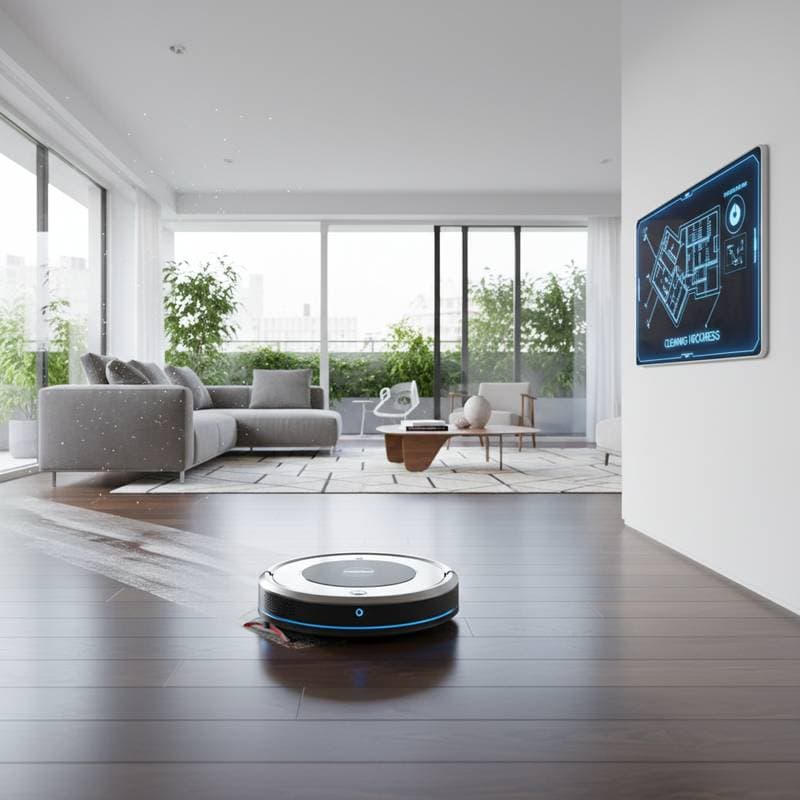
After a demanding day, you return home and notice dust accumulating, pet hair scattering, and crumbs appearing on the floor. The intention to clean tomorrow often delays into the following week. Robot vacuum-mops address this common challenge through advanced technology that handles cleaning autonomously.
Limitations of Traditional Cleaning Methods
Vacuuming and mopping demand significant time and physical exertion. Despite regular efforts, dirt builds up quickly on floors. Robot vacuum-mops break this pattern by operating independently, often when you are not home. They incorporate sensors, precise mapping, and artificial intelligence for navigation that avoids obstacles and covers all areas thoroughly.
Consistency proves essential for floor upkeep. These robots perform daily light cleaning, resulting in visibly cleaner surfaces and prolonged durability for carpets and hard floors. Beyond mere convenience, they establish a standard of cleanliness that surpasses sporadic manual routines.
Mechanics of Robot Vacuum-Mops
These units merge suction mechanisms, rotating brushes, and reservoirs for water or cleaning solutions. They first collect debris through vacuuming, then apply a damp pad to capture remaining particles along the same route. Higher-end versions raise the mop pad automatically upon detecting carpets, avoiding excess moisture.
Water management represents a critical aspect often ignored. Entry-level models may apply too much liquid, potentially damaging hardwood surfaces. Select devices with electronic flow regulation, like those from Roborock or Ecovacs, which modify dispensing according to floor composition.
Selecting an Ideal Robot Vacuum-Mop
Evaluate models based on suction strength, navigation technology, and upkeep simplicity. Consider these recommendations spanning different budgets:
-
Entry-Level Selection: Wyze Robot Vacuum-Mop ($299)
Equipped with LiDAR for mapping and support for multiple floors, this option excels on tile and laminate surfaces. Mopping accuracy remains basic compared to advanced units. -
Mid-Tier Recommendation: Roborock Q Revo ($899)
Features include self-emptying bins, automated mop washing, and dynamic path optimization. It delivers efficient coverage and extended battery life for spaces up to 2,000 square feet. -
High-End Choice: Ecovacs Deebot X2 Omni ($1,499)
Boasts dual rotating mops, artificial intelligence for dodging obstacles, and a space-saving base that manages dust emptying and water refilling independently.
For households with multiple levels, prioritize units that retain several floor plans to avoid repeated setup.
Key Factors in Purchasing Decisions
Financial considerations matter, but assess floor types, pet activity, and acceptable noise levels as well. Robot vacuum-mops generally run at low volumes, though docking stations may produce brief sounds during self-maintenance cycles. Schedule operations for times when you are absent or focused on work.
Initial installation requires approximately one hour for app setup and testing. Integration with voice assistants like Alexa or Google Home enables hands-free activation. Verify strong Wi-Fi coverage near the charging station to prevent interruptions during sessions.
Establishing a Routine with Automated Cleaners
Within a week of use, automated cleaning becomes indispensable, freeing weekends and enhancing overall home freshness. Floors maintain their cleanliness, reducing visible dirt buildup. To sustain optimal function, clear the dust container weekly and swap mop pads every two to three months.
Embrace this technology to relegate floor care to an effortless process. From pristine tiles to hair-free carpets, robot vacuum-mops deliver reliable results with minimal intervention, integrating seamlessly into daily life.