Imagine Your Kitchen Fixing Itself
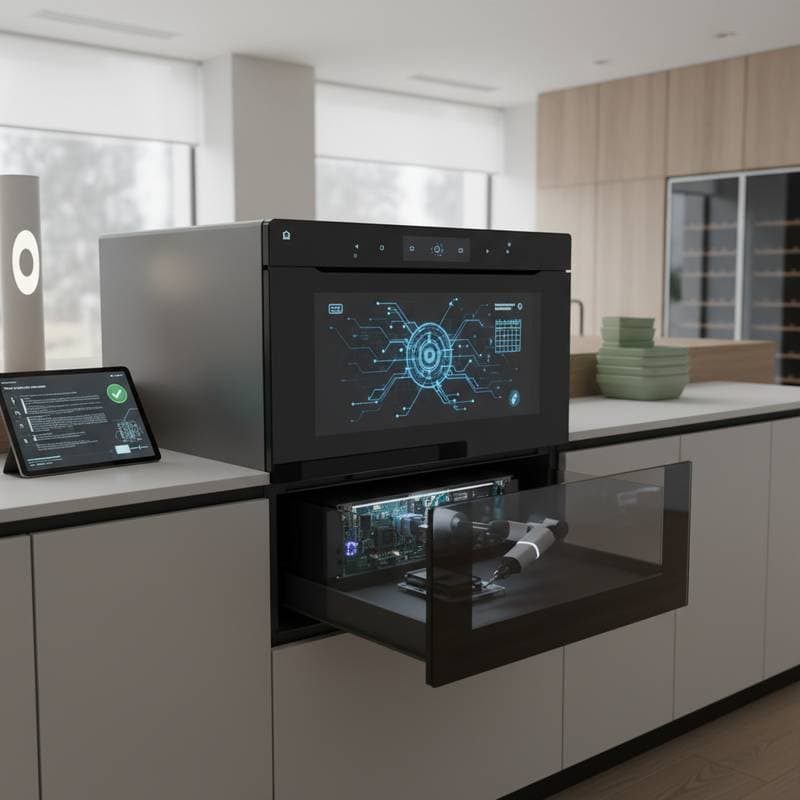
Picture this scenario: You prepare dinner when your smart oven displays an alert. Rather than a cryptic error code, the oven informs you that a heating element shows signs of wear and arranges a repair before failure occurs. You avoid contacting customer service or consulting manuals. The oven identifies the issue and manages the resolution.
This scenario represents the emerging reality in smart kitchens. Self-repairing and self-diagnosing appliances move beyond science fiction. They function as practical, increasingly affordable devices powered by integrated artificial intelligence. This technology detects, predicts, and in some cases resolves issues independently.
The Frustration Behind the Upgrade
Traditional kitchen appliances share a significant drawback. Failures often remain undetected until substantial damage occurs. A refrigerator may lose cooling overnight, a dishwasher could leak during operation, or a cooktop might cease heating mid-meal. Repairs then demand days of waiting, multiple technician visits, and diagnostic guesswork.
Smart technology alters this pattern. Manufacturers integrate sensors, processors, and machine learning software into appliances. These elements enable devices to monitor and maintain their own operations. The benefits extend beyond convenience to include prolonged product lifespan, reduced waste, and long-term cost savings.
How AI Enables Self-Repair
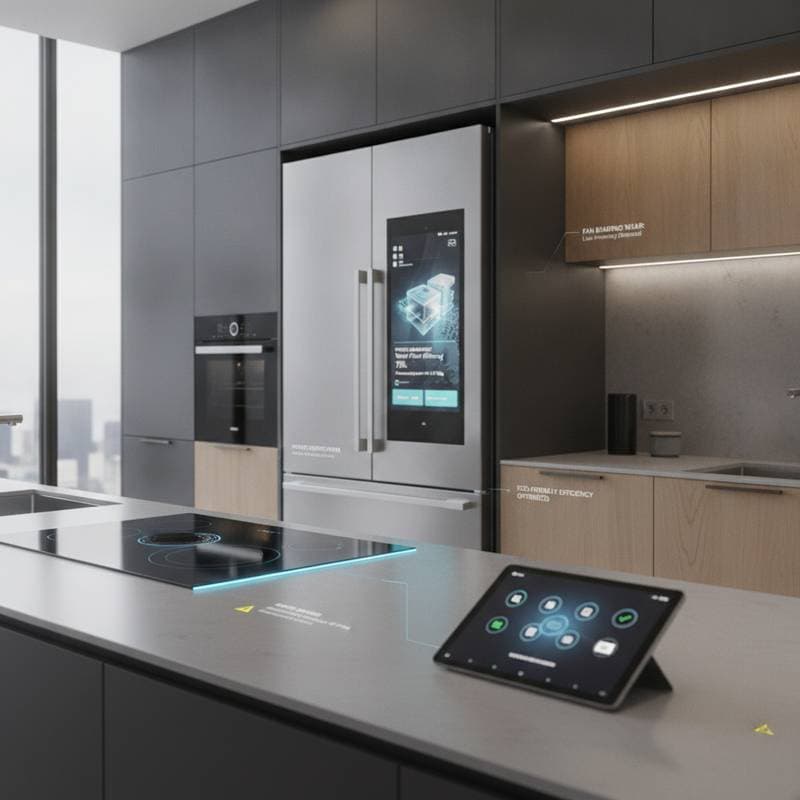
Artificial intelligence converts sensor data into practical insights. In a contemporary smart refrigerator, numerous data points such as temperature variations, compressor vibrations, and door openings feed into algorithms. These algorithms establish baselines for normal performance. Deviations prompt immediate responses.
The process unfolds as follows:
- Continuous Monitoring: Sensors gather performance data from essential components around the clock.
- Pattern Recognition: AI models analyze current data against historical patterns.
- Predictive Diagnostics: Algorithms identify early indicators of potential failures and issue alerts.
- Automated Correction: Simple problems, such as calibration shifts or filter blockages, receive resolution through internal cleaning or adjustment routines.
- Guided Repair: For issues requiring external intervention, the appliance orders precise parts or supplies step-by-step instructions to technicians.
This systematic approach transforms kitchens from reactive environments to proactive ones. Appliances optimize performance continuously, preventing disruptions from unexpected breakdowns.
Smart Kitchen Categories Taking the Lead
Several smart kitchen devices demonstrate advanced capabilities in self-repair and predictive maintenance. Refrigerators, ovens, and dishwashers lead this progress.
Smart Refrigerators
Premium models like the Samsung Bespoke 4-Door Flex, priced at approximately 3,200 USD, employ internal sensors and AI to track compressor health, door seal integrity, and ice maker efficiency. Upon detecting irregular power draw from the compressor, the system adjusts cooling cycles or recommends filter maintenance.
Mid-tier options, such as the LG Smart InstaView at about 2,100 USD, deliver comparable diagnostics via the LG ThinQ app. These units identify condenser coil accumulation and notify users for cleaning to preserve energy efficiency.
Affordable choices like the GE Profile Smart Refrigerator, around 1,400 USD, include basic monitoring with voice notifications through Alexa or Google Assistant. Although they lack advanced self-repair for complex faults, they provide guidance for simple remedies that avert costly professional services.
Smart Ovens and Cooktops
Contemporary ovens achieve self-calibration. The Bosch Series 800 Smart Oven, costing roughly 2,800 USD, monitors temperature uniformity and modifies heating elements to ensure even cooking.
The June Smart Oven Plus, at about 1,000 USD, incorporates internal cameras and AI image analysis to spot cooking anomalies. It alerts users to heating element underperformance. For cost-effective alternatives, the Tovala Smart Oven, priced at 500 USD, features basic sensor diagnostics and issues performance warnings.
Smart Dishwashers and Laundry Centers
The Miele G 7000 AutoDos Dishwasher, approximately 1,800 USD, assesses water pressure and detergent distribution. It initiates self-cleaning cycles to eliminate residue buildup.
The Whirlpool Smart Dishwasher, around 1,200 USD, links to a mobile application that forecasts maintenance needs based on usage data.
Technicians increasingly leverage diagnostic information from these appliances for remote verification. This practice confirms repairs without on-site visits, thereby reducing time and expenses.
The Economic and Environmental Edge
Self-repair features in smart appliances offer advantages that extend to finances and ecology.
Refrigerator repairs typically range from 200 to 600 USD, with full replacements surpassing 1,500 USD. Predictive maintenance halves these expenses by addressing issues preemptively.
For manufacturers, AI-driven diagnostics lower warranty claims and enhance sustainability efforts. Reduced part discards decrease landfill contributions, while fewer service trips conserve fuel. As adoption grows, consumers benefit from extended warranties and improved resale values for connected devices.
How Predictive Maintenance Actually Feels in Daily Life
Consider a dishwasher that sends a notification to your phone: Detergent flow has decreased by 15 percent. The unit proceeds with a self-cleaning cycle upon your approval. The process completes overnight without further input.
Alternatively, an oven detects minor temperature inconsistencies and performs recalibration silently. The following day, baked goods emerge with uniform results. Predictive maintenance delivers these subtle adjustments to sustain seamless operations.
Advanced setups integrate with smart home systems. Linking appliances to a Samsung SmartThings Hub or Amazon Echo Hub centralizes diagnostic oversight. A refrigerator anticipating a cooling lapse can signal the HVAC system to adjust ambient conditions accordingly.
Practical Considerations Before You Buy
Evaluate key factors prior to purchasing self-repairing smart appliances.
- Connectivity: Verify robust Wi-Fi coverage in the kitchen area. Diagnostics depend on reliable network connections.
- Privacy: Confirm that the manufacturer employs data encryption for diagnostics. Leading brands adhere to rigorous privacy protocols, though verification remains advisable.
- Software Updates: Appliances require periodic firmware updates, similar to mobile devices. These enhancements refine diagnostic precision and expand self-repair functions.
- Warranty Coverage: Certain brands extend warranties for monitoring-equipped units due to their reliability. Review terms carefully.
- Professional Setup: Engage certified installers for electrical or plumbing integrations. Retailers often provide installation packages that include initial calibration for optimal learning.
Those on a budget may begin with one device, such as a smart dishwasher, to familiarize themselves with the technology before broader implementation.
Insider Perspective: Where Self-Repair Goes Next
Industry developments point toward modular repair kits as a forthcoming innovation. These kits consist of interchangeable components that appliances detect and replace with minimal effort. An oven identifying a faulty fan motor could order the module and direct a swift user-led exchange.
Predictive supply chains represent another advancement. Appliances forecasting component failures trigger automated part shipments from suppliers. Premium services test this approach in commercial settings, with consumer availability anticipated shortly.
Making It Happen
To initiate an upgrade, identify your core needs. Seek full automation, basic diagnostics, or a combination? Establish a budget framework:
- Entry-level: 1,000 to 1,500 USD for one or two diagnostic appliances
- Mid-range: 2,000 to 4,000 USD for an integrated suite with mobile app support
- Premium: 5,000 USD and above for systems featuring advanced predictive repairs
Assess warranty details and compatibility with existing ecosystems. Devices aligned with Alexa or Google Home simplify integration. Brands like LG and Samsung provide cohesive platforms for unified control.
Adopt a forward-looking strategy. Consistent usage allows appliances to refine their learning from patterns, enhancing reliability over time.
Living with Self-Repairing Appliances
In a connected, self-monitoring kitchen, maintenance fades into the background. Routine tasks like filter cleaning persist, but uncertainty vanishes. These systems safeguard investments and preserve daily routines free from abrupt failures.
FAQs
What distinguishes predictive maintenance from traditional repairs? Predictive maintenance anticipates issues through data analysis, enabling proactive fixes. Traditional methods address problems only after they manifest.
Do all smart appliances support self-repair? Not all models include full self-repair; many offer diagnostics and guided assistance. Premium units provide automated corrections for minor faults.
How do I ensure data privacy with connected appliances? Select brands with encryption and review privacy policies. Disable unnecessary data sharing in app settings.
Can budget models deliver reliable diagnostics? Yes, entry-level options like the Tovala Smart Oven provide essential alerts and basic guidance, sufficient for preventing major issues.
What role do software updates play? Updates enhance AI algorithms, add features, and improve accuracy. Schedule them regularly to maintain performance.