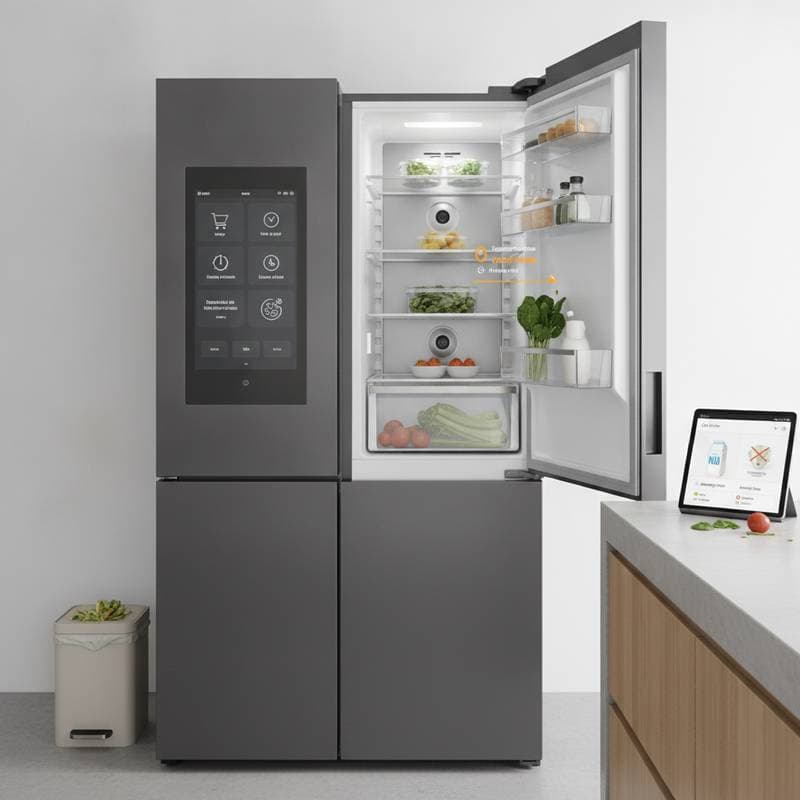
How AI Refrigerators Cut Food Waste
Opening the refrigerator to find wilted vegetables, expired dairy, and forgotten condiments is a common household frustration. Busy schedules often lead to overlooked items and unnecessary waste. AI-enabled refrigerators address this challenge by tracking inventory, suggesting meals, and helping households purchase only what they will actually use.
How Smart Refrigerators Track Inventory
These appliances use cameras, weight sensors, barcode scanning, or connected apps to monitor contents. Some models automatically recognize produce and packaged goods. Others require users to confirm items when loading the refrigerator.
The system performs several key functions:
- Generates digital grocery lists based on current stock
- Identifies products approaching expiration dates
- Suggests recipes using available ingredients
- Monitors consumption patterns for staple items
- Recommends appropriate quantities to prevent overbuying
Users can check inventory from their phones before shopping trips. This visibility reduces duplicate purchases and prevents optimistic buying that leads to waste.
Selecting the Right Model
Feature sets vary significantly across manufacturers. Consider shopping habits rather than selecting the most expensive option available.
Budget-friendly choice: The GE Profile Smart Refrigerator with Keurig K-Cup Brewing System typically costs around $2,000. It provides app connectivity, temperature monitoring, and basic food management through the SmartHQ platform. This model suits households seeking connected features without camera-based inventory tracking.
Mid-range option: The Samsung Bespoke 4-Door Flex Refrigerator with AI Family Hub Plus generally retails near $3,000. It includes interior cameras, recipe suggestions, shopping assistance, and a flexible temperature compartment. The large display allows the entire household to participate in meal planning.
Premium selection: The LG InstaView Counter Depth MAX Refrigerator usually costs approximately $4,000. It offers spacious storage, a transparent door panel, app controls, and advanced food management through LG ThinQ. Inventory capabilities vary by model and region, so verify specific features before purchase.
Prices fluctuate based on retailer promotions, delivery fees, and installation requirements. A more affordable refrigerator paired with a connected inventory app may deliver better value than paying for unused features.
Technology Strengths and Limitations
Prediction accuracy improves when the system observes consistent household patterns. Regular purchases of milk, eggs, spinach, and rice allow the refrigerator to anticipate needs and prompt restocking before supplies run out. Recipe recommendations can utilize items nearing their peak quality, transforming potential waste into planned meals.
Food recognition systems often struggle with opaque containers, loose produce, and leftovers. Labeling storage containers with clear descriptions and confirming items manually improves accuracy. Best-by dates indicate quality rather than safety. Rely on sensory evaluation, storage history, and official food safety guidelines rather than alerts alone.
Installation and Ongoing Costs
Smart refrigerators require stable wireless connectivity and manufacturer account setup. Verify compatibility with preferred phone platforms, voice assistants, and grocery services. Some shopping features are limited by region or require separate retailer accounts.
Additional expenses to consider include:
- Delivery and old appliance removal typically costs $100 to $300
- Professional water line installation ranges from $150 to $500
- Extended protection plans add several hundred dollars
- Replacement filters cost $30 to $60
Professional installation is recommended for water lines and electrical modifications. Consult qualified technicians when cabinetry, flooring, plumbing, or dedicated circuits are involved.
Building Effective Daily Habits
Establish a simple routine to maximize benefits. Confirm new items in the app when unloading groceries and remove discarded items promptly. Review suggested recipes weekly and select one meal that uses ingredients approaching their quality limit. Maintain a manual list of household staples that require regular replenishment.
Practical Benefits for Modern Households
Whether pursuing a fully automated kitchen or simply seeking fewer forgotten leftovers, these systems provide valuable assistance. Clear inventory information supports confident shopping decisions. Recipe suggestions encourage creative cooking with existing ingredients. The technology reduces waste without requiring perfect adherence to complex routines. Daily food management becomes more visible and manageable through consistent use of these connected features.