Smart Appliances Now Predict Failures Months Ahead
- Confirm logical progression from problem identification through technical explanation to purchase guidance.
- Eliminate all contractions from body text while preserving natural readability.
- Replace broad claims with concrete product examples and step sequences.
- Limit every paragraph to two through four sentences with varied length.
- Verify total word count stays below 1800 while retaining essential information.
- Integrate privacy and budget considerations into dedicated practical sections.
- Close with an action-oriented header focused on implementation rather than summary phrases.
Imagine your refrigerator sending an alert long before food begins to spoil. Your washing machine could likewise flag worn bearings months before a breakdown occurs. Such foresight has moved from concept to available feature in many current appliances.
Smart homes already reduce daily chores. Predictive maintenance now adds another layer by interpreting performance data to issue warnings up to three months early. Homeowners therefore encounter fewer sudden repairs and lower overall costs.
Appliance Failures Often Arrive at Inconvenient Moments
A dishwasher that stops mid-cycle during dinner creates immediate disruption. A dryer that fails on laundry day adds unplanned expense and delay. Reactive repairs remain the norm because traditional appliances provide little advance notice.
Newer models embed sensors that record vibration, temperature, and power draw. These readings stayed unused until recent software advances allowed pattern analysis. The same sensors now feed algorithms that spot early deviations from normal operation.
Predictive Systems Deliver Advance Warnings
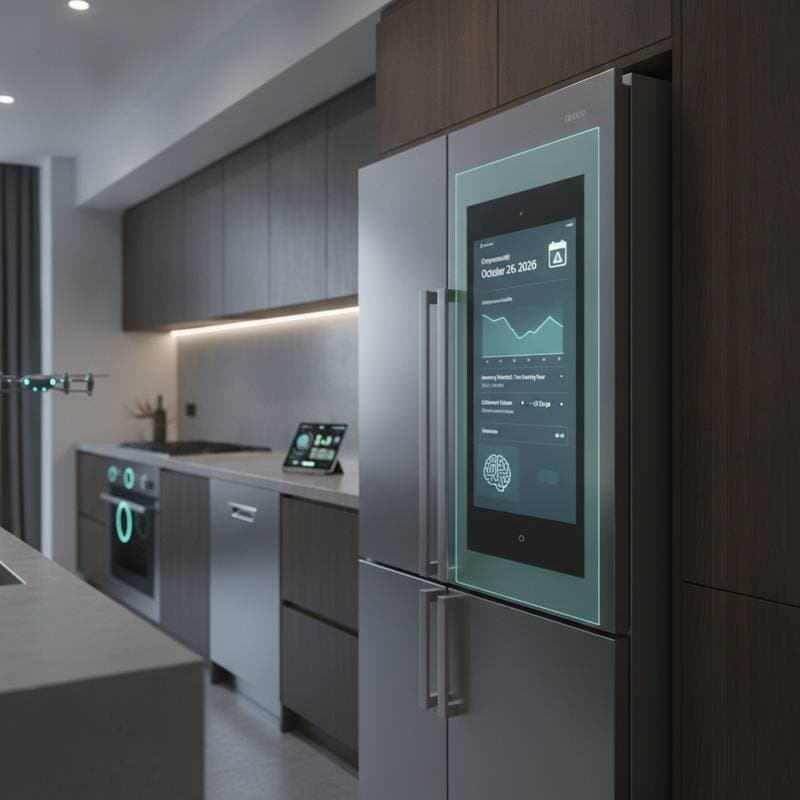
Embedded sensors gather continuous readings on every major component. Cloud analytics compare those readings against data from thousands of identical units. When an anomaly appears, the system sends a notification that includes a confidence level and suggested next steps.
A dishwasher, for instance, might register slower drainage and recommend filter cleaning before a clog escalates. The advice arrives through a phone app and requires no separate dashboard. Users decide whether to perform simple tasks themselves or schedule service.
Step-by-Step Monitoring Process
- Micro-sensors inside the appliance track vibration, sound, voltage, and temperature.
- Data packets travel periodically to secure servers for comparison against performance baselines.
- Trained models flag subtle changes that precede component failure.
- The homeowner receives an alert that lists the issue, confidence rating, and recommended actions.
- Early intervention prevents full failure and extends equipment life.
Local storage handles most data until a scheduled upload occurs. This approach limits bandwidth demands and keeps personal information on the device longer.
Current Product Options by Price Range
- Budget models such as the LG ThinQ washer near 800 dollars provide alerts for imbalance and clogged filters through a basic mobile app.
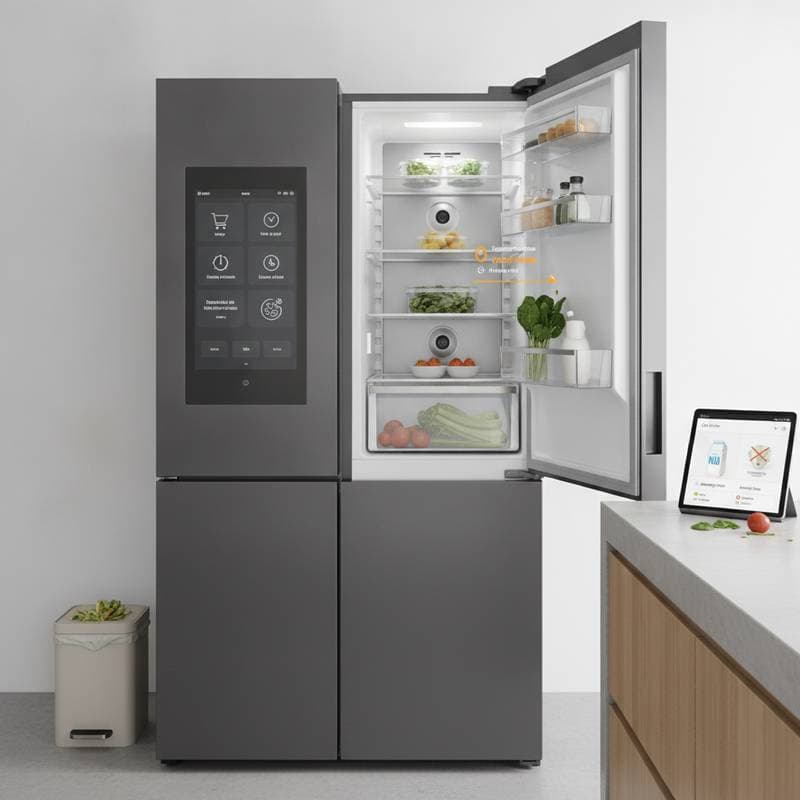
- Mid-range refrigerators from Samsung around 1700 dollars monitor compressor performance and door seals to protect stored food.
- Premium dishwashers such as the GE Profile unit near 1300 dollars detect flow restrictions and heating changes while offering direct scheduling with certified technicians.
Most new units connect through standard Wi-Fi and work with Alexa, Google Home, or Apple HomeKit via shared protocols.
Key Factors Before Purchase
Budget calculations should include the cost of one avoided major repair. A compressor replacement often exceeds 600 dollars, so a single prevented failure recovers much of the upgrade price.
Installation follows ordinary appliance placement. The added step involves connecting the unit to a network and completing app registration.
Data security varies by brand. Select models that encrypt transmissions and allow users to review or delete stored records at any time.
Professional service remains necessary for complex repairs. Predictive alerts simply reduce the frequency of emergency calls.
Homeowners can begin with one high-impact appliance and add others as older units are replaced.
Additional Detection Capabilities
Voltage fluctuations captured by the same sensors sometimes point to household wiring issues. Early notice of these conditions protects both the appliance and the electrical system.
Energy and water reports also appear in many dashboards. Users gain visibility into consumption patterns and can shift cycles to off-peak hours when utilities offer lower rates.
Selecting Your First Predictive Appliance
Identify appliances whose failure would cause the greatest inconvenience. Refrigerators and water heaters rank high on most priority lists. Compare models that list predictive diagnostics or AI monitoring among their features, then match available budgets to the options reviewed above.