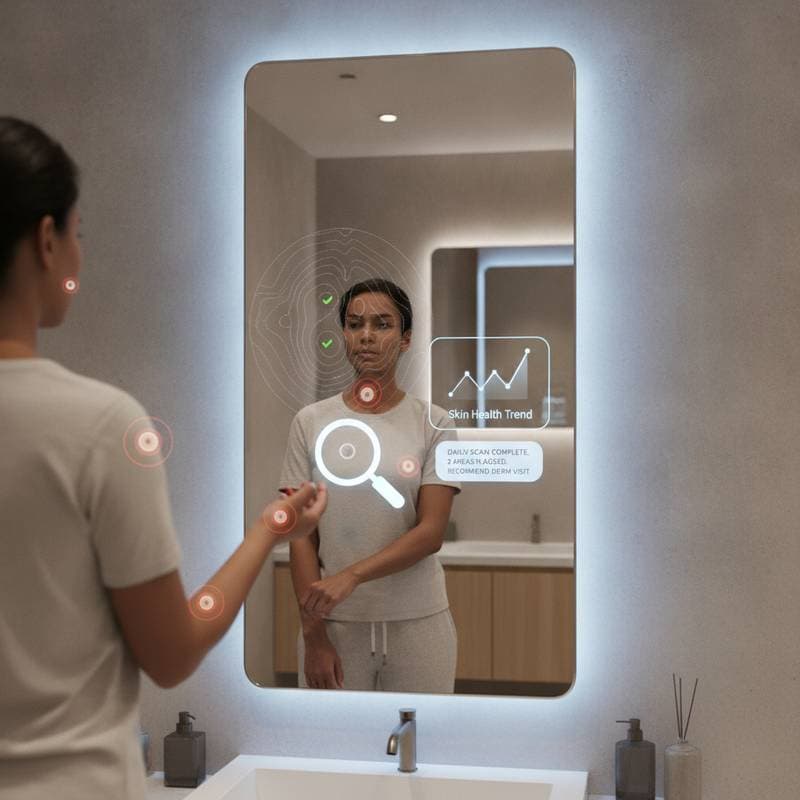
Smart Mirrors Turn Daily Reflection Into Skin Health Monitoring
A mirror has always been a quiet part of personal care. It helps with brushing teeth, styling hair, and checking whether a shirt looks right. New smart mirrors are giving that familiar surface a health focused purpose by examining skin for changes that may deserve professional attention.
These systems use cameras, specialized lighting, image analysis, and connected software to track marks across the face and body. Some are designed for homes, while others are being tested in clinics, pharmacies, and dermatology offices. Their promise is compelling: make regular skin checks easier, help people notice changes sooner, and encourage timely medical care.
The technology does not diagnose cancer on its own. A suspicious result still needs review by a qualified clinician. Yet smart mirrors could help turn skin awareness into a routine, much like checking blood pressure or monitoring sleep.
Why Early Skin Checks Matter
Skin cancer is one of the most common forms of cancer, and many cases are treatable when found early. The challenge is that suspicious changes can be easy to miss. A spot may appear on the back, scalp, shoulder, or another area that is difficult to inspect without assistance.
People also tend to delay appointments when a mark seems harmless. A changing mole may not hurt, itch, or bleed, which can create a false sense of security. Relying on memory makes the problem harder. A person may notice that a spot looks different without remembering its earlier color, shape, or size.
Smart mirrors address part of this problem by creating a more consistent way to observe the skin. A system can capture images under similar conditions, compare them over time, and flag changes that might otherwise escape notice.
That does not replace a dermatologist. It supports the habit of paying attention.
How Skin Scanning Mirrors Work
A smart mirror built for skin monitoring combines several components:
- High resolution cameras capture detailed images of visible skin.
- Special lighting helps reduce shadows and glare, which can hide changes.
- Image analysis software examines features such as color, shape, borders, and size.
- Tracking tools compare current images with earlier scans.
- Alerts and reports direct users toward medical advice when a mark appears unusual.
Some systems use multiple cameras to view areas from different angles. Others rely on a phone connected to a mirror or a handheld scanner that works with a reflective display. The goal is usually to produce a clearer record, not to deliver a final medical answer.
A mirror might identify a mole that has grown, developed uneven coloring, or gained an irregular border. It could also remind someone to inspect areas they rarely see. These small prompts may lead to a useful conversation with a doctor.
Artificial Intelligence With Human Oversight
Image analysis has become more capable as researchers train software on large collections of skin images. The system looks for visual patterns associated with common skin conditions, including features that may appear in melanoma and other cancers.
Still, performance can differ across skin tones, lighting conditions, camera quality, and types of lesions. A model trained mostly on one group of images may be less reliable for another group. Hair, makeup, dry skin, reflections, and motion can also affect a scan.
For that reason, health experts describe these tools as screening aids rather than replacements for clinical care. A mirror can prompt a checkup, but only a healthcare professional can assess the full picture. That assessment may include a close examination, medical history, a dermatoscope, or a biopsy.
The best systems will make this boundary clear. They should use plain language, explain uncertainty, and avoid suggesting that a normal scan guarantees safety.
Making Skin Checks Easier at Home
The biggest consumer benefit may be consistency. A person might ignore a monthly skin check when it requires a separate appointment, a handheld mirror, and a difficult inspection of hard to reach areas. A smart mirror can place the reminder inside an existing routine.
Imagine standing in front of the mirror after washing your face. A gentle prompt asks you to turn slightly so the cameras can capture both sides of your face and neck. Over time, the system builds a private visual record. If a spot changes, the app can suggest that you contact a clinician.
This workflow could be especially helpful for people with many moles, a history of skin cancer, fair skin, frequent sun exposure, or limited access to dermatology services. It may also help caregivers monitor older relatives who struggle to inspect their own skin.
The most useful products will avoid creating extra work. Setup should be simple, scanning should take little effort, and results should be easy to understand. A consumer does not need a medical lecture in the bathroom. They need a clear prompt and a sensible next step.
Where Smart Mirrors Are Already Appearing
Several health technology companies have developed systems that combine imaging with skin assessment. Some use dedicated scanning devices, while others build software for smartphones and connected cameras. In clinical settings, digital dermoscopy tools already help dermatologists compare lesions and organize patient records.
The mirror format brings a different advantage. It can support broad visual coverage while the user stands naturally. A conventional camera may focus on one mark, but a mirror could help identify changes across several body areas during a guided scan.
Retail health settings may also become useful testing grounds. A pharmacy or wellness clinic could offer a private skin screening station that sends images to a medical professional. This arrangement might help people who cannot quickly secure a specialist appointment, though privacy and clinical oversight would need careful attention.
The technology remains an evolving category. Consumers should look for products that explain their evidence, identify clinical partners, and state whether results are reviewed by professionals.
Privacy Belongs at the Center
A smart mirror may collect some of the most personal images a device can hold. That makes privacy a core product feature, not an optional extra.
Before buying or using a skin scanning mirror, check how images are stored, whether they leave the home, and who can access them. Read the company policy for details about data sharing, research use, advertising, and deletion. Strong products should offer encryption, clear consent settings, and a straightforward way to remove stored images.
Households should also consider account security. A shared bathroom device may need separate user profiles, protected access, and local processing when possible. If images are sent to the cloud, the company should explain why and how long it keeps them.
Trust will determine whether people use these systems regularly. A mirror that detects a possible problem but leaves users uncertain about their data may sit unused.
The Risk of False Alarms
No screening tool is perfect. A smart mirror may flag a harmless freckle, scar, rash, or birthmark. Repeated false alarms can create anxiety and unnecessary appointments. The opposite problem is also possible, a system may fail to flag a concerning lesion.
Good design can reduce both risks. The mirror should show why it recommends attention without pretending to offer certainty. It might say that a mark has changed in size or color and suggest a professional assessment. It should not label a user with cancer.
People should also know when to seek care without waiting for a scan. A sore that does not heal, a spot that bleeds, a rapidly changing mark, or a new unusual growth deserves medical attention. Symptoms matter even if a device reports no concern.
This is where education and technology work together. The mirror can improve observation, while trusted medical advice guides action.
Choosing a Smart Mirror That Fits Your Needs
Smart mirrors could become a practical part of preventive care, especially as cameras, lighting, and health software improve. Their strongest contribution will be helping people notice change and respond sooner.
If you are considering one, treat it as a reminder and tracking tool. Choose a product with transparent privacy policies, clear medical disclaimers, evidence from testing, and a path to professional review. Keep regular appointments with a dermatologist when your personal risk calls for them, and never dismiss a concerning change simply because a device does not flag it.
The future of connected wellness will depend on technology that fits naturally into daily life while respecting medical limits. A mirror that encourages a closer look may help turn skin cancer awareness into a steady habit. That simple habit could lead to earlier conversations, earlier examinations, and better outcomes.