Imagine Your Smart Kitchen Fixing Itself
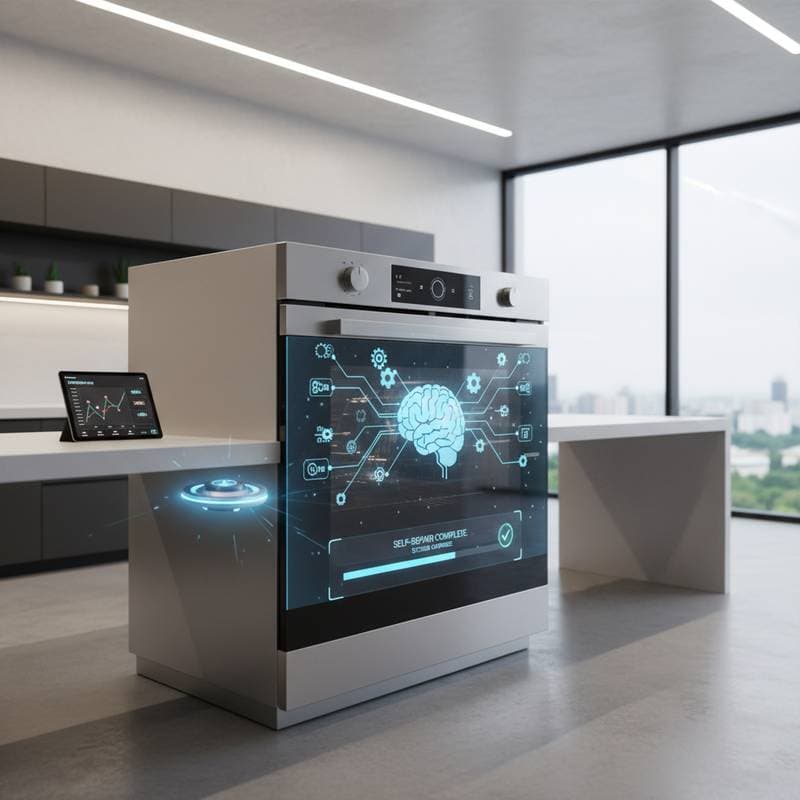
You finish prepping dinner, and your smart oven displays an error message. You reach for your phone, ready to search online forums or wait on customer support lines. Instead, the oven performs a rapid diagnostic scan, detects a misaligned temperature sensor, and recalibrates it on its own. Your meal proceeds without delay, and your evening remains on track.
Self-repairing smart kitchen appliances deliver this level of reliability. Devices equipped with these features detect issues, diagnose causes, and resolve them independently. This advancement moves beyond mere convenience to redefine maintenance in essential cooking equipment.
Challenges in Smart Appliance Reliability
Smart appliances enhance kitchen efficiency through features like inventory-tracking refrigerators and voice-activated coffee makers. However, their intricate designs create vulnerabilities. Sensors, touch interfaces, and processors demand specialized knowledge for repairs that exceed basic mechanical fixes.
Repair costs escalate quickly, and service delays disrupt daily routines. Artificial intelligence addresses these pain points through predictive diagnostics and adaptive software. Such systems intervene early to avert escalations into costly failures.
Advancements in AI Diagnostics for Kitchens
AI diagnostics empower devices to evaluate performance metrics, identify deviations, and pinpoint root causes. This technology proliferates across connected kitchen tools.
Consider advanced connected ovens with integrated thermal sensors linked to an onboard AI processor. When temperatures deviate from norms, the system assesses potential issues such as sensor drift, heating element inconsistencies, or power fluctuations. It may execute automatic corrections or modify operations to ensure safe cooking conditions pending professional intervention.
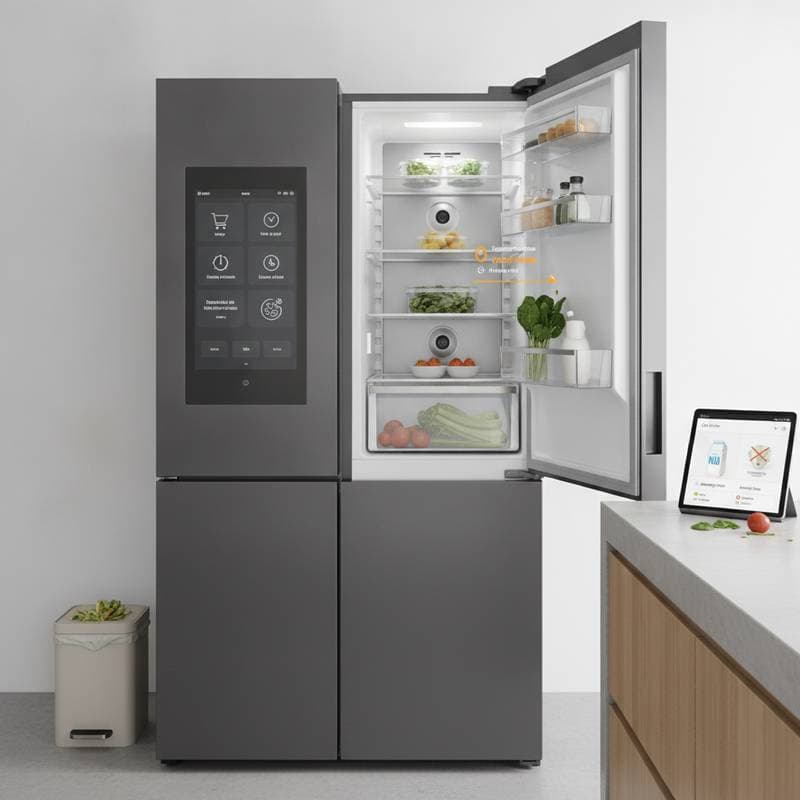
Smart refrigerators apply similar principles to compressor efficiency and air circulation. Upon detecting suboptimal cooling, the AI initiates a defrost sequence or modulates fan speeds to reinstate equilibrium.
Insights from Appliance Technicians
Technicians report that predictive maintenance software averts approximately 70 percent of service requests. These systems record subtle anomalies that evade user detection yet signal emerging problems. Through data accumulation, the AI refines operations proactively, maintaining peak performance.
Mechanisms of Self-Repair in Appliances
Self-repair integrates three foundational technologies for effective operation.
-
Sensor Arrays: Devices deploy precise sensors to monitor variables including temperature, pressure, voltage, and operational cycles. This data streams to the central AI for ongoing analysis.
-
Machine Learning Algorithms: The AI benchmarks live data against extensive datasets from comparable units. Pattern recognition enables anomaly detection and failure forecasting.
-
Dynamic Adjustment Protocols: Following issue identification, the appliance responds with measures like software recalibration, power redistribution, or automated upkeep routines.
Certain models facilitate autonomous firmware upgrades or direct outreach to support teams via cloud links. This orchestration yields uninterrupted functionality and minimal user involvement.
Leading Products in Self-Repair Technology
Prominent brands embed self-repair capabilities in premium offerings.
-
Affordable Entry: The GE Profile Smart Range with SmartHQ Diagnostics, priced at about $1,200, issues predictive notifications for sensor variances and guides users via app-based solutions.
-
Mid-Tier Selection: The LG InstaView ThinQ Refrigerator, at roughly $2,300, conducts ongoing self-assessments and provides voice-assisted resolutions for cooling discrepancies or seal imperfections.
-
High-End Option: The Samsung Bespoke AI Oven, costing around $3,800, employs adaptive thermal management and firmware self-optimization to counteract performance shifts.
These units interface with ecosystems like Google Home, Amazon Alexa, and Samsung SmartThings, enabling data sharing for coordinated energy management and upkeep planning.
Ensuring Long-Term Integration
Select appliances compatible with open standards such as Matter or Wi-Fi 6 to safeguard future adaptability. These protocols support seamless interactions with advancing home networks and facilitate diagnostic enhancements through updates.
Benefits of AI-Driven Self-Repair
These systems extend appliance durability and streamline ownership. Proactive interventions reduce service frequency, yielding financial savings and eliminating routine disruptions.
Visualize a dishwasher that purges its filter during reduced water flow or a cooktop that adjusts burners upon fuel variance detection. Such actions preserve component integrity and sustain output consistency.
Sustainability gains emerge as well. Fewer repairs and replacements curb electronic waste and associated emissions. Manufacturers increasingly highlight these eco-friendly aspects in their development agendas.
Economic Advantages of Intelligent Maintenance
Initial investments in self-repair models exceed standard units, yet returns materialize through diminished repair expenses. Typical fixes range from $150 to $400; automating half of these scenarios offsets premiums within years.
Operational efficiency rises concurrently. Real-time AI analysis optimizes energy use, potentially lowering a refrigerator's consumption by 10 percent post-adjustment.
Optimizing Through Updates
Activate automatic firmware updates to access refinements in diagnostic precision and maintenance efficacy. Neglecting them exposes devices to unresolved software glitches beyond AI remediation.
Prioritizing Safety in Automated Systems
Self-repair prioritizes compliance with electrical codes and incorporates safeguards against hazardous conditions. Devices halt unsafe functions when necessary.
For concerns involving wiring, gas lines, or hydraulic elements, engage certified experts. These features target software and minor hardware tweaks, not comprehensive overhauls.
Professional configuration verifies network stability and circuit capacity, preventing false diagnostics or connectivity failures.
Steps to Implement AI Kitchen Automation
Begin upgrades modestly to experience self-repair benefits. Focus on high-usage items like ovens or refrigerators.
Follow this sequence:
-
Identify Core Needs: Prioritize appliances central to daily tasks, where diagnostics yield immediate advantages.
-
Establish Connectivity: Register via the brand's application to access cloud-enabled monitoring and controls.
-
Initiate Diagnostics: Enable automated scans within device settings; review periodic status summaries.
-
Respond to Notifications: Execute suggested calibrations for alerts, resolving most concerns independently.
-
Evaluate Improvements: Track metrics such as energy savings or noise reduction to confirm AI adaptations.
Gradually incorporate complementary devices like intelligent dishwashers or ventilation systems for holistic integration.
Budgeting for Smart Kitchen Enhancements
Comprehensive setups with self-repair span $4,000 to $12,000, varying by selections. Stagger purchases to manage expenditures effectively.
Installation averages $150 to $400 per unit, covering network alignment and function validation. For gas or high-power installations, retain licensed specialists; platforms like HomeAdvisor connect you with qualified integrators.
Embracing Reliable Kitchen Innovation
Self-repairing appliances elevate home automation by simplifying upkeep and enhancing dependability. They safeguard investments while minimizing interruptions.
Prioritize units with robust support, interoperable designs, and consistent updates. As these technologies mature, kitchens evolve into intuitive, self-sustaining environments.
This shift allows focus on culinary enjoyment amid a backdrop of effortless reliability.
FAQs
What defines a self-repairing smart appliance?
A connected unit that employs sensors and AI to identify, analyze, and resolve minor faults autonomously.
Does AI self-repair address major failures?
No, it manages adjustments like tuning or optimization. Significant issues demand expert attention.
Can these systems function without internet?
Basic local checks operate offline, but cloud-dependent analysis and upgrades require connectivity.
Do self-repair appliances cost more initially?
Yes, often 10 to 20 percent above conventional models, offset by repair savings and efficiency gains.