Holograms Replacing Apps in Smart Home Control
Smart homes evolve from screen-based interactions to immersive spatial experiences. Traditional control relied on mobile applications or voice commands, often requiring multiple steps to access functions. Holographic interfaces now project interactive three-dimensional displays directly into living spaces, allowing users to manage devices through natural gestures. This technology transforms routine tasks, such as adjusting thermostats or monitoring security, into seamless interactions with floating visual elements.
Limitations of Traditional Screen Interfaces
Households with smart devices frequently depend on smartphones or dedicated displays for operation. These methods introduce unnecessary steps: users must unlock devices, select applications, and navigate menus to reach desired settings. Centralized hubs and voice systems help, yet they often struggle with coordinating diverse devices, leading to fragmented experiences.
Holographic systems address these issues by offering context-aware controls positioned exactly where needed. Spatial computing advancements enable compact projectors to create vivid, interactive holograms in open air. Integrated gesture and voice recognition interprets user movements, converting them into precise commands without physical contact.
Emerging Holographic Display Technologies
Extended reality firms develop home-oriented holographic displays that project visuals onto surfaces or generate free-standing images. Prototypes display real-time data, such as weather forecasts, device statuses, or comprehensive home dashboards, positioned on tables or in room centers.
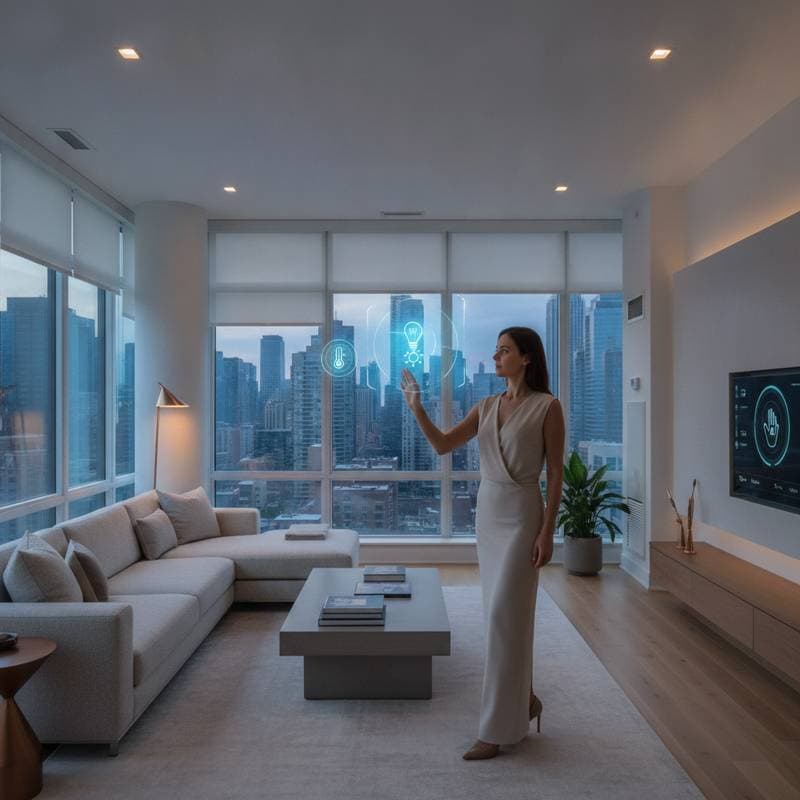
Market research indicates rising demand for screenless interfaces among smart home users. Homeowners seek efficient methods to oversee connected systems without handheld devices. Holograms meet this need by providing spatial context: users point to icons above furniture to modify lighting or gesture near kitchen projections to activate appliances.
To implement such a system, select a projector compatible with your existing devices, ensuring it supports wide-angle projection for room coverage. Position the unit centrally, like on a ceiling mount, to maximize visibility and interaction range.
Advancements in Gesture Recognition
Gesture detection technology has progressed to recognize nuanced movements with high precision using embedded cameras and sensors. In holographic setups, these gestures serve as the core input method. For instance, rotate the wrist to adjust heating levels, pinch fingers to halt audio playback, or extend an arm to summon a control panel.
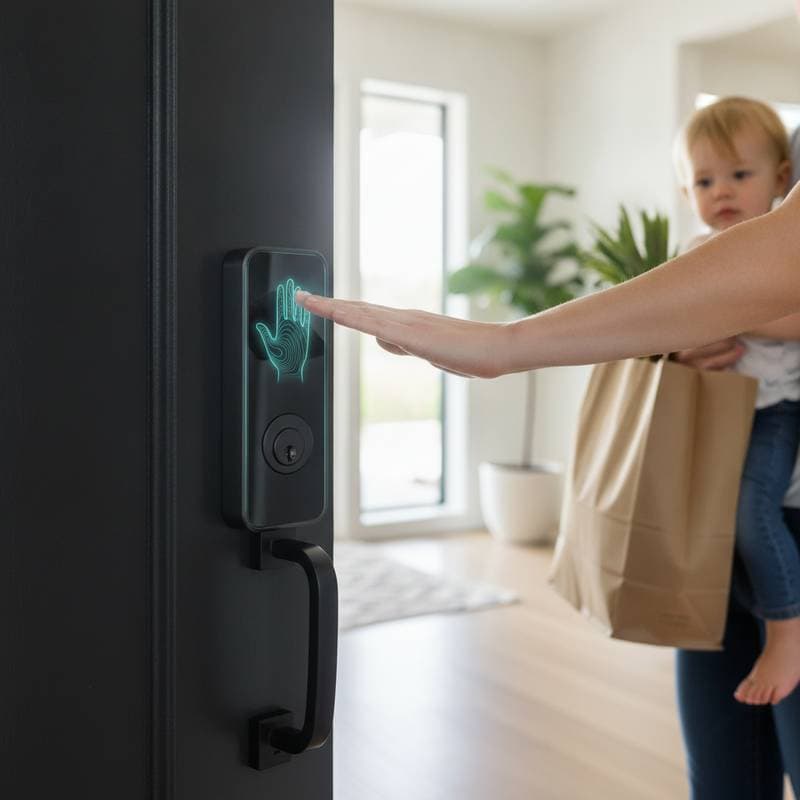
This contactless approach enhances hygiene and accessibility, particularly when hands carry items. It fosters a direct connection with the environment, where the home responds intuitively to user actions.
Studies on connected space usability highlight how spatial interfaces lower mental effort. Users engage with virtual representations as tangible objects rather than sequential lists. Consider visualizing a room's lighting layout in hologram form; select and adjust individual bulbs by interacting with their projected icons.
Unifying Diverse Smart Home Ecosystems
Interoperability remains a key hurdle in smart homes, with various brands demanding proprietary applications and creating disjointed control. Holographic layers provide a cohesive overlay, integrating all compatible devices into a single visual framework.
Envision a central holographic node that scans and maps your home's gadgets, displaying their locations and statuses in a dynamic spatial diagram. Manage everything through gestures or speech, bypassing application launches. Developers already prototype dashboards that synchronize with major platforms, offering streamlined access.
Emerging standards facilitate better device communication, enhancing holographic adaptability. The system learns user patterns, such as frequent evening lighting adjustments, and anticipates needs by pre-positioning relevant controls.
Integrating Holograms into Daily Routines
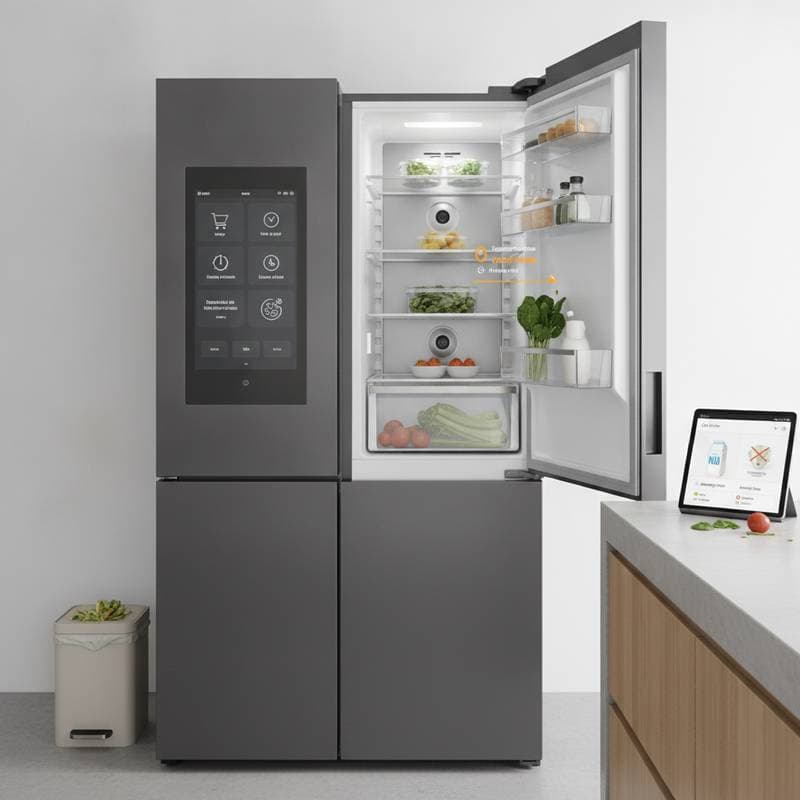
Holographic control integrates effortlessly into everyday activities, enhancing convenience without disruption. Upon entering the kitchen each morning, a projection materializes above the counter, presenting calendar events, appliance readiness, and climate settings. Execute a brief gesture to brew coffee, soften illumination, and queue music selections.
In communal areas, position holographic nodes near seating to handle entertainment and ambiance adjustments. During meals, projections can activate security views upon detecting visitors, keeping interactions fluid.
For multi-person households, this shared interface promotes collaboration. Family members access the same projected controls, eliminating device handoffs or compatibility disputes, and turning management into a collective process.
Core Components of Holographic Systems
Effective holographic control depends on projection, sensing, and intelligent processing. Laser or LED projectors produce sharp, depth-enhanced images suitable for indoor environments. Depth-sensing cameras track gestures and positional data, while AI algorithms differentiate intentional inputs from incidental motions.
Challenges include maintaining clarity in well-lit spaces and accommodating varied user physiques. Privacy concerns arise from constant sensor activity, necessitating robust data safeguards. Solutions involve edge computing to process inputs locally and modular designs that minimize always-on surveillance.
Hybrid configurations combine projections with smart surfaces: embed sensors in countertops for motion detection, paired with overhead projectors. This setup conceals hardware, allowing holograms to emerge naturally from familiar fixtures.
Transitioning to Spatial Interfaces
Smart home evolutions follow a pattern from experimental to essential. Voice systems, once novel, now integrate routinely; holograms chart a parallel course. Declining hardware costs and refined software pave the way for widespread adoption, potentially supplanting many application-dependent controls.
This progression aligns with preferences for environments that anticipate rather than react. Holograms achieve this by rendering information contextually, appearing precisely when useful and receding otherwise, thus preserving focus on daily pursuits.
Realizing Responsive Home Environments
Adopting holographic smart home features begins with evaluating current setups for compatibility. Start small by integrating a single projector with core devices like lights and thermostats, then expand to full-room coverage. As technology matures, these systems will redefine interaction, making homes more attuned to inhabitants' needs and rhythms.