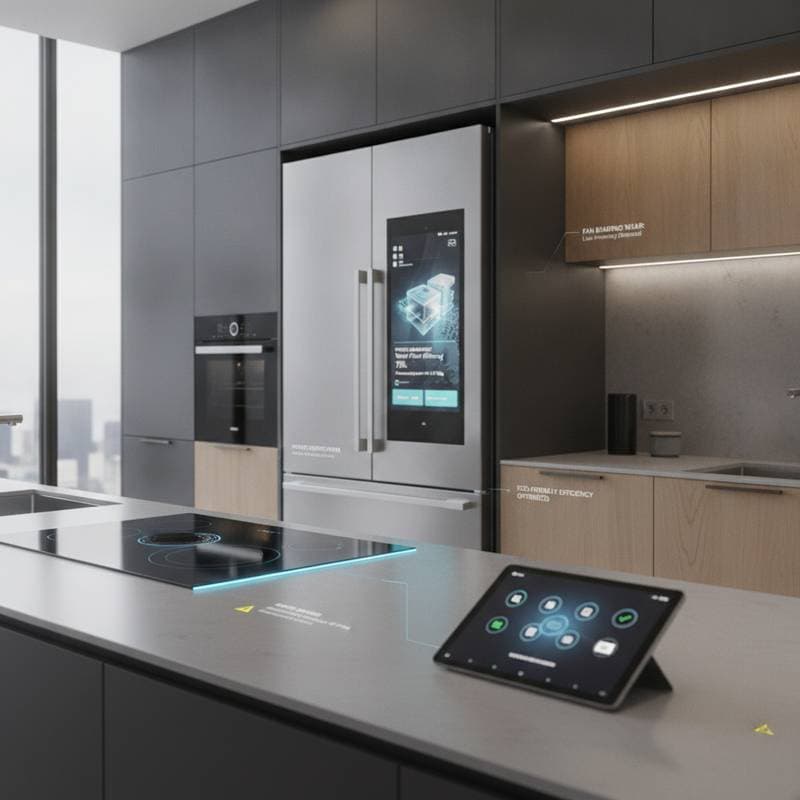
Smart Kitchens Learn Habits to Auto-Order Groceries
Smart homes evolve from basic conveniences to intelligent collaborators. The kitchen shifts from a center of manual tasks to a space that learns, anticipates, and responds. Consider a refrigerator that maintains food freshness while monitoring milk levels, forecasting preferred breakfast staples, and placing orders before shortages arise. These smart kitchens that learn habits to auto-order groceries reshape household food management, waste reduction, and time efficiency.
From Convenience to Predictive Living
Initial smart kitchen devices emphasized control and access. Users adjusted oven settings via applications or viewed refrigerator contents remotely during shopping trips. Current advancements extend beyond responses to commands; systems now analyze usage patterns, shopping intervals, and brand preferences to forecast requirements.
This evolution converts grocery planning from a burdensome chore to an effortless operation. Households experience a transition from reactive habits to anticipatory ease. Research indicates increasing interest in kitchen technologies among users of voice assistants and connected climate controls, as the kitchen influences daily routines profoundly.
How Learning Kitchens Understand Users
Data forms the core of these systems. Smart refrigerators, linked pantries, and application-integrated grocery services collect details on purchases, consumption rates, and expiration trends. Pattern recognition reveals user rhythms; for instance, consistent morning egg use signals a weekly carton duration, prompting timely reorders via selected delivery providers.
Such analysis extends to personalization. Systems refine accuracy with extended use, aligning closely with individual lifestyles. Certain refrigerators employ cameras and sensors for item identification through packaging or barcodes, while others start with user entries and improve predictions progressively. Gradually, the kitchen manages operations autonomously, akin to a scheduler attuned to personal calendars and tastes.
The Rise of Automated Grocery Ordering
Automated ordering progresses from experimental feature to essential tool for time-pressed families. Integration occurs within appliance networks. Leading manufacturers collaborate with delivery platforms to form continuous cycles of monitoring and replenishment; low produce levels in the refrigerator or near-empty cereal boxes detected by pantry sensors initiate digital purchase requests.
Subscription frameworks enable selections of favored retailers and delivery schedules. Systems compare costs and propose eco-friendly options. A kitchen might suggest regional organic produce upon detecting frequent selections of such items. Beyond mere automation, this represents adaptive support that reflects user priorities.
Why It Matters for Everyday Life
Individuals dedicate significant hours to meal preparation, list compilation, and store visits. Automation recovers this duration and prevents oversights or redundancies. Expiration monitoring further curbs global food waste issues.
Energy optimization emerges as another advantage. Interconnected kitchen components coordinate cooling and storage according to food varieties and volumes, modestly lowering consumption while extending freshness. Overall, operations become more streamlined and environmentally sound.
Real-World Examples of Smart Kitchen Intelligence
Prominent brands lead these developments. Refrigerators equipped with interior cameras scan contents to pinpoint shortages. Integrated recipe applications propose dishes from existing stocks and append absent elements to virtual carts.
Voice systems such as Alexa and Google Assistant broaden into inventory oversight. Users query remaining fridge items or authorize proposed purchases. Delivery services embed further into home platforms, facilitating subscriptions tied to usage forecasts.
Consider an integrated setup featuring a networked refrigerator, pantry monitors, and meal organizer. Detection of low milk triggers a signal to the grocery application, which verifies sufficiency against scheduled recipes before including it in the upcoming shipment. This automated linkage maintains consistent stocking.
Addressing Barriers to Adoption
Despite attractions, obstacles persist. Privacy ranks highest; users seek guarantees of data protection and avoidance of intrusive marketing. Companies address this through clear policies and local processing alternatives to cloud reliance.
Pricing presents another hurdle. Premium costs accompany advanced appliances, though market expansion drives gradual reductions. Long-term gains in waste minimization and time recovery often justify expenses.
Interoperability advances via standardized protocols, enabling cross-brand device harmony. This flexibility suits users assembling diverse systems over single-vendor commitments.
The Future of Meal Planning
Smart kitchens provide more than automation; they offer guidance. Refrigerators could recommend recipes utilizing soon-to-expire goods or tailor orders to wellness objectives. Minimal manual effort would span planning, procurement, and preparation.
Upcoming enhancements might incorporate nutrition analysis, adapting to dietary needs or restrictions for secure selections. Households with allergies or specialized regimens gain from automated safeguards.
Broader applications include communal systems for local cooperatives, streamlining group orders to cut packaging and transport impacts. These developments foster efficient, sustainable food networks.
Practical Benefits Users Can Expect
Adopters of smart kitchen enhancements encounter concrete advantages:
- Time efficiency through diminished shopping excursions and simplified planning.
- Waste reduction via precise expiration and portion tracking.
- Expense management with lists that avert excess acquisitions.
- Tailored suggestions that adapt to evolving tastes.
- Environmental gains from efficient energy and minimized discards.
These elements yield a considerate, reactive kitchen dynamic. Technology elevates daily patterns beyond mere tools.
Integrating Smarter Kitchen Features
Maturing systems cultivate collaborative human-kitchen interactions. Notifications might alert to scheduled orders aligned with plans or deferrals due to unused remnants. This fosters mindful home practices where aids amplify rather than supplant awareness.
Growth in uptake follows direct encounters with efficiencies. The change parallels digital media overtaking traditional browsing; familiarity with intuitive automation discourages reversion to manual oversight.
Steps to Upgrade Your Kitchen
To pursue smarter kitchen integration, initiate with targeted additions. A networked refrigerator or pantry tracker serves as an effective entry point. Combine with delivery services offering order automation.
Evaluate beyond initial appeal. True merits reside in routine streamlining and informed choices regarding sustenance and usage.
Smart kitchens that learn habits to auto-order groceries redefine home oversight. They position the kitchen as a supportive ally that enhances lifestyles, conserves hours, and curtails waste.