How Smart Fridges Track Expiration Dates to Reduce Food Waste
Households often face the challenge of forgotten items in the refrigerator. Half-used jars, overlooked leftovers, and expired dairy products accumulate unnoticed. Food waste presents a daily frustration and a significant global issue. Technology now addresses this problem through smart refrigerators equipped with expiration tracking features. These devices convert the refrigerator from a source of waste into a center for efficiency and sustainability.
Smart home technology extends beyond basic controls like lighting and temperature regulation. The kitchen emerges as the next key area for innovation. Intelligent appliances monitor purchases, consumption patterns, and potential discards. The smart refrigerator leads this advancement in contemporary households.
The Impact of Food Waste
Food waste extends beyond minor household annoyances. It influences personal budgets, energy consumption, and environmental health. Spoiled groceries result in financial losses and ecological costs, including wasted water, fuel for transportation, and manufacturing resources. Research from consumer groups indicates that homes contribute substantially to food waste, often due to overlooked inventory or ignored expiration dates.
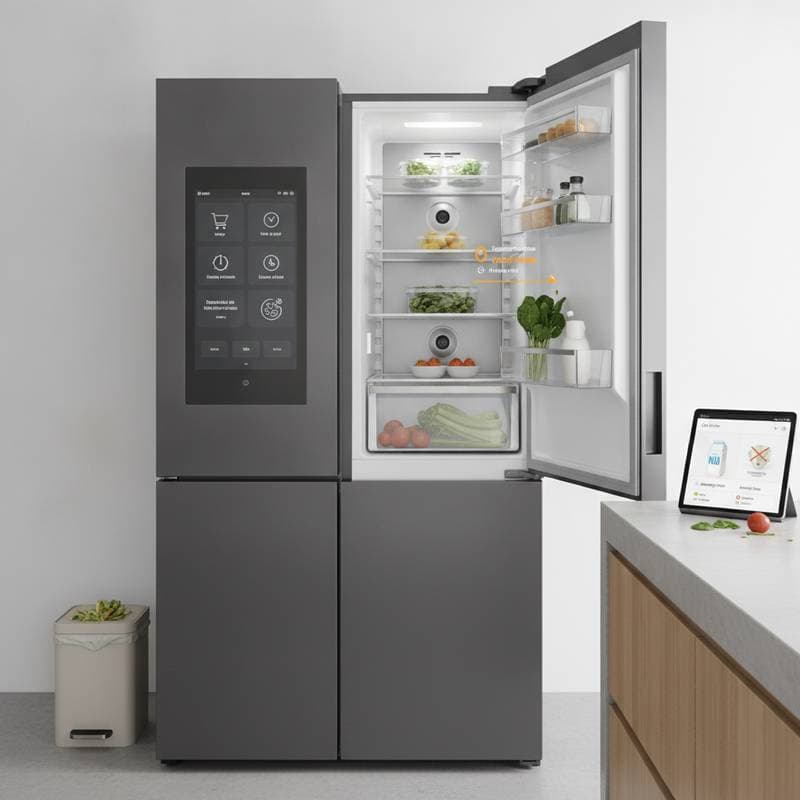
Smart fridges tackle this issue directly. They analyze refrigerator contents more effectively than manual checks. Through barcode scanning, produce identification, and shelf-life monitoring, these appliances eliminate the tendency to forget stored items. Users experience fewer instances of unnecessary disposal.
Evolution of Smart Refrigerators
Smart refrigerators first appeared as innovative but limited devices. Recent models demonstrate greater functionality. They connect to broader smart home networks, employ cameras and sensors for inventory oversight, and generate recipe ideas from available ingredients. The standout feature involves precise expiration date tracking.
Internal cameras paired with artificial intelligence enable product identification upon storage. Certain models support mobile app-based barcode scanning to record items and their expiration details automatically. As deadlines approach, the refrigerator issues alerts or proposes recipes incorporating those items. This forward-thinking approach alters shopping, cooking, and waste reduction behaviors.
Mechanics of Expiration Tracking
Users find the expiration tracking process straightforward, though it relies on sophisticated backend systems. Upon adding groceries, the refrigerator captures product data via barcode scans or image analysis. It consults a database for typical shelf lives and optimal storage guidelines.
Key capabilities include:
- Automatic product identification through camera-based object recognition.
- Expiration date logging via barcode scans or manual entry.
- Alerts for items approaching expiration.
- Recipe suggestions featuring near-expiry ingredients.
- Analysis of consumption patterns to refine shopping decisions.
This integration transforms the refrigerator into a proactive inventory manager. Users avoid late discoveries of spoiled food through timely notifications.
Balancing Convenience and Sustainability
Expiration tracking offers advantages that surpass cost savings. It promotes sustainable practices by curbing household waste. As awareness of consumption habits grows, tools aiding responsible choices align with evolving consumer priorities.
Consider a practical example: An app reveals that lettuce and yogurt near expiration. It recommends a smoothie or salad recipe using both. Preparation occurs without waste, replacing manual reminders with automated support. Food management integrates effortlessly into routines.
Leading Smart Fridge Innovations
Various manufacturers introduce refrigerators with advanced food management. Internal cameras transmit images to smartphones for remote inventory views during shopping trips. QR code integration and sensors align items with digital lists. Premium options connect to voice assistants for queries like expiration status.
Ecosystem connectivity enhances performance. Integration with grocery services enables automatic reordering of essentials or list updates for low-stock items. Such networks deliver efficient, customized kitchen operations.
Gaining Insights from Usage Data
Smart refrigerators provide data on consumption behaviors. They highlight patterns, such as frequently unused items or prematurely spoiled produce. This information allows adjustments to purchasing, improved meal planning, and better portion control.
Industry reports note rising adoption, particularly in urban settings. Devices appeal through technological prowess and real-world utility. They simplify tasks, cut expenses, and encourage eco-friendly decisions, fulfilling multiple user needs.
Addressing Adoption Challenges
Significant potential exists, yet obstacles persist. High initial costs deter some buyers compared to standard models. Privacy concerns arise from data collection on purchases and eating habits. Producers must prioritize secure handling and ethical use of information.
User involvement poses another hurdle. Systems require precise input for optimal function; unscanned or unlabeled items lead to gaps. Manufacturers emphasize automation to minimize effort. The aim involves seamless, background operation.
Advancements in Expiration Monitoring
Future smart fridges will integrate more deeply with home systems. Pantries could sync with refrigerators, stoves access ingredient details, and apps anticipate needs proactively. Tracking may encompass the full kitchen environment.
Improvements in image processing and online links boost accuracy. Systems learn from accumulated data to identify items independently. Enhanced models might assess freshness via visual indicators like color changes or texture shifts, providing early spoilage warnings.
Enhancing Daily Kitchen Practices
Consumers benefit promptly from these features. Reduced forgotten items mean less clutter and fewer cleaning surprises. Tracking simplifies meal planning as a constant reminder tool. It sparks culinary creativity by repurposing at-risk ingredients.
Technology proves most valuable when resolving common issues. Food waste affects all households. Refrigerators that monitor dates and freshness represent a tangible move toward smarter, more accountable lifestyles.
Implementing Smart Tracking at Home
Full integration requires no top-tier purchase. Existing refrigerators pair with apps or add-on sensors for comparable tracking. Basic scanners or inventory applications serve as interim solutions until advanced options become accessible.
To optimize smart tracking, follow these steps:
-
Begin modestly by logging items via phone or assistant.
-
Maintain regularity in updating inventory post-shopping or cooking.
-
Utilize recipe recommendations for expiring goods.
-
Examine data to identify and modify waste-prone purchases.
-
Automate connections to delivery services or alerts.
These practices yield immediate efficiency gains and sustainable results.