Imagine Catching Skin Cancer Early With a Mirror
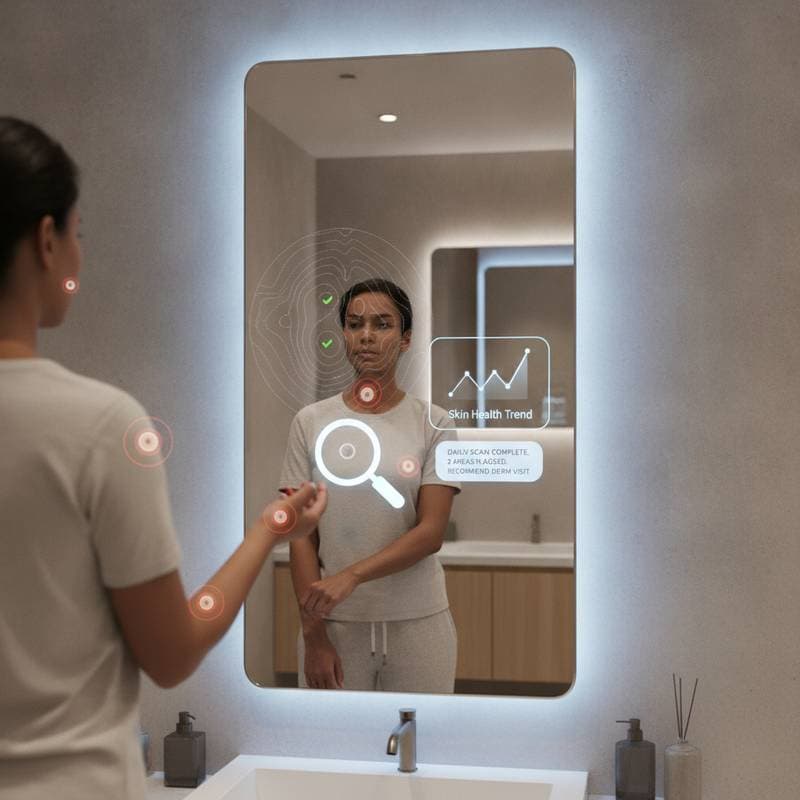
Morning routines often include brushing teeth and styling hair before heading out. Picture that routine enhanced by a mirror that silently scans skin, compares data points, and highlights suspicious moles. This smart mirror health technology now enters homes, transforming everyday reflections into proactive health tools.
Regular skin checks often seem daunting due to busy schedules, expenses, and oversight. Dermatologists advise frequent examinations, yet compliance remains low. AI smart mirrors address this gap through high-resolution imaging, precise lighting, and machine learning to spot potential skin cancer indicators in the bathroom.
The Opportunity: Everyday Health Screening at Home
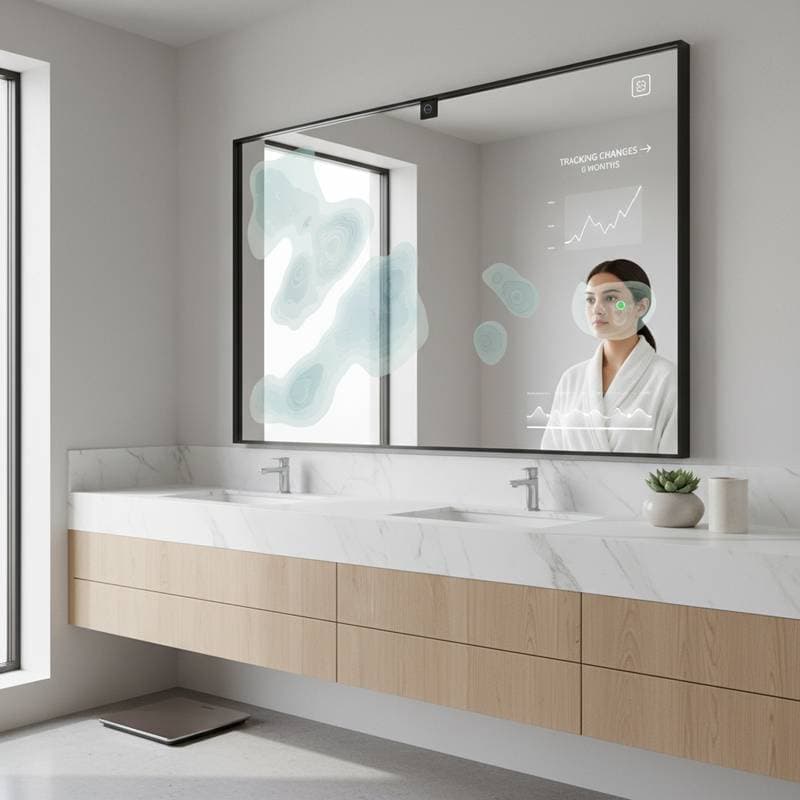
Early detection dramatically improves outcomes for skin cancer, the most common cancer type. Many individuals miss routine dermatology visits, allowing subtle changes to go unnoticed. A smart mirror establishes a personal baseline, monitors variations over time, and alerts users to anomalies, serving as an accessible early warning system.
This innovation aligns with broader smart health and wellness trends. It promotes prevention and user empowerment by embedding artificial intelligence into daily habits. Users benefit from seamless monitoring that operates without interrupting normal activities.
How Smart Mirrors Detect Skin Changes
Smart mirrors employ layered technologies to identify skin irregularities.
- High-resolution cameras record detailed images under controlled lighting conditions.
- AI image analysis matches these images against extensive dermatological databases.
- Pattern recognition algorithms evaluate asymmetry, border irregularities, color shifts, and texture anomalies.
- Machine learning refines precision through aggregated, anonymized user data.
These systems flag potential issues rather than provide diagnoses. They encourage professional follow-up, effectively linking personal observation with expert care.
Lighting Quality Matters
Consistent lighting proves essential for accurate detection. Devices with color-calibrated LED systems reveal subtle pigmentation differences that standard lights obscure. Select models featuring true white or natural daylight illumination to ensure the AI processes unaltered skin tones.
Choosing the Right Smart Mirror
Options span price ranges to suit various needs.
Budget Option: HiMirror Slide ($140–$160)
The HiMirror Slide offers portability and compactness. It assesses wrinkles, pores, and dark spots while tracking progress. Though oriented toward beauty analysis, its imaging capabilities introduce affordable smart technology for basic skin monitoring.
Mid-Range Choice: CareOS Themis ($450–$600)
This device accommodates multiple users and connects with smart scales, toothbrushes, and fitness trackers. Its camera produces shareable images via a secure app for dermatologist review. The interface also functions as a wellness dashboard.
Premium Selection: Eilikor Smart Mirror Pro ($1,200–$1,500)
Equipped with near-infrared sensors, the Eilikor Pro detects subsurface changes. Trained on medical imaging data, it provides encrypted cloud storage and supports voice or gesture controls. These features enhance the overall user experience.
Differences among models include data privacy measures, lighting calibration, and smart home integrations.
Compatibility and Ecosystem Considerations
Many smart mirrors integrate with Apple Health, Google Fit, or Samsung Health platforms. Skin data then complements metrics like heart rate, sleep patterns, and nutrition. Verify compatibility with existing devices such as scales or wearables prior to purchase.
Voice assistant compatibility with Alexa or Google Assistant adds convenience. Privacy-focused users should opt for local storage. Premium units often include offline modes to retain data on the device.
Secure Network Setup
For health devices, establish a guest Wi-Fi network or dedicated IoT router. This setup isolates the mirror from main home networks, safeguarding against unauthorized access while maintaining performance.
Installation and Setup
Installation mirrors traditional setups, though larger units may require sturdy brackets or expert help.
Follow these steps:
- Select a spot with steady lighting and low glare.
- Connect to power and Wi-Fi sources.
- Adjust lighting and camera via the app.
- Perform an initial full-face and skin scan.
- Set reminders for weekly or monthly reviews.
When replacing a sink mirror, confirm electrical safety and humidity tolerance. Certain models suit bathrooms, while others fit bedrooms better.
Understanding AI Accuracy and Limitations
Advancements yield AI accuracy rivaling dermatologists for high-risk lesions. Reliability depends on optimal conditions; factors like inadequate lighting or residue can impair results.
The tool excels in trend tracking rather than definitive assessment. It prompts users toward professional care with documented visuals. Regular software updates enhance model performance and processing.
Realistic Cost and Maintenance
Prices decline with market growth.
- Budget models: approximately $150
- Mid-range devices: $400–$600
- Premium systems: $1,000 or more
LED components last tens of thousands of hours. Clean with a microfiber cloth and mild solution; steer clear of alcohol-based products on touch surfaces.
Optional subscriptions for updates or storage range from $5–$15 monthly. Review inclusion details before selection.
Privacy, Consent, and Data Handling
Health data demands robust protection. Prioritize end-to-end encryption, on-device processing, and consent requirements for sharing. Reject automatic cloud uploads without permission.
HIPAA-compliant options facilitate secure clinic transfers. Enable two-factor authentication on linked accounts for added security.
The Role of Professional Oversight
No mirror substitutes for dermatological expertise. Use flags as cues to seek immediate evaluation. Professionals leverage archived images for precise tracking and diagnosis.
Telehealth platforms increasingly accept these uploads for remote assessments, benefiting those in remote locations or with access challenges.
The Emotional Side of At-Home Screening
Home monitoring empowers while occasionally stirring concern over findings. The process simplifies vigilance, eliminating manual photo efforts or appointment hassles. Users assume greater health control with minimal added routine.
Potential Future Upgrades
Evolving AI promises UV exposure monitoring and hydration assessments. Prototypes detect microvascular shifts for early circulatory insights.
Modular add-ons like dermatoscope cameras and adjustable lighting panels will elevate mirrors to comprehensive medical aids.
Practical Considerations Before Buying
Evaluate these factors:
- Space and placement: Allow two inches of edge clearance for ventilation.
- Connectivity: Ensure reliable Wi-Fi for updates.
- User profiles: Confirm multi-account support for shared use.
- Data storage: Decide between local or cloud options.
- Service support: Select brands with strong assistance and update policies.
Local processing justifies premium costs for privacy emphasis.
Budgeting and Long-Term Value
Initial expenses offset through avoided clinic costs and early interventions. View it as preventive savings over time.
Professional installation adds $100–$300. Portable versions suit budgets, offering travel-friendly tracking.
Integrating a Smart Mirror Into Daily Life
Adopt this technology to advance proactive wellness. Define priorities like analytics depth or detection focus, then match to model features.
For setup support, engage certified professionals familiar with smart systems and security.
Sustaining Benefits With Your Smart Mirror
Establish routine scans for baseline development. Annotate app notes for concerns or post-visit progress. Consistent use maximizes the tool's preventive potential.