Breathing Easy Starts with Smarter Air
Many homeowners notice a faint musty smell in their living room yet find that cleaning vents and replacing filters does not resolve the issue. Hidden mold spores, volatile organic compounds, and other airborne toxins often affect indoor air quality without obvious signs. Modern homes sealed tightly for energy efficiency tend to trap these pollutants inside.
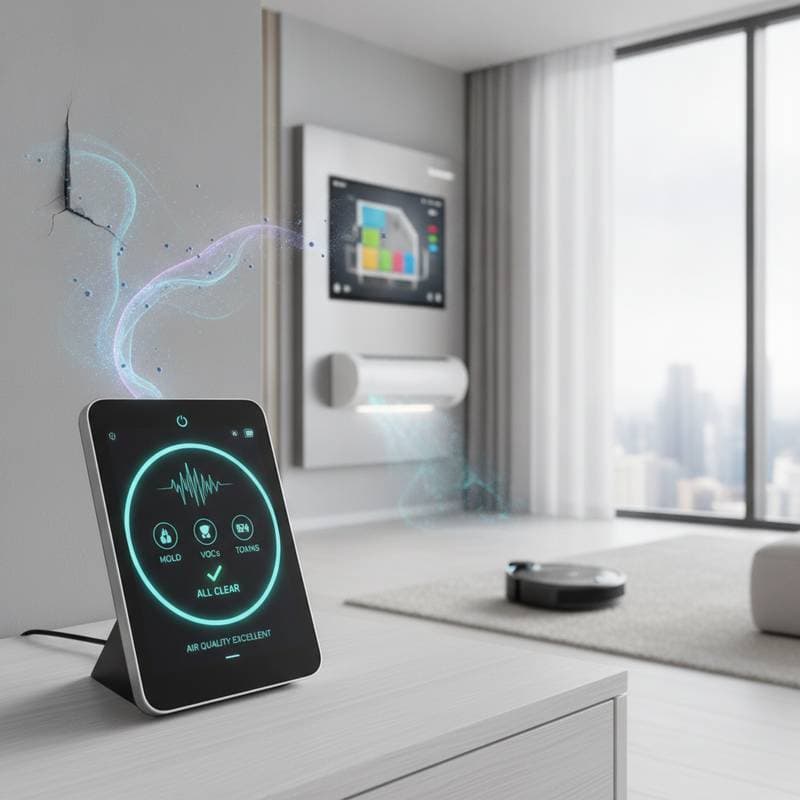
Smart air quality systems now offer a practical way to detect and manage these invisible threats. These devices monitor conditions continuously and connect with other home systems to maintain healthier environments.
The Invisible Problem Lurking Indoors
Indoor air can reach pollution levels up to five times higher than outdoor air when ventilation is limited. Mold growth often follows water leaks or elevated humidity and releases spores that trigger allergies or respiratory irritation before any visible signs appear. Everyday activities such as cooking, cleaning, and using synthetic furniture also release volatile organic compounds that can persist for months.
Without measurement tools, residents may remain unaware of the substances they breathe daily. These pollutants accumulate gradually and affect comfort as well as long term health.
How Smart Air Quality Systems Detect Hidden Threats
Smart air quality systems employ multiple sensors to track particulate matter, humidity, temperature, carbon dioxide, carbon monoxide, and volatile organic compound levels. When readings exceed safe thresholds, the devices send smartphone alerts and can activate connected equipment automatically. Over time the systems recognize household patterns and recommend preventive steps such as increased ventilation during peak humidity periods.
Key Technologies Inside Smart Air Quality Systems
- Laser particle sensors identify microscopic particles including mold spores and dust.
- Electrochemical sensors track gases such as carbon monoxide and formaldehyde.
- Infrared sensors measure carbon dioxide to assess ventilation effectiveness.
- Smart connectivity links the monitor to air purifiers, HVAC systems, and dehumidifiers for automatic responses.
Professional grade sensors detect particles as small as 0.3 microns, which supports early identification of mold activity before it spreads behind walls.
Choosing the Right Smart Air Quality System
Selection depends on home size, existing smart devices, and specific air quality concerns. A compact sensor suits a single room apartment, while a network of units benefits larger or multi level homes.
Three reliable options illustrate the range available.
- The Amazon Smart Air Quality Monitor, priced near 70 dollars, measures humidity, carbon monoxide, and volatile organic compounds while sending alerts through Alexa.
- The Airthings View Plus, priced near 270 dollars, tracks radon, particulate matter, volatile organic compounds, and humidity with app integration for Alexa and Google Home.
- The IQAir AirVisual Pro, priced near 280 dollars, delivers detailed analytics and outdoor comparisons suitable for larger homes or allergy management.
Continuous data logging proves more effective than periodic sampling for catching problems early, especially in frequently unoccupied properties.
Integrating with Your Smart Ecosystem
These monitors connect with existing smart home platforms to enable automated responses. When volatile organic compound levels rise after cleaning, the system can activate a purifier and adjust vents without manual input. Protocols such as Matter or Thread improve compatibility and response speed across devices.
Homes with central HVAC systems can link sensors directly to thermostats so that rising humidity triggers the air conditioner or dehumidifier. This approach maintains comfort and reduces the chance of mold development.
Practical Considerations Before Buying
Budget planning requires awareness that entry level monitors begin near 70 dollars while advanced multi room setups can exceed 400 dollars. Some brands add monthly fees for cloud data storage, so review terms before purchase. Most units install easily yet perform best when placed away from vents and windows.
Regular filter cleaning preserves sensor accuracy. Serious mold concerns still warrant professional inspection because airborne readings alone cannot confirm structural damage. Recalibration every few months using the manufacturer application maintains reliable data.
Protecting Health and Home Value
Consistent monitoring supports early mold detection that can prevent costly remediation. It also extends HVAC filter life and improves energy efficiency through targeted equipment operation. Residents gain the ability to maintain stable indoor conditions without constant oversight.
Begin in one room that shows recurring humidity or odor issues. Install a monitor, review readings for several days, and identify triggers. Additional devices or ventilation upgrades can follow based on observed patterns. This measured approach creates a responsive home environment that supports cleaner air over time.