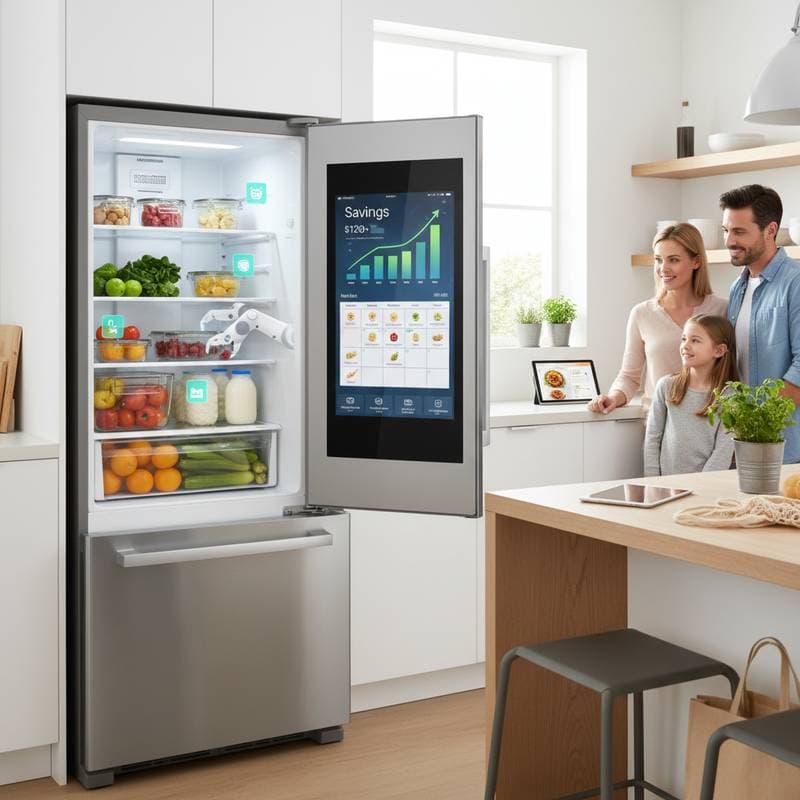
Annual Savings of $1200: How AI Refrigerators Combat Food Waste
Smart homes continue to advance, and one of the most compelling innovations occurs in the kitchen. The refrigerator, previously a basic cooling unit, now serves as an intelligent assistant that assists in saving money, minimizing waste, and streamlining meal planning. Advanced artificial intelligence technology reshapes household grocery management and freshness tracking, with initial users noting annual savings up to $1200 through reduced spoiled food.
Understanding the Impact of Food Waste
Households frequently discard overlooked leftovers or expired produce, leading to frustration. The typical family throws away a significant amount of groceries monthly, often unaware of the budgetary consequences. Food waste extends beyond environmental concerns; it influences finances and meal preparation directly. The primary challenge lies in visibility and timing. Without clear insight into inventory or expiration dates, overbuying occurs or items go unused. Intelligent refrigerators address this issue directly.
Mechanisms of AI-Powered Refrigerators
An AI-equipped refrigerator employs internal cameras, sensors, and machine learning algorithms to oversee contents. It scans items upon placement on shelves, monitors expiration dates, and generates recipe ideas for items approaching spoilage. Certain models integrate with grocery applications to refresh inventory automatically following shopping trips. This approach reduces overlooked items in remote fridge areas and eliminates unnecessary store visits.
Samsung and LG pioneer this domain with interconnected refrigerators that recognize foods and issue alerts for expiring ingredients. These systems analyze user habits over time, forecasting needs such as milk replenishment or produce wilting. Consequently, the kitchen operates proactively, aligning with household routines rather than opposing them.
Financial and Practical Advantages
Achieving $1200 in yearly savings appears substantial, yet it accumulates through minimized spoilage and optimized shopping. Households waste less and purchase precisely what is required, leading to decreased impulse buys and enhanced meal organization.
Convenience enhances daily life significantly. With the refrigerator monitoring inventory, meal preparation accelerates and stress diminishes. Users query the device for dinner options, receiving suggestions that prioritize expiring items. Advanced setups link to ovens, automatically configuring temperatures for chosen recipes. This integration fosters a fluid kitchen environment that merges technology with routine activities.
Integrating Sustainability into Intelligent Kitchens
AI refrigerators promote sustainability beyond monetary gains. Waste reduction decreases household carbon emissions and preserves resources in food production. Many units feature energy-efficient cooling that modulates power based on door openings and internal conditions. Together, these elements yield environmental and individual advantages.
Interest in such technologies grows among consumers. Research indicates kitchen appliances rank highly among sought-after smart home enhancements, particularly those offering convenience and cost reductions. As usage expands, pricing should decrease, broadening accessibility.
Optimizing Your AI Refrigerator Investment
When selecting an AI refrigerator, assess compatibility with existing devices first. Prioritize models that interface with virtual assistants or grocery applications. Configure notifications for nearing expirations and experiment with recipe recommendations to maximize grocery utilization. As the device adapts to preferences, it refines planning and further curtails waste.
The evolving kitchen emphasizes connectivity and awareness. AI refrigerators demonstrate technology's capacity for practicality and environmental responsibility. For those seeking financial efficiency, waste minimization, and elevated cooking, this appliance represents a worthwhile consideration.