Touchless Faucets as the Heart of the Modern Kitchen
Touchless faucets have progressed far beyond simple hands-free operation. These devices now serve as central hubs in smart kitchens, integrating seamlessly with various appliances through advanced gesture and voice controls. This evolution allows users to manage water flow, lighting, ovens, and dishwashers without physical contact, fostering a more hygienic and efficient cooking environment.
The Rise of Integrated Kitchen Technology
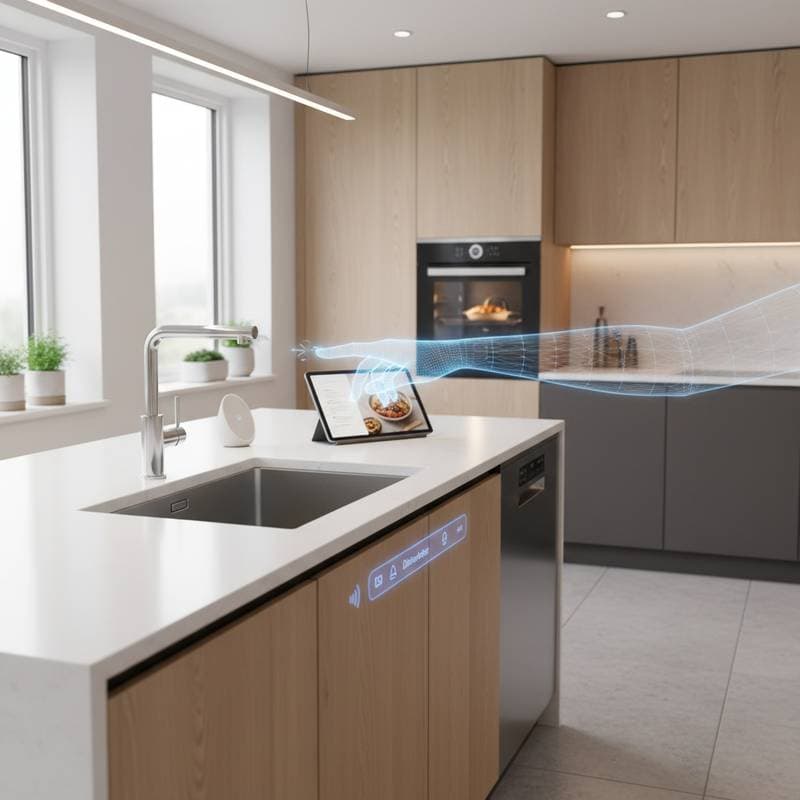
Traditional touchless faucets relied on infrared sensors to detect hand movements near the spout. Recent advancements incorporate artificial intelligence and connectivity protocols such as Zigbee or Wi-Fi, enabling communication with other smart devices. For instance, a subtle wave of the hand can activate the faucet while simultaneously signaling the overhead lights to brighten or the dishwasher to begin its cycle.
This integration stems from the growing demand for connected home systems. Manufacturers design these faucets to act as command centers, reducing the need for multiple remote controls or apps. Users experience a unified interface that simplifies daily tasks, from preparing meals to cleaning up afterward.
Gesture Controls: Precision in Motion
Gesture controls in modern touchless faucets use sophisticated cameras and motion sensors to interpret specific hand signals. A raised palm might start the water flow at a preset temperature, while a circular motion could dispense soap from an integrated dispenser. These features minimize cross-contamination, which proves especially valuable in busy households or commercial kitchens.
Beyond basic activation, gestures can synchronize with other appliances. For example, pointing toward the oven may preheat it to a desired setting, or swiping near the faucet could adjust the range hood's ventilation speed. Such precision ensures that cooking processes flow smoothly, allowing focus on the task at hand rather than device management.
To maximize effectiveness, users should position the faucet in a central location, away from obstructions. Calibration through companion apps fine-tunes sensitivity, adapting to individual preferences and kitchen layouts. This setup transforms routine actions into intuitive interactions.
Voice Commands: Hands-Free Orchestration
Voice control elevates the functionality of touchless faucets by incorporating virtual assistants like Alexa or Google Assistant. Users issue commands such as "start the dishwasher" or "set water to warm," and the faucet relays instructions to connected devices. This layer of control proves invaluable during multitasking, such as chopping vegetables while managing timers.
Integration requires secure pairing between the faucet and home network. Once established, voice commands execute rapidly, often within seconds, enhancing overall kitchen responsiveness. Privacy features, including wake-word customization, ensure that activations occur only on intent.
Benefits for Hygiene and Efficiency
The primary advantage of these systems lies in their promotion of hygiene. By eliminating the need to touch handles or buttons, touchless faucets reduce the spread of bacteria during food preparation. Studies indicate that such technologies can decrease microbial contamination by up to 80 percent in high-use areas.
Efficiency gains manifest in time savings and energy optimization. Automated sequences, like filling a pot while preheating the oven, streamline workflows. Connected systems also monitor usage patterns, suggesting adjustments to conserve water and electricity over time.
Selecting and Installing a Touchless Faucet Hub
When choosing a touchless faucet, consider compatibility with existing appliances. Look for models supporting open standards like Matter for broad interoperability. Deck-mount or wall-mount options accommodate various sink configurations, ensuring a fit that enhances rather than disrupts kitchen aesthetics.
Installation typically involves basic plumbing adjustments, often completable in under an hour with standard tools. Professional assistance may benefit complex setups involving electrical wiring for voice-enabled features. Post-installation testing verifies gesture accuracy and network stability.
- Assess your kitchen's smart device ecosystem.
- Review faucet specifications for sensor range and integration capabilities.
- Budget for additional hubs if needed for full connectivity.
- Test in-store demos to gauge responsiveness.
Embracing a Connected Cooking Future
Touchless faucets redefine kitchen dynamics by centralizing control in a single, intuitive device. This shift not only elevates convenience but also aligns with sustainable practices through smarter resource management. As technology advances, expect even deeper integrations, such as recipe-guided automations that adjust appliances in real time.
Homeowners who adopt these systems report heightened satisfaction with their cooking experiences. The result is a space that anticipates needs, responds effortlessly, and supports healthier habits. Invest in this technology to unlock the full potential of your kitchen today.