When Your Robot Vacuum Becomes a Pet Health Assistant
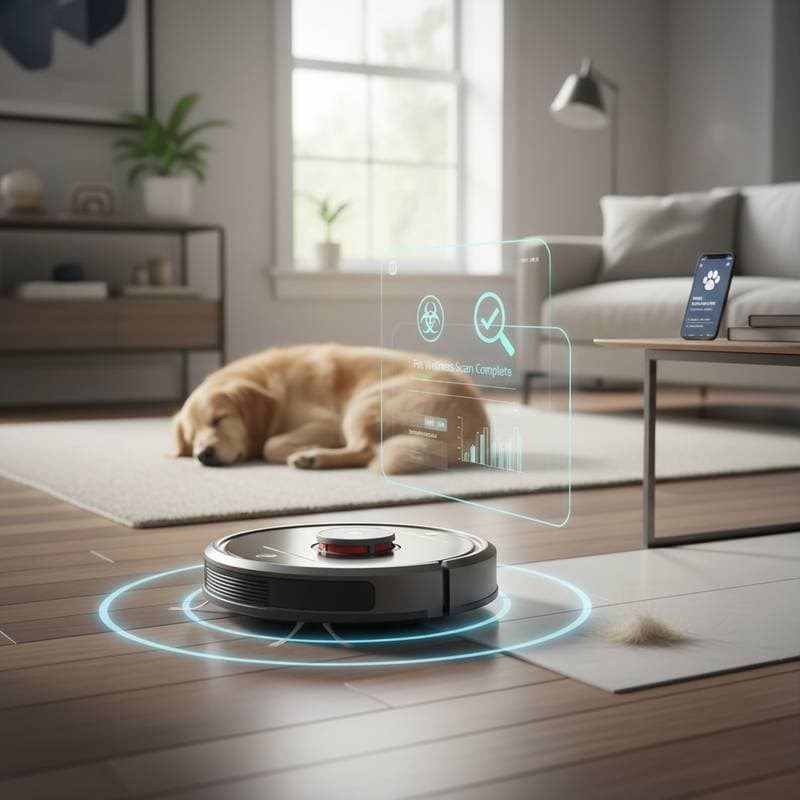
Picture this scenario. You sit with your morning coffee, and your phone notifies you of an alert from the robot vacuum. The message concerns an unusual pattern in your pet's waste, which may indicate a digestive concern. A few years ago, such functionality seemed like science fiction. Today, it represents a standard feature in smart cleaning devices equipped with health monitoring.
Pet owners depend on robot vacuums to manage fur and dander effectively. The latest innovations extend this role by spotting potential health problems early. Whether you live with a dog, cat, or multiple pets, these advanced cleaners now contribute to their overall well-being.
The Hidden Challenge Behind Pet Mess and Health
Pet owners recognize that fur presents only one aspect of household maintenance. Accidents occur, litter spreads, and unusual odors often signal discomfort in pets. These signs may go unnoticed until after a long day or during a hectic weekend, complicating cleanup and allowing symptoms to progress.
Standard robot vacuums treat all debris uniformly, lacking awareness of its nature. This approach risks spreading messes further if the device encounters pet waste. Recent models address these limitations while interpreting the significance of detected items.
Smarter Cleaning Meets Health Monitoring
Contemporary robot vacuums employ AI-driven vision systems, infrared sensors, and chemical detection arrays to distinguish materials on floors. Integrated with a companion app, these devices notify users of anomalies. For instance, a dark spot resembling pet waste prompts the vacuum to halt and send an alert. An abrupt rise in hair across rooms may indicate allergies or stress, triggering a relevant summary.
This integration fits effortlessly into daily routines. Users receive straightforward reports, such as increased shedding over a week or irregular waste in specific areas, without needing to analyze data themselves.
Insider Tip
Certain high-end models incorporate odor detection via volatile organic compound sensors, technology borrowed from air purifiers. These sensors distinguish everyday scents like food spills from those linked to pet waste or illness. Such refinements enhance practical performance significantly.
The Devices Leading the Charge
Options exist across budget levels for those interested in this technology. The following comparison highlights key models.
1. Budget Option: Eufy Clean X8 Pro ($499)
The Eufy Clean X8 Pro excels in pet homes with its twin turbines for strong suction and hair-detangling brushes that minimize upkeep. Although it lacks comprehensive biological sensors, the Eufy app records high-shedding zones and issues alerts for notable fur accumulation. This model suits smaller homes or single-pet households as an economical entry point.
2. Mid-Range Option: Roborock Q Revo MaxV ($899)
Equipped with Reactive AI for obstacle avoidance, the Roborock Q Revo MaxV recognizes pet waste, toys, and bowls to prevent collisions. Image recognition enables it to pause and notify via the app. It monitors mess frequency to reveal shifts in pet behavior, supports Alexa and Google Home, and adjusts suction based on fur levels during mopping.
3. Premium Option: iRobot Roomba Combo j9+ ($1399)
The iRobot Roomba Combo j9+ pioneers Pet Health Alerts through its object recognition, which covers waste, fur mapping, and pet movement trails. The iRobot OS app suggests tailored cleaning based on pet habits and provides insights for early illness detection. A self-emptying base enhances usability.
Compatibility and Upgrade Paths
Verify integration with your smart home setup before purchase. Leading models connect to Alexa, Google Home, and occasionally Apple HomeKit. Pairing with devices like air purifiers or pet cameras yields comprehensive health data.
Future upgrades include modular sensor packs for adding detection features. Begin with basic cleaning and expand to health monitoring as needed.
How Detection Technology Actually Works
Detection operates through multiple layers. Cameras and sensors collect visual and chemical information, processed by onboard machine learning. The system flags irregularities and consults cleaning history via the app to determine alert necessity.
Examples include:
- A surge in fur clumps signaling stress or seasonal changes.
- Repeated waste in unusual spots suggesting urinary concerns.
- Persistent odor shifts indicating dietary or infectious issues.
These observations prompt timely vet consultations without providing diagnoses.
Insider Tip
Select models share anonymized data with veterinary networks to refine algorithms. This optional feature aids research while safeguarding user privacy.
Setting It Up for Accurate Results
Optimal performance demands careful initial configuration. Adhere to these steps for dependable operation.
- Map the space thoroughly with two complete runs to establish precise paths and minimize errors.
- Clean the front camera and side sensors weekly using a microfiber cloth to prevent dust interference.
- Maintain consistent lighting, as most systems depend on it; employ infrared for dark conditions if available.
- Designate pet zones like feeding or litter areas in the app for targeted monitoring.
- Respond to alerts immediately by inspecting sites, which trains the algorithm on your home's norms.
These practices enable the device to clean effectively and compile reliable pet pattern data.
Budget, Timeline, and Practical Considerations
These advanced vacuums command prices from $500 to $1400 based on capabilities. Setup requires under an hour, with app-managed updates. Filters and brushes cost approximately $40 for periodic replacement.
Hygiene remains essential when handling pet waste. Use gloves for bin emptying and rinse with warm water. For self-emptying units, clean the dock's container monthly to avoid odors.
In multi-pet homes, run separate cycles per room for clearer insights. Combine with smart collars for holistic tracking. Test compatibility on older floors, as sensors perform best on varied surfaces per manufacturer specifications.
Safety and Privacy Considerations
Camera and microphone features raise valid privacy questions. Opt for devices with local processing to avoid cloud uploads. Brands like iRobot and Roborock prioritize on-device analysis, keeping home images secure. Disable unnecessary remote access.
For safety, restrict operation away from litter boxes with chemical additives, which may harm sensors. Position charging docks in well-ventilated, humidity-controlled spots.
The Bigger Picture: From Cleaning to Caring
This technology subtly enhances everyday experiences. It eliminates uncertainty around normal shedding or fleeting odors by providing consistent monitoring. Users gain time to bond with pets rather than scrutinize subtle cues.
Beyond automation, it fosters greater awareness. Smart cleaning now serves as a wellness ally, enriching the home environment for both residents and animals.
Making It Happen
Assess your home layout and pet behaviors to choose wisely. Prioritize suction for heavy shedders or precision mapping for accident-prone areas.
Professional services or platforms like HomeTech Marketplace facilitate seamless integration, sensor calibration, and pet-safe setup.
Integrate with air purifiers for odor tracking or thermostats for comfort adjustments tied to pet locations. Over time, these connections reveal valuable patterns, deepening your connection to your home.
Key Takeaways
- Advanced robot vacuums identify pet waste, fur, and odors to signal health concerns.
- Costs span $500 for entry-level to $1400 for full-featured systems.
- Proper setup and lighting ensure precision.
- Prioritize privacy in camera models.
- Smart device syncing amplifies health monitoring.
FAQs
Can robot vacuums really detect pet waste?
Yes, models like the Roborock Q Revo MaxV employ visual recognition to spot and evade waste.
Do these vacuums diagnose illnesses?
No, they highlight patterns; consult a veterinarian for professional assessment.
Is setup complicated?
The app provides guided instructions, with mapping completed in about an hour.
Can I use them on carpet and hardwood?
Yes, detection works across surfaces, though hard floors with lighting yield optimal results.
What about smell detection?
Premium units feature sensors for unusual compounds in waste.
Are these vacuums safe around curious pets?
Yes, built-in sensors halt movement if pets approach closely.
Do I need Wi-Fi for alerts?
Yes, a reliable connection enables app notifications.
Will this work for multiple pets?
Yes, app zones allow room-specific tracking.
Smart cleaning extends beyond pristine floors to support pet care. With appropriate configuration, your robot vacuum aids in maintaining the health and happiness of your animal companions.