Smart Mirrors Track Your Skin Changes Daily
Smart mirrors are revolutionizing skincare by using AI and high-resolution imaging to track subtle skin changes, helping detect potential cancer early. From affordable to premium models, these devices combine convenience, privacy, and clinical-level insights, turning everyday routines into proactive health checks that could make early detection effortless and life-saving.
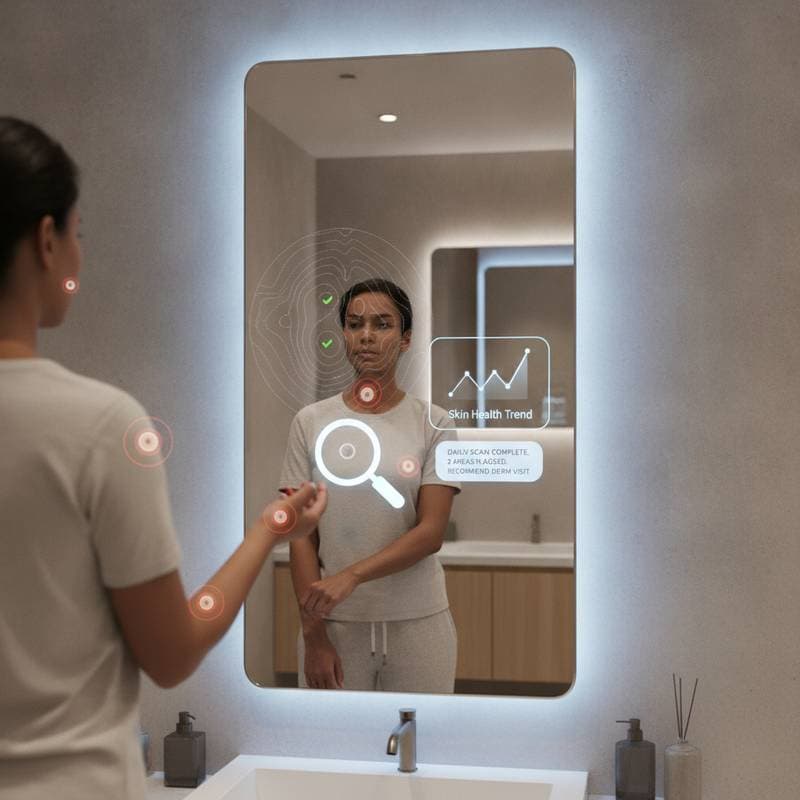
Imagine stepping up to your bathroom mirror in the morning, expecting the usual reflection, but instead, it greets you with a gentle reminder: “You might want to check that new mole on your shoulder.” This scenario represents the reality smart mirrors bring to homes today. These devices evolve beyond vanity accessories into health monitors that assist in detecting skin cancer earlier than traditional methods allow.
Understanding the Difficulty in Detecting Skin Changes
Most individuals notice new freckles or moles only when they become prominent. Daily routines often lead to overlooking subtle changes, and without vigilance, even minor irregularities may remain undetected for months. Dermatologists emphasize that early detection stands as the most critical factor in successful treatment outcomes. However, maintaining regular professional screenings proves challenging for many people. Smart mirrors address this gap effectively.
Transforming Skin Health Monitoring with Smart Mirrors
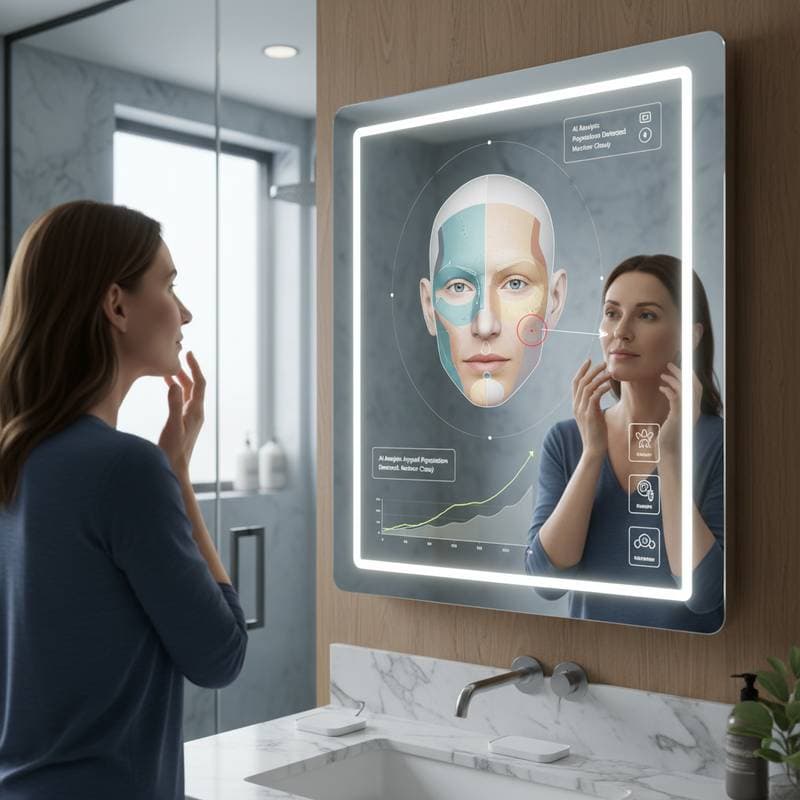
Smart mirrors incorporate high-resolution cameras and AI-driven image analysis to monitor skin over time. These devices capture daily images, compare them to prior records, and flag any anomalies that merit further review. While the technology avoids providing diagnoses, it prompts users to seek dermatologist consultations promptly when issues arise.
The primary advantage rests in its seamless integration into daily life. Users avoid the need for scheduled appointments or manual photo documentation. The mirror operates discreetly in the background, revealing changes that might otherwise escape notice.
Exploring the Underlying Technology
Contemporary smart mirrors leverage computer vision and machine learning algorithms to create detailed skin maps. Entry-level models, such as the HiMirror Slide priced at approximately $120, offer fundamental analysis for dryness, pore size, and visible spots. Mid-range options like the CareOS Themis Smart Mirror, costing around $600, incorporate multispectral imaging to identify subtle pigmentation variations invisible under standard lighting.
Premium selections, including the Capstone Connected Smart Mirror at about $1000, extend functionality with integrated health tracking, voice activation, and cloud-based progress monitoring. All these mirrors connect to companion mobile applications, enabling secure image storage and straightforward sharing with healthcare providers during virtual appointments.
Key Insight
Dermatologists frequently employ polarizing filters and uniform lighting for precise skin examinations. Higher-end smart mirrors replicate these conditions through ring lights and color-calibrated sensors, guaranteeing consistent results regardless of ambient light variations throughout the day.
Installation and Daily Use Guidelines
Establishing a smart mirror requires minimal effort and yields significant benefits.
-
Select an optimal position: Ensure the area features bright, uniform illumination. Overhead bathroom lights can produce shadows, so incorporate side-mounted lights or integrated LEDs for superior results.
-
Mount the device securely: Opt for wall installation to maintain a fixed camera perspective. Adhere to the manufacturer's instructions, and engage a qualified electrician if wiring modifications prove necessary.
-
Establish a user profile: Create an individual account to tailor tracking to specific skin tones and conditions. This personalization enhances the accuracy of change detection.
-
Incorporate routine scans: Perform scans weekly or monthly to build a robust baseline. Regular intervals allow the system to pinpoint gradual developments, such as emerging spots.
Many smart mirrors integrate with platforms like Alexa or Google Home, facilitating voice-activated data logging and reminder settings.
Key Factors for Effective Implementation
Entry-level smart mirrors begin at around $100, while advanced versions surpass $1000 based on dimensions, display resolution, and supplementary features. Mid-range units often provide the ideal equilibrium of cost and capability for most users.
Privacy remains paramount; prioritize devices that support local data retention or encrypted cloud services. Verify compliance with health information protection regulations prior to transmitting images to medical experts.
In multi-user households, distinct profiles safeguard individual data confidentiality. When planning smart home integrations, confirm compatibility, as connectivity varies across devices and ecosystems.
Advanced Feature Highlight
Certain sophisticated models assess environmental influences, including humidity levels and UV exposure. These capabilities enable users to refine skincare regimens or receive timely sunscreen application alerts before outdoor activities.
Embracing Proactive Skin Monitoring
Smart mirrors herald a new era in personal health technology, merging aesthetic routines with clinical vigilance. They equip individuals with clinic-equivalent tools accessible from home, fostering consistent awareness without added effort.
Early identification of skin issues proves instrumental in preserving health, and these devices simplify the process of remaining attentive. Through precise imaging, ongoing surveillance, and user-friendly data access, a standard bathroom transforms into an efficient health monitoring hub.
Consider evaluating models aligned with your financial parameters and technical preferences. For intricate setups, collaborate with certified smart home specialists to guarantee secure and optimal installation.
Frequently Asked Questions
What distinguishes smart mirrors from standard dermatology apps?
Smart mirrors provide hands-free, automated imaging with fixed positioning for consistency, unlike apps that rely on user-taken photos, which may vary in quality and angle.
How accurate are smart mirrors in detecting skin changes?
These devices excel at identifying visible alterations but serve as screening tools, not substitutes for professional diagnosis. Consult a dermatologist for any flagged concerns.
Can smart mirrors track skin for multiple family members?
Yes, most models support separate profiles, ensuring personalized tracking and data privacy for each user.
Do smart mirrors require internet connectivity?
Basic functions operate offline, but cloud syncing and app integration necessitate a stable connection for full feature access.