Getting Started with a Smart Security Vacuum
If you plan to explore this technology, begin with straightforward steps. Upgrade an existing robot vacuum or purchase a new hybrid model designed for both cleaning and surveillance. Follow this structured roadmap to integrate the device effectively.
-
Evaluate Your Current Setup
Assess if your present vacuum allows camera additions or cloud connectivity. Brands such as Ecovacs often provide firmware updates that introduce surveillance capabilities without requiring full hardware replacement. Review the manufacturer's specifications and user manual for compatibility details. -
Decide on Your Security Goals
Determine whether basic motion detection suffices or if high-definition video streaming proves essential. Consider factors like resolution needs for clear footage and integration with existing alerts. This clarity guides model selection and feature prioritization. -
Set a Realistic Budget
Allocate funds between $700 and $1,600 for a hybrid cleaner that delivers reliable surveillance. Factor in ongoing costs such as subscriptions for video storage. Compare options from multiple brands to balance features and price. -
Plan for Integration
Confirm seamless connection with your smart home hub, whether Alexa, Google Home, or Apple HomeKit. Test app compatibility during research and review user forums for real-world integration experiences. This preparation prevents setup frustrations. -
Test and Adjust
After installation, conduct several test patrols while present at home. Fine-tune navigation routes, optimize room lighting for better camera visibility, and calibrate alert sensitivity. Monitor performance over a week to ensure consistent reliability.
The Cost and Convenience Equation
Incorporating security features enhances safety while boosting overall efficiency. Homeowners avoid the expense of dedicated surveillance equipment by combining cleaning and monitoring in one device. For instance, installing two or three stationary cameras typically requires $400 in hardware costs, excluding professional setup fees.
A hybrid robot vacuum involves a higher initial investment but provides daily cleaning alongside continuous monitoring. Maintenance remains straightforward: replace filters and brushes every few months, similar to standard vacuums. Surveillance demands optional cloud storage plans, ranging from $5 to $10 monthly based on storage needs and brand policies.
This approach appeals to those who prioritize simplicity. The result includes a tidier living space, reduced device clutter, and greater control over home security. Over time, the consolidated system proves more economical and less intrusive.
Insider Tip: Map Data as a Hidden Asset
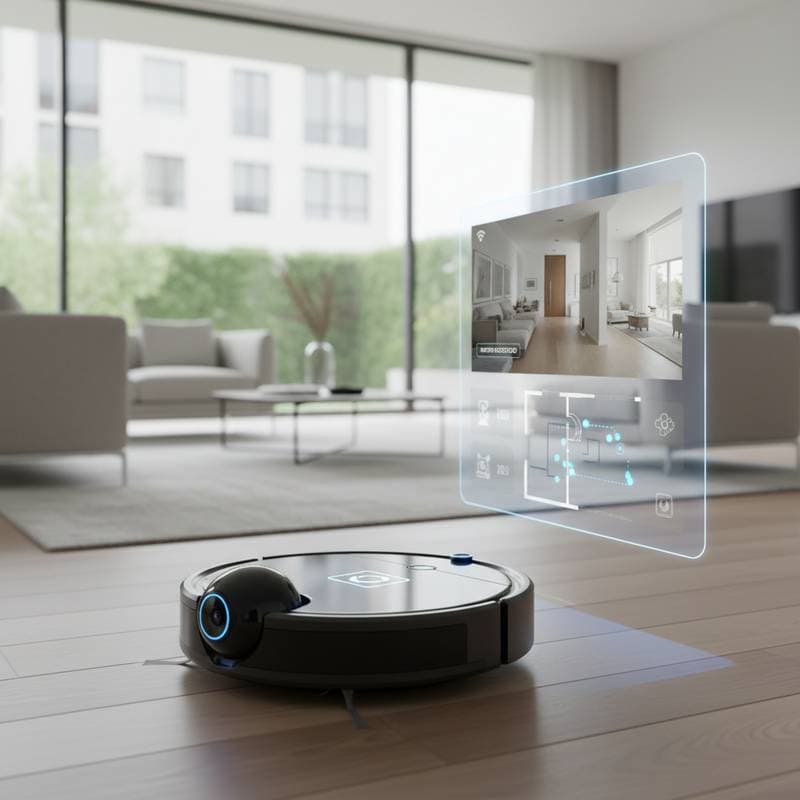
The true value in a security-focused robot vacuum lies not solely in its camera but in the detailed maps it generates. These digital blueprints capture room dimensions, furniture positions, and movement patterns throughout the home. Advanced models allow designation of no-go zones, which serve dual purposes as restricted cleaning areas and defined patrol perimeters.
Enthusiasts leverage these maps further by exporting data to coordinate with other smart systems. For example, integrate mapping with automated lighting to illuminate detected activity or link to alarms for immediate responses. This underutilized capability transforms basic navigation into a comprehensive security network, enhancing both intelligence and protection.
To maximize benefits, regularly update maps after home changes like rearranging furniture. Experiment with custom zones to focus patrols on high-traffic or vulnerable areas. Such strategic use elevates the vacuum from a cleaner to a central hub in smart home defense.
Future Possibilities on the Horizon
Manufacturers continue to advance these hybrid systems, promising deeper connections with household devices. Envision a robot vacuum that identifies unusual motion and activates smart lights or sounds an alarm automatically. Alternatively, consider it relaying path information to a thermostat, which then optimizes air circulation in occupied spaces only.
Several brands already prototype these interactions in controlled environments. Battery technology progresses with enhanced lithium cells, enabling extended operation across multiple floors without frequent recharging. Edge computing integration allows on-device processing, reducing dependence on cloud services for quicker responses.
These developments signal a shift toward fully autonomous homes. As standards evolve, expect improved privacy controls and energy efficiency. Homeowners will benefit from devices that anticipate needs, blending security and convenience seamlessly.
Making It Happen
Integrating a security-ready robot vacuum requires minimal complexity. Begin with one unit to familiarize yourself with its operations, then scale to additional features or devices as needed. For assistance, engage verified professionals through smart home platforms; they handle Wi-Fi optimization, privacy configurations, and routine automations.
This technology fulfills aspirations for self-maintaining and vigilant residences. Beyond spotless floors, it delivers reliable oversight during absences. The subtle operation of your vacuum now symbolizes comprehensive home protection, fostering confidence in daily life.
FAQ
1. Can any robot vacuum act as a security device?
Not every model qualifies. Select units equipped with integrated cameras and network connectivity to enable video monitoring and alerts.
2. Are security vacuums safe to use with pets?
Yes, designs incorporate collision avoidance and motion recognition to navigate around animals. Silence audio notifications if pets show sensitivity to noises.
3. How secure is the video feed?
Opt for models featuring encrypted transmission and multi-factor authentication. These measures safeguard against external access and data breaches.
4. Can I use one robot for multiple floors?
Yes, though manual relocation of the charging base may prove necessary. Acquire additional docks for effortless multi-level operation.
5. What happens if the Wi-Fi drops?
The device persists with cleaning tasks and retains footage on local storage until connectivity resumes. Alerts resume once the network stabilizes.
6. Does adding a camera affect cleaning performance?
No, contemporary processors manage dual functions without compromising suction power or pathfinding precision.
7. Will insurance companies recognize robot vacuums as security devices?
Certain insurers acknowledge them, particularly when paired with confirmed alert systems or professional monitoring services.
8. Can I control the robot remotely while traveling?
Yes, utilize a secure mobile application for worldwide access, provided internet availability and proper device linkage.