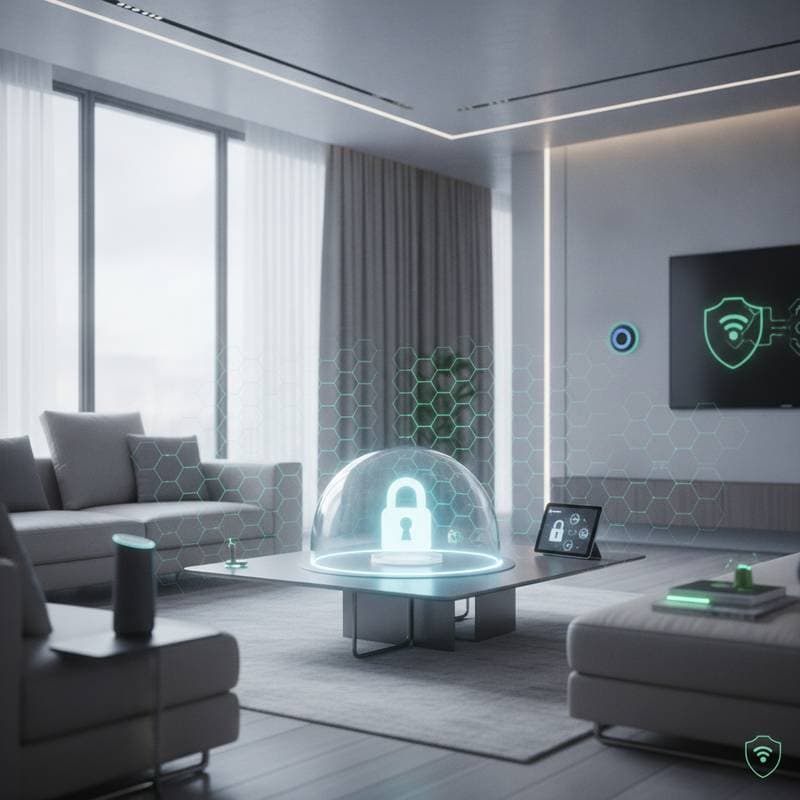
Future Smart Homes Block Neighbor WiFi Snooping
Smart homes are evolving from convenience-driven ecosystems into secure digital fortresses. As devices multiply and data flows through every corner of the home, privacy has become the next frontier of innovation. The latest wave of smart home technology is reimagining how WiFi networks operate.
Future systems promise to stop neighbor snooping, unwanted connections, and data leaks before they start. The connected home of the near future will not just be intelligent. It will be secure by design.
Intelligent Network Isolation
Traditional routers treat every nearby signal the same. They broadcast across open airwaves that anyone with the right tools can scan. Future smart home hubs will change that through intelligent network isolation.
This system creates invisible digital boundaries around a property. Networks use adaptive encryption and smart frequency hopping to hide device signatures. The approach prevents outsiders from even detecting that a network exists.
Instead of relying on a single password or static channel, the system continuously shifts identifiers. Snooping becomes nearly impossible. Most WiFi snooping today happens passively. A curious neighbor or hacker captures network packets to see what devices are connected. With network isolation, those packets become unreadable noise.
Device Identity Verification
One of the weakest points in current smart homes is the device connection process. Many gadgets still rely on QR codes or unsecured broadcast modes during setup. Future smart homes will use device identity verification.
This handshake protocol confirms every device identity before it joins the network. Each smart bulb, speaker, or thermostat will come with a built-in authentication chip. The chip validates against a home central hub. If the signature does not match, the connection fails automatically.
Verification ensures only trusted devices can communicate within the network. Homeowners will not need to worry about whether their camera feed or voice assistant could be intercepted.
Mesh Networks with Privacy Zones
Mesh networks have already made WiFi coverage seamless across large homes. The next generation adds privacy zoning. This feature creates micro-networks for specific rooms or functions.
Privacy zones isolate sensitive devices like security cameras or locks from entertainment systems. The approach works like a digital firewall. It separates devices by purpose. If a smart TV is compromised, it cannot access security system data.
Homeowners gain control. They decide which devices share data and which remain fully private.
Predictive Threat Detection
Future smart homes will analyze data patterns to spot suspicious behavior before a breach occurs. Predictive threat detection uses learning algorithms to identify unusual traffic. Examples include a device suddenly sending data at odd times or a neighbor network trying to probe a signal.
These systems notify homeowners instantly. They can even block the activity automatically. An alert might report that the network just rejected an unknown device nearby trying to connect. Predictive systems address privacy concerns directly.
Cloud-Free Operation
Another major shift is the move toward cloud-free smart homes. Many devices still rely on cloud servers for processing commands or storing data. Future systems will process more data locally on encrypted hubs. Personal information stays inside the home.
This approach improves both speed and privacy. Voice assistants, cameras, and sensors respond faster. Private information like footage or voice recordings stays off the internet entirely.
Physical Layer Security
WiFi protection often focuses on software. Yet the physical layer is equally vulnerable. Physical layer security introduces hardware-based encryption at the signal level. It scrambles radio waves in ways that only intended receivers can decode.
This makes it harder for anyone nearby to intercept or analyze network traffic. The technology gives every data packet its own private tunnel across the airwaves. For households in dense apartment buildings, this becomes a game changer. Each home effectively becomes a closed digital island.
Unified Privacy Dashboards
As security features grow more complex, homeowners need a simple way to manage them. Unified privacy dashboards consolidate all network privacy settings into one control panel.
Instead of switching between different apps for routers, cameras, and sensors, users gain a single view. The view shows which devices are connected, what data they share, and who has access. The dashboard can recommend settings or automatically adjust them based on usage.
Preparing Homes for These Protections
Homeowners can start by evaluating current router capabilities and planning upgrades that support local processing. They should prioritize devices with built-in authentication features. Regular network audits help maintain isolation and zoning as new gadgets join the household.