When Robots Clean Better Than Humans
Traditional vacuuming depends on motivation, energy, and time. People often skip corners or miss areas under furniture. This inconsistency allows allergens, fine dust, and pet dander to accumulate over time.
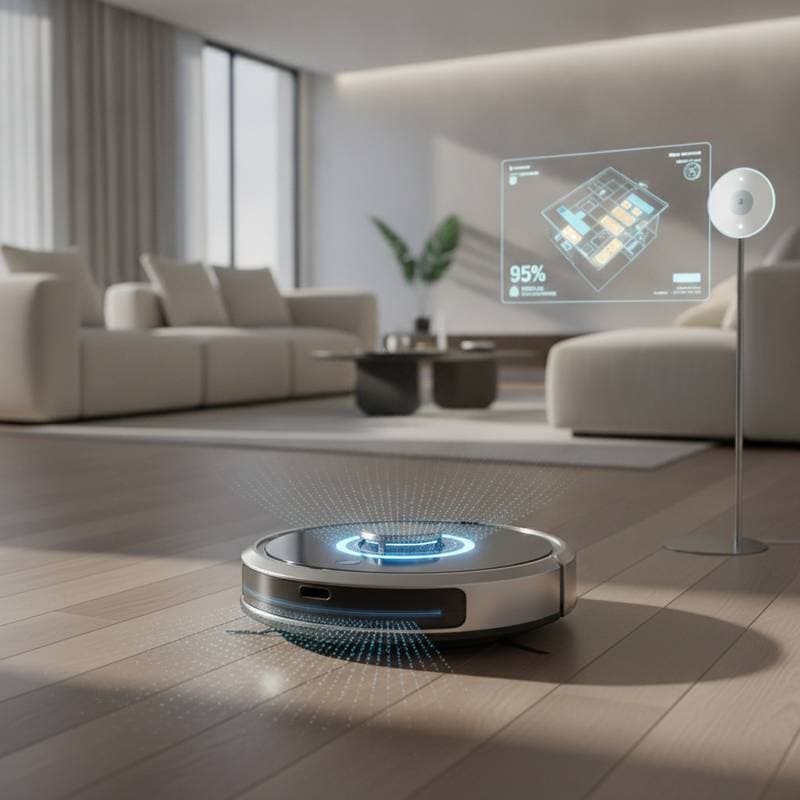
Robot vacuums address these gaps through repetition and precision. They use sensors and mapping to cover floors systematically. The devices operate daily without requiring user effort, which maintains lower dust levels than occasional manual sessions.
How Sensors Improve Coverage
Modern models employ LiDAR mapping and AI obstacle detection. These tools divide rooms into zones and distinguish between rugs and hard floors. Suction power adjusts automatically based on surface type.
Independent tests show top models capture 95 percent of debris on hard floors and nearly 90 percent on low pile carpets. Daily runs prevent buildup even when individual passes seem less powerful than a full upright vacuum.
Performance Data Comparison
- Debris pickup reaches 75 to 80 percent on budget models and exceeds 95 percent on premium units with hard floors.
- Coverage consistency hits 98 percent with mapping systems compared to 85 percent for typical human patterns.
- HEPA filters in robots trap 99 percent of fine particles and reduce airborne allergens more effectively than many bagless uprights.
- Energy consumption stays below 100 watts per hour versus 1000 watts for standard vacuums.
Structured navigation patterns outperform raw suction power. Models that follow grid routes deliver better results than random movement. Look for LiDAR or similar mapping features when selecting a unit.
Model Options by Budget
The Eufy RoboVac 11S provides reliable edge cleaning for apartments at approximately 200 dollars. It uses basic sensors and works well on hard floors.
The Roborock Q5+ adds LiDAR mapping and a self emptying dock for around 480 dollars. It handles both carpet and hard surfaces effectively.
The iRobot Roomba Combo j9+ offers simultaneous vacuuming and mopping plus object recognition for about 1400 dollars. It adjusts routes according to usage patterns and lifts its mop on carpets.
All three models connect with major smart home platforms. Multi device support allows future expansion to mops or air purifiers.
Maintenance and Ownership Factors
Brushes and filters require weekly attention that takes roughly 15 minutes. Self emptying bases reduce this to monthly intervals. Total costs over five years remain competitive with repeated upright replacements when filters, bags, and electricity are included.
Check for UL or ETL certification on any purchase. Homes with stairs need verified cliff sensors. Pet owners should select tangle free rollers.
Adaptive Learning Benefits
Certain robots record dirt concentration data and target high traffic zones automatically. Living areas receive extra passes while guest rooms get standard attention. This data driven approach creates consistent cleanliness that manual habits rarely match.
Getting Started
Begin with a model that includes self emptying and reliable mapping. Run the device daily for one week and inspect the bin to observe collected debris. Upgrades to mopping or scheduling features can follow as needs evolve.
Robot vacuums support healthier indoor environments through frequent, precise cleaning. The approach reduces allergens while freeing time for other tasks.