Affordable Care Robots for Elderly Home Monitoring
Smart homes now extend beyond voice assistants and lighting control. A new generation of devices brings safety, comfort, and companionship directly into homes where older adults wish to remain. Affordable care robots blend sensors, mobility, and gentle interaction to support aging in place.
The Growing Need for Home-Based Care
Many older adults prefer to stay in their own homes instead of moving to assisted living. Families often cannot provide constant monitoring or instant help during emergencies. Traditional home care services remain costly, and staffing shortages limit consistent support. Basic smart home devices supply reminders and alerts yet still depend on manual triggers or wearable devices.
Care robots address these gaps by combining movement, communication, and data analysis. They monitor health patterns, detect changes, and offer social interaction. These tools now serve as practical options for households seeking reliable daily assistance.
Companion Robots with Empathy
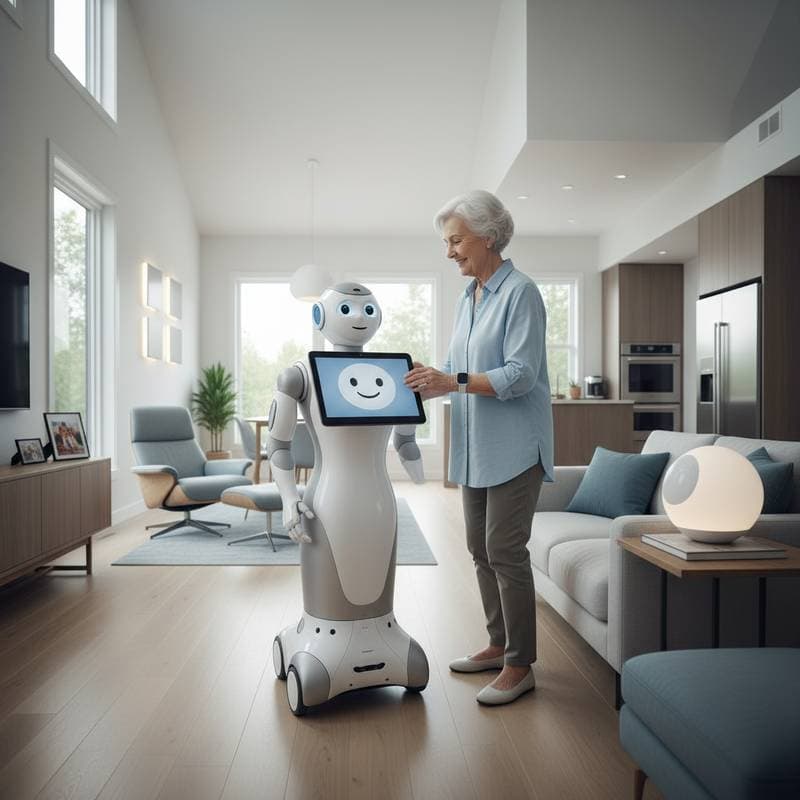
Emotionally responsive companion robots represent one of the clearest advances. These compact, mobile units hold conversations, remind users to take medication, and notice shifts in tone or behavior. Cameras and sensors allow them to read facial cues and adjust responses in real time.
Loneliness affects many older adults and directly influences both mental and physical health. Companion robots help reduce isolation through daily interaction and gentle prompts that encourage activity. Devices such as ElliQ or Cutii demonstrate friendly presence and simple controls. They initiate chats, suggest activities, and send mood or engagement summaries to family members.
Mobility and Fall Detection Robots
Falls continue to pose the greatest risk for independent living. Robots fitted with advanced motion sensors track movement patterns and identify unusual activity. Some models follow the user through rooms so assistance stays nearby at all times.
Immediate fall detection can determine whether recovery stays quick or injury becomes serious. These robots also lower anxiety for both seniors and families. Models such as the Misa CareBot navigate narrow spaces, monitor motion, and automatically request help when a person does not respond to an alert.
Health Monitoring Through Subtle Sensors
Care robots connect with blood pressure cuffs, glucose monitors, and sleep sensors. They record data trends and notify caregivers about potential issues before problems grow. The same systems manage daily routines including hydration, nutrition, and medication schedules.
Early notice of small health changes helps prevent larger complications. Automation of reminders and passive data collection reduces daily workload for users and families alike. Certain models link voice interaction with remote health dashboards that caregivers can review from any location.
Affordable Design and Accessibility
Prices have dropped as modular designs, open-source software, and healthcare partnerships enter the market. Subscription models now require only a modest monthly fee that covers monitoring and updates. This approach mirrors services already familiar from home security providers.
Lower costs allow more households to adopt the technology without financial strain. Community programs and insurance providers can also support wider use among seniors living alone.
Integration with Smart Home Ecosystems
Care robots perform best when linked to existing lighting, climate, and security systems. A detected fall can trigger lights, unlock doors for responders, and alert family members automatically. Cross-platform compatibility with standards from major smart home brands simplifies setup and extends usefulness over time.
Choosing a Care Robot for Daily Needs
Identify the most pressing requirements first, such as medication management or mobility support. Then select a robot that connects smoothly with current smart home devices. As these systems continue to improve, homes will increasingly anticipate well-being rather than simply respond to commands.