Smart Refrigerators Cut Food Waste by Half Using AI
Nearly every household has experienced the frustration of discovering spoiled produce buried in the back of the fridge. Food waste remains one of the most persistent challenges in modern kitchens. It affects both the environment and household budgets. Smart refrigerators powered by artificial intelligence now emerge as a practical solution that promises to cut food waste by half.
Rethinking the Modern Refrigerator
The refrigerator has long served as a silent workhorse that preserves food and prevents spoilage. Its core function has remained mostly unchanged for decades. The rise of smart technology has reimagined this appliance into an intelligent hub. The hub manages inventory, tracks expiration dates, and suggests recipes based on current contents.
Sensors, cameras, and AI algorithms monitor the contents of the fridge in real time. The system tells users exactly what items remain, when each expires, and how to use items before spoilage occurs.
How AI Powers Waste Reduction
Machine learning forms the core of this innovation. Smart refrigerators recognize individual items through built-in cameras and barcode scanning. The system logs an estimated freshness window for each item and tracks access frequency. Over time the fridge learns household consumption patterns and predicts which items will likely be eaten soon.
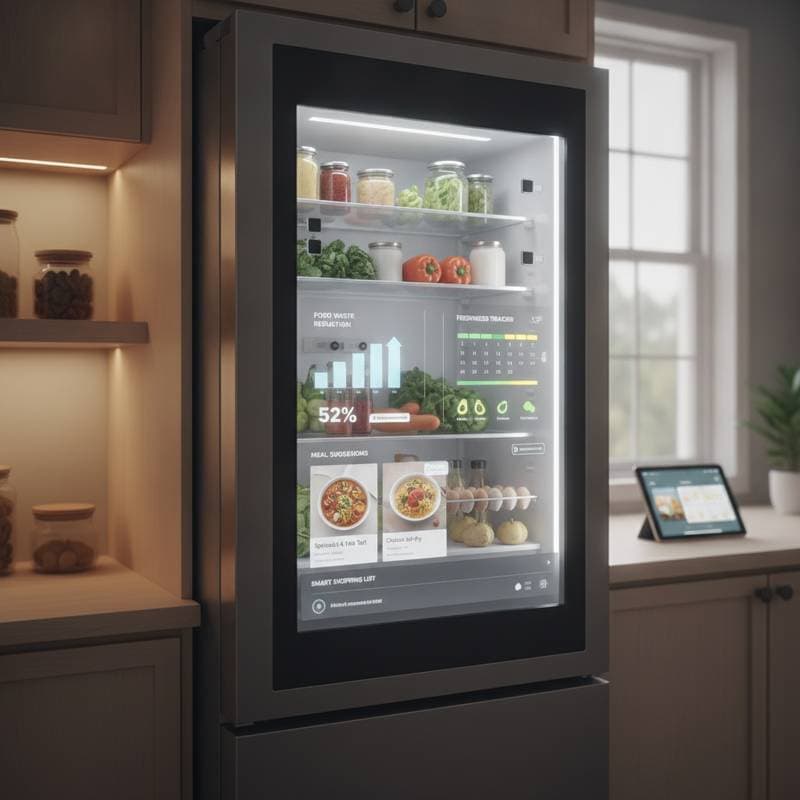
AI also supports better meal planning. The fridge analyzes available items that near expiration and recommends recipes that use those ingredients first. This approach prevents forgotten produce from becoming waste while it simplifies daily cooking decisions.
Real-World Example: Smarter Shopping and Cooking
Several leading appliance brands have introduced refrigerators that integrate with grocery apps and voice assistants. Models that sync with digital shopping lists update automatically when milk or eggs run low. Others connect to online grocery services so users can reorder essentials without opening an app.
A user preparing dinner may hear the fridge suggest a pasta recipe that uses tomatoes and spinach nearing spoilage. The system can send a phone notification that reminds the user to consume those ingredients before the week ends. This guidance turns a simple appliance into a proactive kitchen assistant.
Measurable Impact on Waste and Savings
Research into smart kitchen technology shows steady reductions in household food waste after adoption. Studies indicate that AI-driven fridges can reduce waste by up to half compared with standard models. Families also spend less on unnecessary duplicate purchases because real-time inventory tracking prevents overbuying.
This approach supports environmental goals as well. Food waste contributes heavily to greenhouse gas emissions in landfills. Cutting waste therefore lowers a household carbon footprint in a meaningful way.
Beyond Expiration Tracking: Predictive Freshness
Traditional expiration dates often represent conservative estimates. Smart refrigerators now use sensors that detect changes in humidity, temperature, and gas emissions from ripening produce. These data points allow AI systems to predict freshness more accurately than printed labels.
If the fridge detects that apples are ripening faster than expected, it alerts the user early. The system may also adjust internal temperature or humidity to extend freshness automatically. This predictive capability reduces waste and ensures food reaches the table at peak quality.
Integration with Broader Smart Ecosystems
The next evolution involves seamless communication between appliances. A connected fridge can share data with an oven to suggest preheat settings for a planned dinner. It can coordinate with a smart speaker to read recipes aloud during cooking. It can even sync with a smartwatch to align meal recommendations with fitness goals.
This integration creates a home ecosystem that feels intuitive. Homeowners enjoy a unified experience that saves time and reduces stress.
Overcoming Barriers to Adoption
Smart refrigerators cost more than traditional models, and some users question whether convenience justifies the price. Privacy remains another concern because in-fridge cameras and data analytics raise questions about information storage and use.
Manufacturers respond with transparent data policies and local processing to minimize privacy risks. As adoption grows and production scales, prices are expected to become more accessible. Long-term financial and environmental benefits already convince many early adopters that the investment is worthwhile.
Designing for Everyday Life
These refrigerators appeal because they fit naturally into daily routines. Busy families use the fridge as a central hub where everyone can view available items, plan meals, and avoid waste. Individuals who live alone gain help managing portions and tracking consumption.
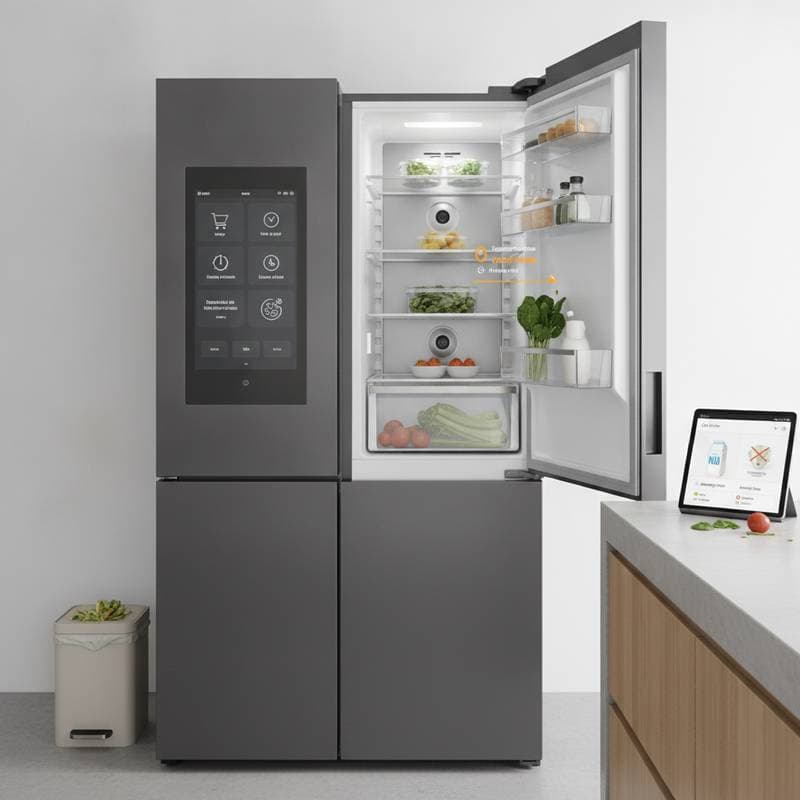
Touchscreens now display energy usage, food freshness indicators, and recipe suggestions in clean formats. Voice commands allow users to ask what they can cook without touching a button. This blend of functionality and simplicity matches demand for seamless living.
The Future of AI in the Kitchen
Smart refrigerators represent only the beginning. As machine learning models advance, kitchens will evolve into adaptive environments. Future systems may analyze dietary preferences and suggest balanced meal plans automatically. They could coordinate with local farms or grocery services to source fresh ingredients exactly when needed.
This shift reflects movement toward personalized living spaces that respond to habits and values. The result is a kitchen that feels less like a machine and more like a partner in everyday wellness.
Steps to Reduce Household Food Waste
Consumers who want to reduce food waste can adopt a smart refrigerator as one direct step. Begin with a model that includes inventory tracking and freshness alerts. Connect the unit to a preferred grocery or recipe app to streamline shopping and cooking. Use the data it provides to adjust buying habits and portion sizes.
Manufacturers continue to refine these systems to improve intuition and cost effectiveness. The combination of AI and consumer feedback creates a cycle of continuous improvement. Each generation of smart fridges becomes more adaptive and more aligned with real household needs.
The promise of cutting food waste by half represents a tangible improvement in resource management, cost savings, and sustainable living. The smart refrigerator quickly becomes a symbol of this change that merges technology with everyday practicality.