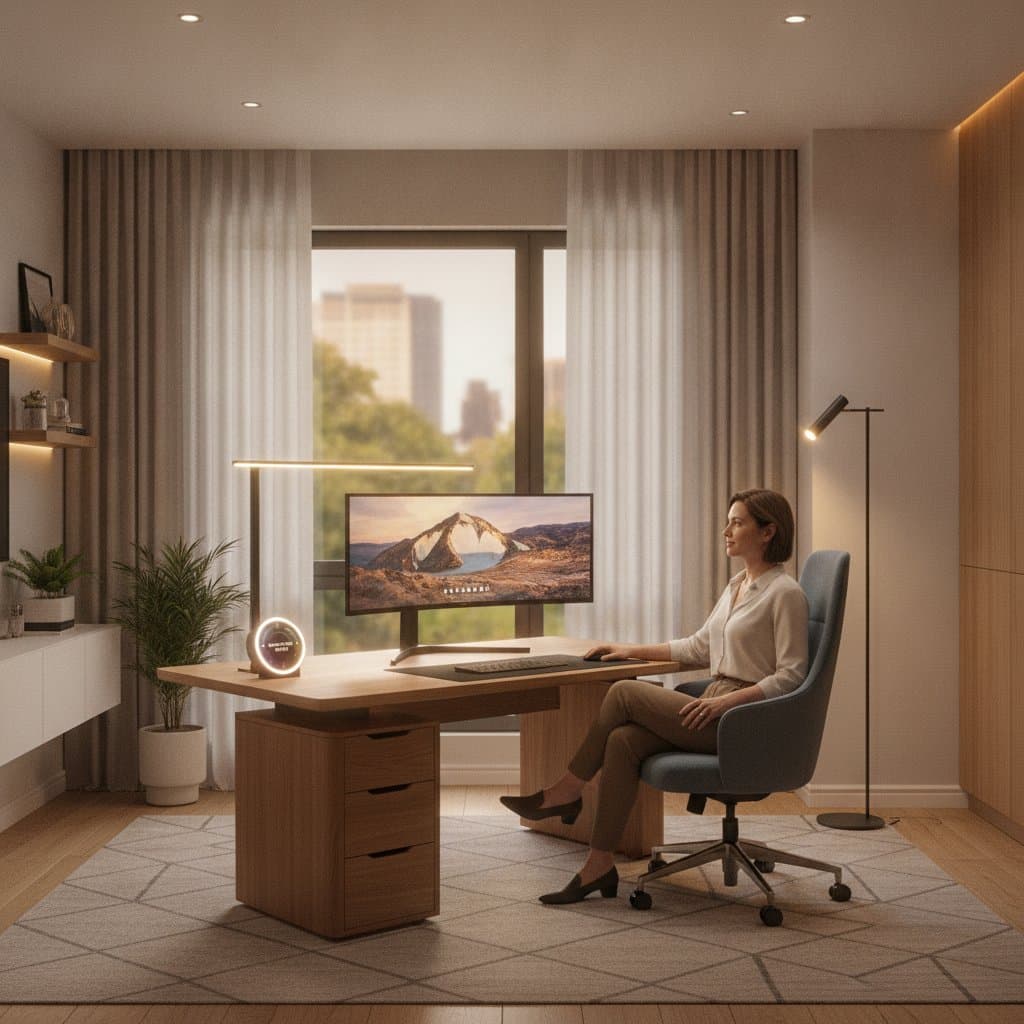
Cut Eye Strain 70% with Adaptive Home Office Lighting
The modern home office serves as a hub for creativity, meetings, and digital connection. Screens dominate daily routines, making eye strain a major wellness challenge for remote workers. Research from ergonomic and vision studies links poor lighting to increased visual fatigue, reduced focus, and mood changes. Adaptive lighting addresses these issues by matching light tone, intensity, and direction to natural body rhythms and environmental conditions.
These systems create a balanced workspace that maintains alertness during work hours and supports relaxation as the day ends.
Why Lighting Matters More Than You Think
Traditional lighting remains fixed throughout the day. It ignores how eyes and brains react differently to brightness and color over time. When surrounding light fails to change, the circadian rhythm falls out of sync. This mismatch often leads to headaches, tired eyes, and disrupted sleep.
Workers using dynamic, tunable lighting report up to 70 percent less eye strain and fatigue than those relying on standard overhead bulbs. Adaptive systems mirror natural daylight by shifting from cool, energizing tones in the morning to warmer, calming hues in the evening. Eyes stay comfortable while the body receives clear signals for alertness and wind-down periods.
The Science of Circadian Lighting
Circadian lighting recognizes that light influences hormones and alertness beyond basic vision. Blue-enriched light in the morning suppresses melatonin and supports focus. Softer amber tones later in the day allow melatonin levels to rise and prepare the body for rest.
Smart systems use sensors and algorithms to monitor time of day, room brightness, and activity levels. They adjust color temperature and brightness without manual input. Integration with platforms such as Philips Hue, Nanoleaf, and LIFX enables automatic scenes that respond to daily patterns.
Real-World Benefits for Remote Workers
Adaptive lighting influences performance, health, and energy consumption in measurable ways.
- Reduced eye fatigue occurs when light adapts to surroundings, so pupils avoid constant adjustment.
- Improved focus follows from cooler morning light that promotes concentration and warmer evening tones that limit overexposure.
- Better sleep patterns result from reduced evening blue light that otherwise delays rest.
- Lower energy costs come from sensors that dim or turn off lights based on occupancy and daylight.
- Enhanced mood stems from lighting that recreates natural conditions indoors.
Building the Ideal Adaptive Lighting Setup
Effective setups require thoughtful layering rather than full renovation.
Start with tunable LED bulbs that span cool white to warm amber temperatures. Add a smart hub or voice assistant to automate schedules that mimic sunrise, maintain neutral white at midday, and fade to soft amber after sunset. Combine an adjustable desk lamp with ambient overhead lighting to reduce contrast. Install motion and daylight sensors for automatic responses. Test intensity and color settings over several days to match personal routines.
Notable Innovations Leading the Way
Philips Hue White Ambiance provides preset modes such as Energize and Relax that shift automatically. Nanoleaf Lines and Shapes combine artistic panels with circadian modes. Casambi and Lutron systems offer multi-room control with motion and daylight sensors. IKEA Home Smart supplies an affordable entry point through app-based scheduling.
The Psychological Boost of Balanced Light
Lighting shapes emotional responses to a workspace. Bright, even conditions support motivation while uneven light creates a dull atmosphere. Adaptive systems produce gradual transitions that maintain visual interest and prevent mental fatigue. The workspace feels responsive and connected throughout the day.
Overcoming Common Adoption Barriers
Many people avoid adaptive lighting due to assumed complexity or expense. Current options include plug-and-play bulbs that connect directly to Wi-Fi. Setup occurs through mobile apps in minutes. Entry-level bulbs cost little more than standard LEDs, and energy savings typically recover the investment within months. Portable desk lamps with built-in adaptive features suit renters.
Living Better with Light
Home office lighting can actively support eye health, focus, and work-life balance. Begin with tunable bulbs or a smart desk lamp. Adjust schedules to personal energy patterns. Observe changes in eye comfort and mood as light evolves. Smart lighting redefines comfort in home workspaces by moving beyond static illumination.