HVAC Warning Signs Appear Before Costly Breakdowns
Homeowners often face sudden HVAC failures that lead to expensive repairs. Predictive monitoring changes this pattern by identifying issues early through continuous data analysis.
Why Traditional Maintenance Falls Short
Reactive approaches wait for visible symptoms such as unusual noises or weak airflow. Many problems begin with minor changes in vibration, pressure, or motor performance that remain undetected until a breakdown occurs. Predictive systems address this gap by tracking performance metrics in real time.
How Predictive Monitoring Operates
The process follows five clear stages.
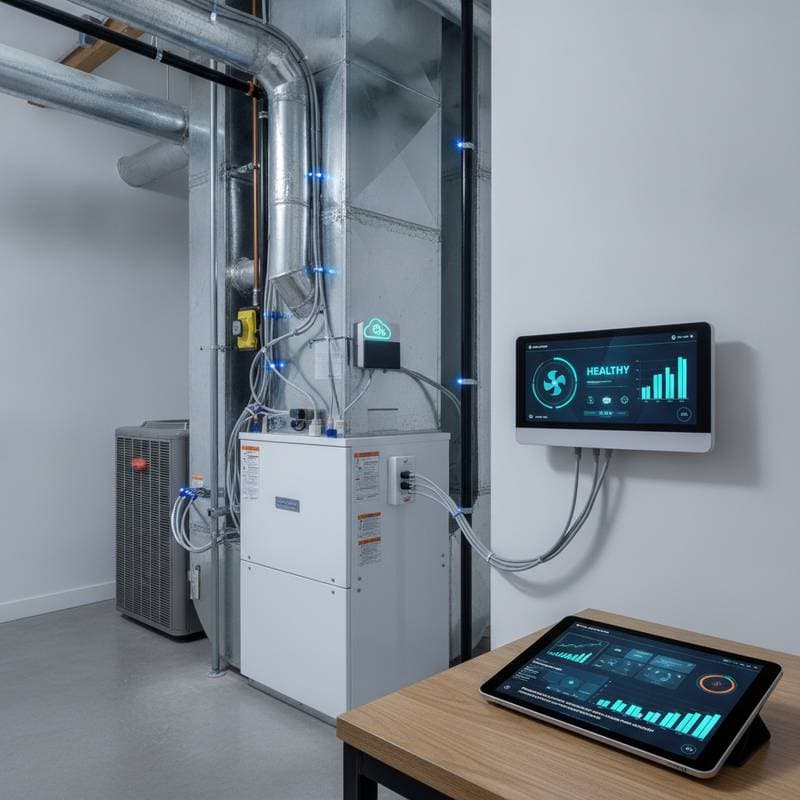
- Sensors record temperature, humidity, voltage, vibration, and pressure data.
- Information travels to a cloud platform via Wi-Fi.
- Software compares new readings against established normal ranges.
- Deviations trigger alerts through a mobile application.
- Users receive specific recommendations for filter changes, coil cleaning, or professional service.
Additional tracking of energy patterns can reveal duct or insulation problems and suggest thermostat settings that reduce consumption.
Product Options Across Budget Levels
Several solutions fit different needs and price points.
- The ecobee Smart Thermostat Enhanced, near 190 dollars, supplies basic trend tracking and filter reminders while connecting to common smart home platforms.
- The Flair Puck Pro with Smart Vents, approximately 400 dollars for a room set, balances airflow and learns thermal patterns to flag early airflow restrictions.
- Trane Link with Predictive Diagnostics, starting near 1,000 dollars for compatible units, uses built-in sensors to forecast component wear and notifies both homeowners and certified dealers.
All listed products work with major smart home ecosystems. Confirm compatibility with existing hubs before purchase.
Key Factors Before Installation
Evaluate these elements to ensure successful deployment.
- Units older than ten years may need sensor retrofits or full replacement.
- Reliable Wi-Fi coverage near the equipment prevents data gaps; mesh extenders can resolve weak signals.
- Review each platform privacy policy to understand data handling practices.
- Total investment ranges from 300 to 1,500 dollars based on system scope.
- Licensed technicians must perform installation because electrical and refrigerant connections require certification.
Professional setup and calibration typically require half a day. After activation, an application dashboard displays system status, usage trends, and alerts.
Technician Advantages From Stored Data
Historical records allow service professionals to identify gradual shifts such as rising current draw that point to coil fouling or compressor strain. Early intervention through targeted maintenance avoids full component replacement.
Daily Benefits and Integration
Efficient operation produces steadier temperatures, reduced noise, and lower utility costs. Reported energy reductions reach 10 to 20 percent compared with reactive schedules. Alerts decrease emergency visits by prompting routine service instead.
Existing smart thermostats and air quality sensors connect directly to predictive platforms. Pairing with solar monitors enables cooling schedules that align with available renewable output. Temperature rises can also activate ceiling fans or adjust smart blinds automatically.
Steps to Begin Implementation
Assess current equipment age and thermostat compatibility first. Request quotes from local installers or home service platforms when needed. Select a budget tier and automation level that matches household requirements. Review monthly alerts and complete recommended actions promptly to maintain performance gains.
Predictive monitoring delivers consistent comfort and lower operating expenses through ongoing oversight rather than emergency responses.