AI Cooking Assistants Monitor to Prevent Kitchen Fires
Smart homes progress from optional conveniences to integral components of daily life. In the kitchen, intelligent cooking assistants transform routine tasks into secure and streamlined processes. AI-powered monitoring systems stand out by averting kitchen fires through early detection. These tools merge computer vision, temperature sensors, and predictive analytics to supervise stoves, ovens, and cooktops. Busy families gain substantial reassurance from this vigilant oversight.
Connected devices proliferate, and users demand solutions that simplify tasks while protecting well-being. Fire prevention emerges as a prime application of artificial intelligence in residential settings. By identifying patterns, spotting irregularities, and initiating responses, these systems function as attentive cooking partners that remain focused at all times.
The Limitations of Conventional Kitchen Safety Measures
Cooking ranks among the primary sources of residential fires. Incidents frequently arise when individuals leave the stove unattended briefly or overlook an active burner post-meal. Standard smoke detectors alert occupants only after smoke appears, yet rapid escalation often causes irreversible harm. The delay from ignition to alert represents a critical weakness.
Efforts with intelligent sensors have addressed this issue for years, but many depend on basic heat or smoke indicators. Such devices struggle to differentiate routine cooking from hazardous conditions. For instance, the aroma from searing bacon may trigger false alerts, whereas a slowly scorching pot might evade notice. This unreliability fosters annoyance and misplaced trust.
AI cooking assistants alter this landscape with contextual intelligence. They interpret stove activities holistically rather than isolated data points. This nuanced approach positions them as potentially vital safeguards.
Mechanisms of AI Cooking Assistants
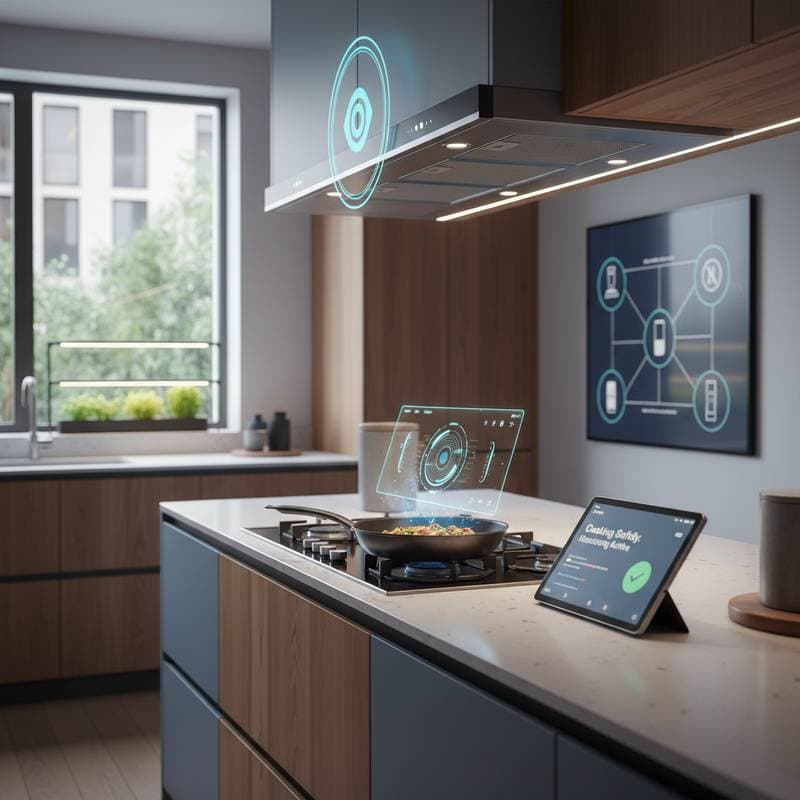
Contemporary safety systems layer multiple technologies for comprehensive oversight. Cameras, motion detectors, and thermometers supply data to an onboard or remote processor. Trained algorithms distinguish activities such as simmering liquids, heating oils, or idle cookware. Upon identifying elevated temperatures, extended stillness, or emerging smoke, the system issues warnings or executes preventive measures.
Certain units disconnect stove power or lower settings upon threat detection. Others dispatch mobile notifications or activate smart speakers to urge immediate inspection. Precision stems from fusing diverse inputs into an instantaneous situational assessment.
A prominent device affixes above the cooking surface and employs thermal imaging for burner and vessel tracking. Prolonged overheating or inactivity prompts audible alarms or integration with smart outlets to halt electricity. Alternative versions link with voice platforms, enabling queries like "Does the stove remain active?" for prompt replies.
Importance of This Technology
AI-enhanced cooking safety excels in averting incidents proactively rather than reacting post-occurrence. Homeowner polls indicate rising demand for integrated protection, particularly among parents and seniors. Systems that intervene prior to fire ignition resonate with those managing demanding schedules.
These assistants also advance energy conservation. Units observe usage trends and recommend adjustments, such as minimizing unnecessary heat or prompting burner deactivation. This dual focus on security and sustainability aligns with evolving preferences for intelligent, eco-conscious residences.
Insurers increasingly collaborate with kitchen tech developers. Monitored appliances lower claim risks, yielding advantages for providers and residents alike. Such integrations highlight technology's impact on practical and financial aspects of home management.
Machine Learning's Contribution to Kitchen Safety
Intelligence in these systems derives from adaptive learning capabilities. Machine learning algorithms train on extensive cooking data sets. They evaluate heat patterns, vapor levels, and movement to pinpoint early hazards. Gradually, the system tailors to user preferences, recognizing extended low-heat cooking or intense stir-fry sessions.
Adaptation proves essential for reliability. Fixed sensors may confuse standard practices, but evolving models enhance discernment. Consequently, false positives decline, and responses sharpen. This progressive refinement matches expectations for dynamic smart home features.
Seamless Integration in Smart Home Networks
Kitchen safety tools amplify effectiveness through ecosystem connectivity. Consider a scenario where smoke detection prompts the ventilation system to pause airflow, illuminates warning lights, and broadcasts alerts via audio devices. This synchronized protocol forms a robust defense.
Standardized protocols facilitate smooth incorporation with central hubs. Users oversee all elements via a single dashboard, eliminating app fragmentation. Such accessibility accelerates uptake among non-experts.
Advanced configurations link to external aid. Persistent unacknowledged warnings may alert contacts or authorities. This capability supports autonomous living for aging individuals.
Obstacles and Practical Advice for Adoption
Promise notwithstanding, implementation encounters barriers. High costs from sophisticated components deter some buyers. Camera-equipped devices raise privacy issues in intimate areas. Developers counter with localized analysis and robust encryption, minimizing cloud transmission.
Dependability demands perfection in safety gear. Companies prioritize rigorous validation and approvals to uphold quality. User input from pioneers aids algorithm and design improvements.
Prospective buyers must assess appliance compatibility. Select models demand particular stove types or wiring, while others adapt universally. Prioritize straightforward setup and upkeep for optimal results.
Practical Implementations and Innovations
Tech firms showcase AI kitchen safety's viability through diverse products. A favored sensor blends optical and heat detection for stovetop vigilance. It identifies departures from active burners and notifies users swiftly.
Another employs overhead imaging with refined vapor analysis to separate moisture from peril, curbing disruptions. Emerging ventures embed monitoring in appliances, like induction tops with inherent controls and auto-cutoffs.
Commercial applications in eateries and communal spaces demonstrate scalability. These tools uphold protocols, freeing personnel for core duties. Maturing tech promises affordability for mass markets.
Enhancing Everyday Cooking with AI Support
Fire prevention aside, assistants enrich culinary routines subtly. Features include step-by-step recipes, live heat readings, and burn-risk notifications. Cooking evolves into an engaging, instructive endeavor.
Envision multitasking as the system oversees multiple vessels. Overflowing pots trigger heat reductions; escalating oil levels prompt preemptive cautions. These aids build assurance and ease anxiety for novice or preoccupied chefs.
Family dynamics benefit from extended vigilance. Guardians enable youth independence with remote oversight. Seniors maintain autonomy bolstered by reliable backups. This blend of enablement and caution defines innovative design.
Advancing Secure and Intelligent Kitchen Environments
AI cooking assistants signal a pivot to anticipatory residential protection. They exemplify smart technology's role in unobtrusive enhancement of safety and simplicity. Refinements will deepen routine assimilation, fostering enduring household security.