AI Robots Reshaping Smart Home Maintenance
Smart homes progress toward environments that anticipate needs and manage tasks independently. AI-powered cleaning and organizing robots lead this change, advancing past basic floor care to handle sorting, tidying, and object recognition. This transition from hands-on chores to automated solutions redefines household routines, combining reliability with ease to streamline daily life.
Advancing from Basic Cleaning to Intelligent Navigation
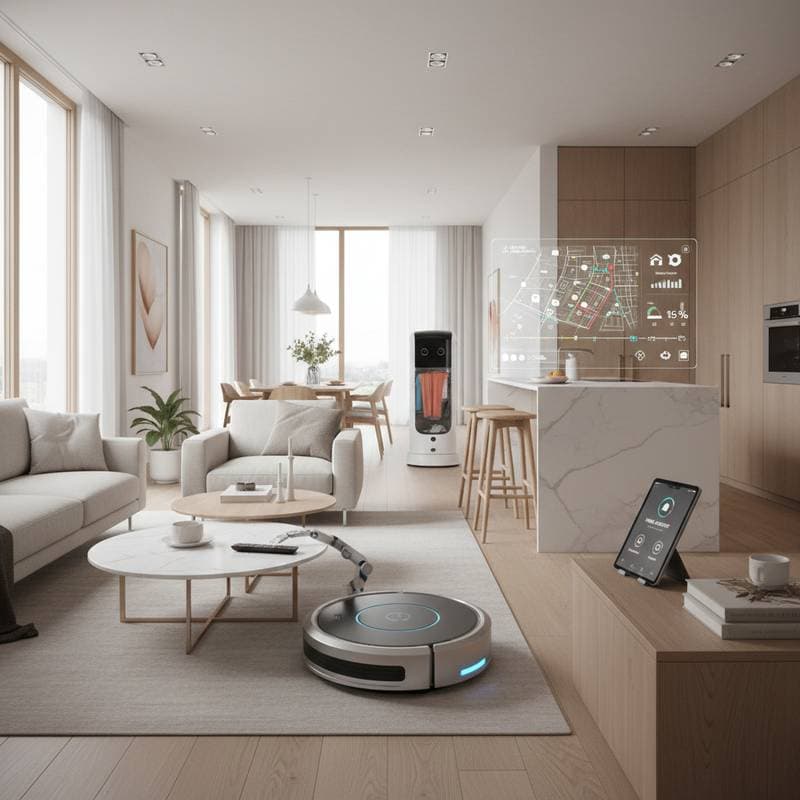
Early robotic vacuums navigated haphazardly, often colliding with obstacles. Current AI models employ sophisticated sensors and visual mapping to map home layouts precisely. They detect barriers, store room configurations, and refine paths from past runs, ensuring thorough coverage without interruptions.
Such precision elevates cleaning from a chore to a streamlined operation. Users reclaim time while maintaining spotless areas. Leading models incorporate AI cameras to identify and evade items like cables or toys, delivering reliable performance with minimal intervention.
Adapting to Daily Routines
These robots extend learning beyond physical spaces to user behaviors. By tracking patterns, they propose ideal cleaning schedules or prioritize busy zones. For instance, a device might target the entryway after evening arrivals or the dining area post-meals.
This personalization aligns with demands for proactive smart devices. Surveys indicate users prefer systems that foresee requirements over those responding to prompts. AI robots fulfill this by embedding awareness into automation, making upkeep a seamless extension of home life.
Extending Capabilities to Full Organization
Floor care represents only the start. Emerging robots tackle laundry folding, item sorting, and toy collection through prototypes with articulated arms and recognition software. These systems differentiate fabrics from tools or debris, enabling targeted actions.
Families with young children or animals benefit most from such expansions. A robot could gather loose objects prior to vacuuming, preventing jams and enhancing efficiency. Prototypes from innovators demonstrate rapid progress, signaling widespread availability soon.
Integrating into Connected Ecosystems
Cleaning robots now function within broader smart networks, linking with thermostats, lights, and security. During operation, they might signal lights to brighten or purifiers to engage, capturing airborne particles.
This connectivity fosters cohesive operations. Standards like Matter simplify interoperability across brands, easing configuration. Homes thus operate as unified wholes, with devices collaborating intuitively.
Promoting Sustainable Energy Practices
AI robots influence energy management by timing tasks for low-demand periods, cutting bills and emissions. Models modulate power based on dirt levels or surface types, avoiding excess use.
This approach supports growing environmental priorities. Users adopt these systems to balance performance with conservation, integrating robots into eco-friendly setups that reduce overall household impact.
Balancing Automation with Human Needs
Robots augment rather than supplant human efforts. They enhance leisure by handling drudgery, allowing focus on valued pursuits. Owners often view them as reliable aides, fostering positive interactions with helpful tech.
Privacy features, including on-device processing and secure transmissions, build confidence. Developers prioritize these elements, ensuring cameras and sensors respect user boundaries as capabilities advance.
Enhancing Accessibility for All
For those with limited mobility or demanding lives, these robots provide vital support. They enable self-sufficiency by minimizing physical demands or external aid. Declining costs broaden access beyond early adopters.
This pattern echoes the evolution of voice controls and smart climate systems from premium to essential. Future domestic aids will blend affordable bots with versatile platforms for comprehensive task handling.
Real-World Innovations at Work
Market leaders showcase progress through features like self-emptying docks, adaptive mopping, and room-specific adjustments. Devices map via LiDAR for accurate navigation and link to hubs for app or voice control.
Users can direct a bot to prepare spaces for events, with it coordinating ambiance settings automatically. This orchestration creates fluid experiences, where technology operates discreetly.
Envisioning Self-Sustaining Homes
AI cleaning robots mark a shift toward proactive living spaces. Environments evolve from static to dynamic, upholding tidiness through smart interventions. Advancements promise refined personalization and human-machine synergy.
These tools deliver more than cleanliness; they instill order and calm. As sophistication increases, homes will proactively nurture well-being, blending innovation with practicality for enriched lives.