When a Budget Robot Vacuum Feels Premium
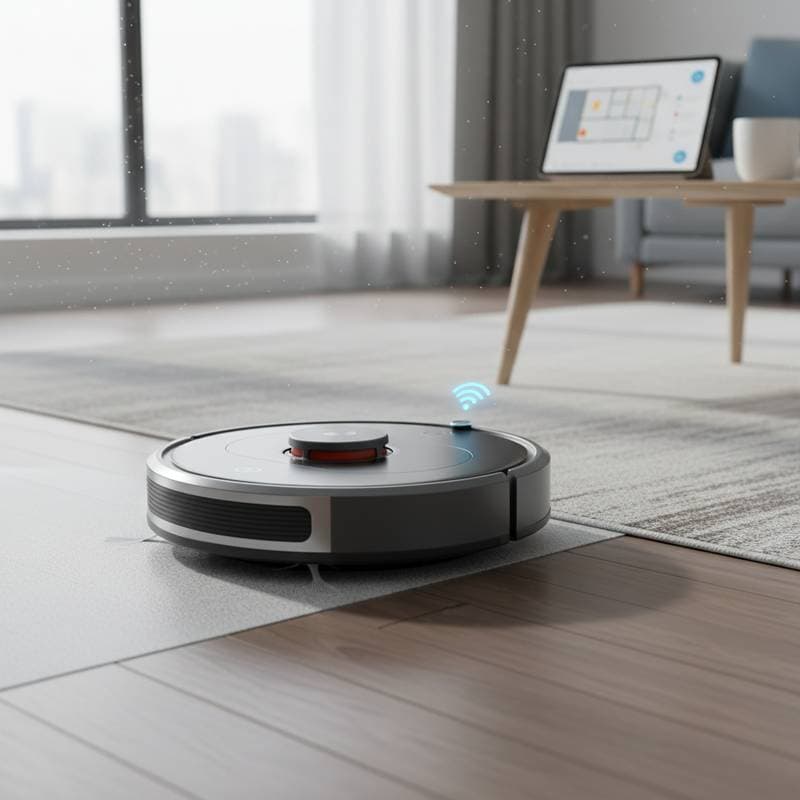
You may have noticed those sleek robot vacuums gliding across hardwood floors in social media videos, then docking quietly like obedient companions. The associated price tags often deter potential buyers. The positive development is that substantial spending is no longer required to access many smart cleaning capabilities. Robot vacuums priced around two hundred dollars now provide impressive performance with features previously limited to models costing twice as much.
The difficulty lies in identifying which affordable units merit inclusion in your household. Certain models advertise app control and mapping yet struggle with pet hair collection or rug navigation. Others perform effective cleaning but omit scheduling or voice integration. Success depends on achieving equilibrium among cleaning power, navigation sophistication, and user convenience.
Why Budget Robot Vacuums Are Getting Smarter
The robot vacuum market has evolved significantly, prompting manufacturers to incorporate established components from higher-end products. Motors operate with greater efficiency, sensors occupy less space, and Wi-Fi modules cost less. This downward transfer of technology enables a sub-two-hundred-dollar robot to incorporate sophisticated elements such as dynamic mapping, multi-surface cleaning, and compatibility with smart home systems.
For typical households, these economical models manage everyday dust and debris effectively. Manual intervention remains necessary for substantial messes, but for routine upkeep, a modestly priced robot maintains floor tidiness reliably.
Key Features to Look for in a $200 Robot Vacuum
Affordability does not imply simplicity in a robot vacuum. The following premium-caliber features elevate a lower-priced model to deliver an unexpectedly upscale experience.
-
Smart Mapping and Navigation
Earlier budget models moved haphazardly, frequently overlooking sections of rooms. Contemporary versions employ gyroscopic or visual sensors to generate a layout of the environment. Although less accurate than laser navigation, this approach supports more systematic cleaning routes. -
App and Voice Control
Select vacuums that link to a mobile application for initiating, halting, scheduling, or reviewing cleaning records. Compatibility with assistants such as Alexa or Google Home enhances usability further. -
Multi-Surface Adaptation
A reliable budget robot navigates seamlessly from tile to carpet while preserving suction strength. Rubber or hybrid brush rolls outperform conventional bristles in resisting entanglement. -
Automatic Recharging
At this price level, the device should return to its base when the battery depletes. Certain recent models resume operation post-recharge. -
HEPA or High-Efficiency Filters
Effective filtration captures fine particles and allergens, proving beneficial for homes with pets or allergy sufferers.
Insider Tip
Certain budget robots utilize identical brush or suction components as their manufacturer's premium counterparts. Verifying compatibility of replacement parts discloses whether an economical model inherits elements from a top-tier series.
Recommended Models for Every Budget Level
These three selections provide dependable value and functionality at or near the two-hundred-dollar threshold, aiding in decision-making.
-
Budget Pick: Eufy RoboVac 11S ($190)
This model excels in quiet performance and a low-profile design, facilitating access beneath furniture. Wi-Fi control is absent, yet it delivers steady cleaning via robust suction and a basic remote. -
Mid-Range Choice: iRobot Roomba 694 ($199)
Features include app and voice control, scheduling, and responsive navigation. The unit adapts to user patterns over time and integrates with smart assistants for straightforward operation. -
Premium Feel on a Budget: Lefant M210 Pro ($210)
Positioned just above two hundred dollars, it offers app control, potent suction for pet hair, and collision-avoidance sensors. This choice suits users seeking a contemporary interface without advanced mapping expenses.
Each model supports daily cleaning in small to medium-sized residences. The Roomba benefits from ongoing software updates, positioning it as a durable option, whereas the Eufy and Lefant appeal to those favoring straightforward designs.
Practical Considerations Before You Buy
Despite accessible pricing, a robot vacuum represents a sustained commitment. Consider these aspects:
-
Battery Life and Replacement Costs: Batteries endure two to three years on average. Substitute units range from twenty to fifty dollars.
-
Filter and Brush Maintenance: Replace filters every few months and brushes annually or biannually, based on frequency of use.
-
Floor Type Compatibility: Deep-pile carpets may require stronger suction or supplementary manual vacuuming.
-
Connectivity and Privacy: Wi-Fi models transmit data for mapping and firmware enhancements. Examine privacy options within the app.
Pro Installer Tip
When integrating the robot with systems like Alexa or Google Home, configure a dedicated 2.4 GHz Wi-Fi network. Many budget devices encounter issues with dual-band setups that shift frequencies automatically.
Integrating a Robot Vacuum into Daily Routines
At this price, a robot vacuum emphasizes reliability over extravagance. It sustains cleaner floors amid periodic thorough cleanings and conserves weekly time. For additional savings, explore refurbished or open-box options from reputable sellers, which frequently carry complete warranties and deliver upscale features below two hundred dollars.
Whether aiming for hands-off cleaning or reduced dust accumulation, current budget robot vacuums extend beyond mere utility. They foster the contentment of a maintained living space with minimal ongoing labor. Allow the device to manage standard tasks, freeing time for preferred activities.
FAQs
What is the best robot vacuum under two hundred dollars?
The iRobot Roomba 694 provides the optimal combination of intelligent features, cleaning efficacy, and dependability at that price.
Do budget robot vacuums work on carpets?
Yes, most manage low- to medium-pile carpets, although suction diminishes on denser varieties.
Can I control a budget robot vacuum with my phone?
Multiple models support app connectivity and voice assistant integration.
How often should I empty the dustbin?
Empty it following each or every other cleaning session to sustain optimal suction.
Do cheap robot vacuums map your home?
Some employ fundamental sensors for mapping, though precision differs. Anticipate thorough coverage over exact room delineation.
Are replacement parts easy to find?
Manufacturers such as Eufy, iRobot, and Lefant offer filters and brushes via their online stores, simplifying upkeep.
Can I use a robot vacuum if I have pets?
Yes, prioritize units with vigorous suction and anti-tangle brushes to address fur accumulation.
Where should I place the charging dock?
Position it adjacent to a wall, ensuring approximately two feet of open space on either side for dependable docking.