Imagine Opening Your Fridge and Finding It Already Knew What You Needed
You arrive home after a long day and open the refrigerator only to discover that milk, eggs, and other staples are missing. Smart refrigerators now address this common issue by tracking inventory and anticipating needs. These appliances have moved beyond basic cooling to become systems that monitor contents, predict usage, and support better meal planning.
The result is greater convenience and reduced daily stress around household management. Predictive models achieve this through integrated sensors and learning algorithms that adapt to individual routines.
The Challenge with Keeping a Kitchen Stocked
Maintaining balanced grocery supplies requires constant attention to avoid both shortages and spoilage. Standard organization methods often fail when items are pushed aside or overlooked during busy periods. Families and frequent cooks face repeated uncertainty about what remains available.
Predictive refrigerators address these gaps by using cameras, sensors, and usage data to build accurate inventories. They observe consumption rates and freshness indicators over time. This approach turns reactive shopping into a more planned process.
How Predictive Smart Fridges Actually Work
Current models combine several technologies that operate without constant user input.
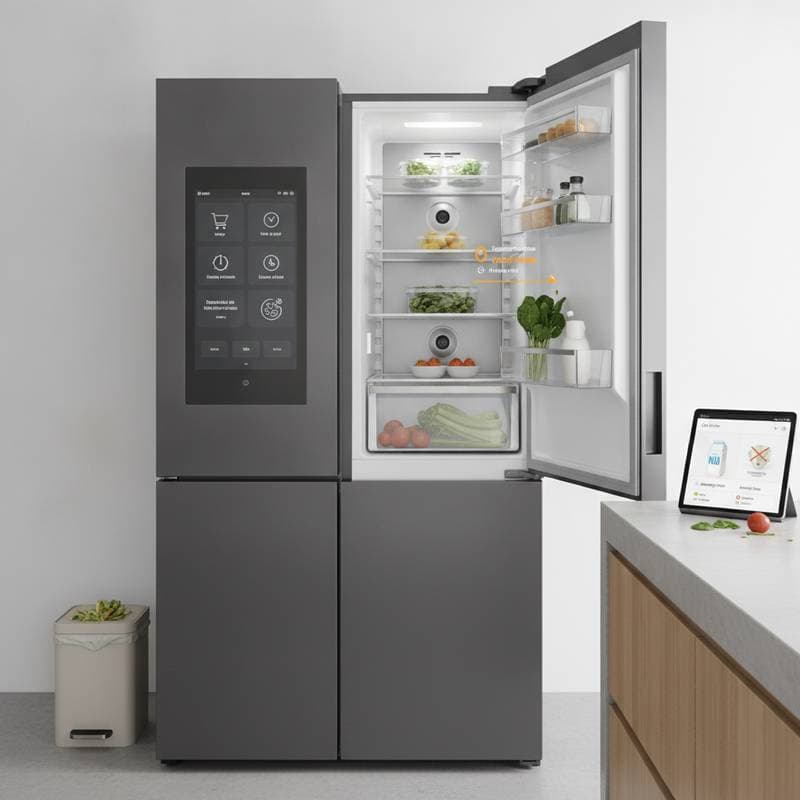
- Internal cameras and sensors scan shelves to identify items through shape, color, and barcodes, refreshing inventory data each time the door closes.
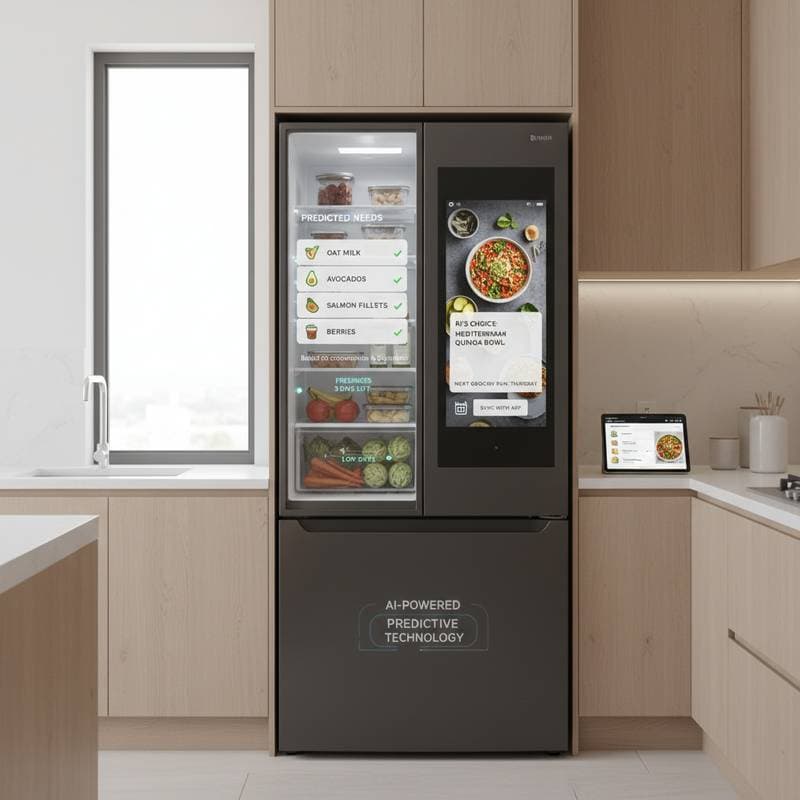
- Machine learning processes personal shopping patterns along with meal preferences to forecast future requirements.
- Direct connections to grocery services enable automatic list updates or one step reordering.
- Touchscreens and voice controls provide quick access to alerts and suggestions.
Initial item confirmation after unpacking groceries helps the system reach reliable accuracy sooner.
Predictive Features That Actually Save Time
These refrigerators deliver practical daily advantages beyond basic monitoring.
- Automated lists update continuously based on detected usage.
- Notifications arrive when items approach expiration dates.
- Recipe ideas draw from current contents to limit waste.
- Temperature adjustments in some units respond to stored items and support lower energy use.
The overall effect is a kitchen environment that handles routine tasks quietly.
Product Options by Budget
Several models illustrate the range of available features and price points.
Budget Option: Hisense Smart Touch Fridge ($1,200 to $1,400)
This unit provides Wi Fi connectivity and basic app controls for inventory tracking. It works with common voice assistants yet offers limited predictive capabilities.
Mid Range Option: LG Smart InstaView Refrigerator ($2,500 to $2,900)
Internal cameras and AI tracking allow usage based reorder suggestions through the companion app.
Premium Option: Samsung Family Hub 4 Door Flex ($3,800 to $4,200)
Advanced cameras, recipe guidance, and multi service integration come with a large display for additional functions.
Ecosystem compatibility matters when selecting a model. Existing voice assistant setups should guide the final choice.
Practical Considerations Before Buying
Reliable performance depends on a few preparation steps.
- Strong Wi Fi coverage in the kitchen area prevents interruptions to tracking functions.
- Privacy controls in the app determine how consumption data is stored and shared.
- Proper electrical capacity and grounding support safe operation.
- Adequate clearance accounts for any added depth from internal components.
Professional installation can simplify setup when preferred.
The Hidden Advantage: AI That Learns Your Habits
Accuracy improves noticeably after several weeks of regular use. The system refines predictions by reviewing restocking frequency and consumption speed. Patterns such as higher weekend demand are recognized automatically.
Some units can incorporate data from fitness trackers to suggest suitable meal options. This learning process remains stable across current models.
Cost and Long Term Value
Initial prices are offset by measurable reductions in waste and unplanned trips. Energy savings of forty to seventy dollars per year are common with efficient models. Software updates occur automatically while routine maintenance stays straightforward. Optional subscription services for advanced grocery features add a modest monthly cost.
Common Concerns and How to Address Them
Early prediction errors are corrected directly in the app, after which accuracy rises quickly. Core cooling functions continue without internet, though predictive tools require reconnection. Data protection relies on encryption, and sharing options can be adjusted in settings.
Treating the appliance as an evolving tool encourages better long term results.
Moving Toward a Predictive Kitchen
Review current shopping patterns to decide whether inventory tracking would reduce waste or last minute errands. Select a model that matches budget limits and existing home systems. Many households begin with basic connectivity and progress to full predictive features after experiencing the benefits firsthand.
These refrigerators now support consistent food management and time savings in everyday routines.