AI Mapping Transforms Robot Vacuum Performance
Imagine returning to floors free of dust and debris without any manual effort. Your robot vacuum moves steadily across the living room, passes beneath sofas, and covers every edge without leaving gaps. Occasional bumps against furniture legs or overlooked patches near rugs highlight where older systems fall short. AI mapping now provides the intelligence that allows these devices to interpret spaces with greater accuracy than lidar alone.
Limitations of Lidar Systems
Lidar sensors create maps by sending laser pulses and calculating distances. This method works in open areas yet falters on shiny floors, fails to identify items such as socks or cables, and misinterprets dark rugs as obstacles. The resulting map treats rooms as geometric shapes rather than lived-in environments with moving furniture, pets, and daily clutter.
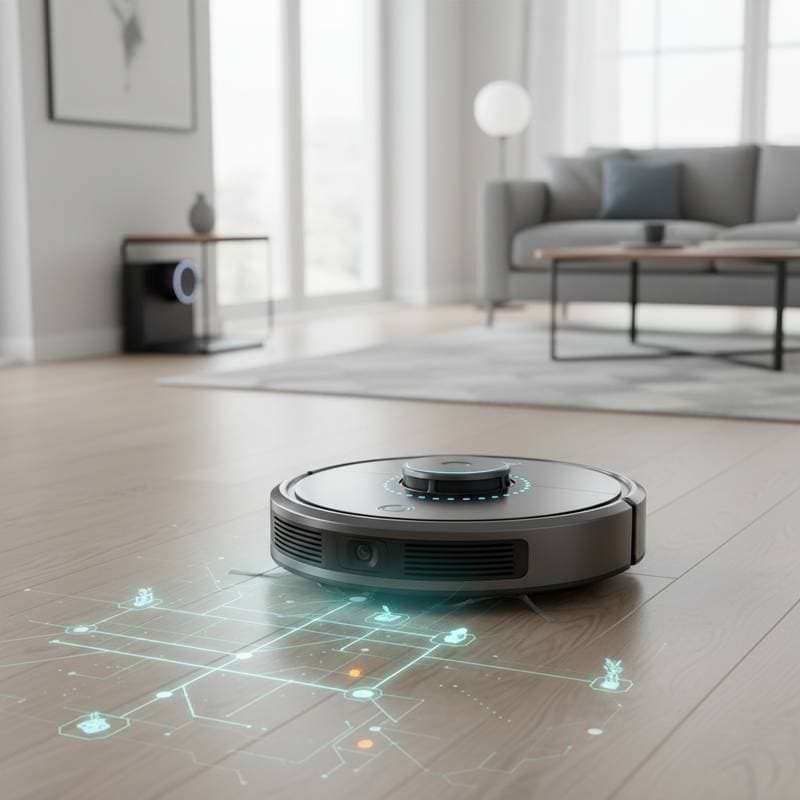
AI mapping replaces laser-only detection with camera feeds, depth sensors, and trained models. The system identifies object types in real time and adjusts its path accordingly. It separates a shoe from a charging cable or a pet toy from a food bowl, which reduces collisions and improves coverage in a single pass.
Core Technology Behind AI Mapping
Onboard processors examine live camera images to label obstacles and update room layouts. When combined with SLAM algorithms, the vacuum builds a floor plan that refines itself after each cycle. Shifting dining chairs no longer trigger full remapping because the model recognizes familiar shapes and compensates automatically.
Many premium units apply semantic mapping that assigns room labels and tailors suction levels to expected debris. Kitchen zones receive higher power after meals while bedrooms stay on lower settings. All processing occurs on the device, which keeps data local and speeds up responses.
Selecting an AI-Mapped Model
Three tiers illustrate current options.
- Budget pick: The Eufy RoboVac X8 at approximately 400 dollars offers dual turbines and basic visual mapping. It handles large objects well but performs best in rooms with adequate lighting.
- Mid-range option: The Roborock Q Revo near 900 dollars adds an AI camera and vibrating mop pads. It detects floor materials, skirts cords and shoes, and maintains accurate multi-room maps.
- Premium choice: The iRobot Roomba Combo j9+ around 1400 dollars includes advanced object recognition, automatic emptying, and water refilling. It connects with major voice assistants and stores user preferences across sessions.
Verify compatibility with existing smart-home platforms before purchase. Google Home and Alexa users should confirm voice scheduling support, while Apple households benefit from models that work with Siri Shortcuts or the Matter standard.
Setup and Maintenance Steps
Place the vacuum in a well-lit area during initial mapping runs. Infrared or structured-light models compensate for low-light rooms. Wipe camera lenses weekly and install firmware updates promptly to access expanded object libraries.
Entry-level units start near 400 dollars; top models exceed 1500 dollars. The return appears as fewer stuck incidents, shorter cleaning times, and more complete floor coverage. Most homes complete mapping after one or two full cycles.
Homes with few outlets gain from a docking station that manages cables neatly. Larger properties should select units that store separate maps for each floor to avoid repeating setup when the device moves between levels.
Applying AI Mapping Daily
Define custom zones and schedules inside the companion app to match household routines. High-traffic hallways can receive daily passes while guest rooms run weekly. Once preferences are set, the vacuum maintains consistent results with minimal intervention.