AI Robot Vacuums That Anticipate Pet Shedding Cycles
Smart homes increasingly respond to daily routines with precision. Pet owners face persistent challenges from fur scattering across floors and upholstery. Advanced robot vacuums now employ artificial intelligence to forecast shedding patterns in cats and dogs, then modify cleaning operations accordingly. This capability transforms routine maintenance into seamless support for households with animals.
Intelligent Management of Pet Hair
Earlier robot vacuums provided basic automation for dirt removal. Current versions incorporate sophisticated sensors and machine learning to analyze pet behaviors over time. These systems track shedding frequency, animal movements, and debris composition to develop tailored cleaning strategies aligned with home dynamics.
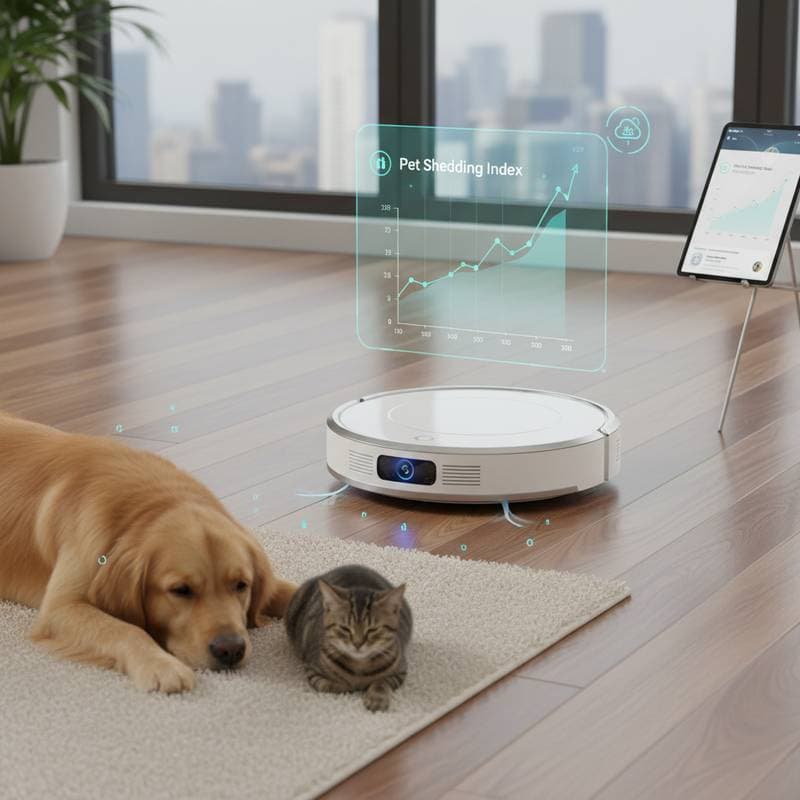
Consider a scenario where the device observes elevated fur collection during multiple sessions. It forecasts an upcoming increase in shedding and initiates additional cleaning passes. Such adjustments prevent accumulation on rugs and enhance indoor air quality, all without user intervention.
The Importance of Forecasting Cleaning Needs
Shedding varies due to seasons, nutrition, anxiety, or medical conditions. Mismatched cleaning efforts lead to either excessive operation or inadequate coverage. Forecasting eliminates this uncertainty by projecting debris levels in advance.
Data-driven insights maintain consistent cleanliness and minimize allergen buildup. Individuals with sensitivities or in compact living areas benefit most, as targeted cleaning addresses fur concentration in high-traffic zones.
Innovations from Leading Manufacturers
Companies such as iRobot, Roborock, and Ecovacs pioneer these advancements. Their devices feature cameras and LiDAR sensors to identify pets and navigate obstacles safely. Advanced filtration distinguishes pet hair from particles like dust or food remnants, optimizing vacuum strength for each.
Picture a system that detects your dog's seasonal molt via app notifications, ramps up sessions preemptively, and ensures quiet operation around resting animals. These elements integrate into daily life, delivering reliable performance in contemporary cleaning solutions.
How Pattern Recognition Drives Predictions
Core to this technology lies data analysis from each cleaning cycle. The vacuum logs debris volume and variety, establishing a household norm over time. Deviations, such as rising fur amounts, trigger adaptive responses.
Integration with compatible pet monitors or home cameras enriches this process. Insights into sleep spots or activity zones refine forecasts. This multifaceted approach achieves high prediction reliability.
Beyond ease, the system aids health monitoring. An abrupt shedding surge may indicate issues like nutritional deficiencies or environmental stress. Notifications empower owners to address potential concerns promptly.
Balancing Ease and Pet Well-Being
Many pet guardians view hair management as an ongoing task demanding regular manual work. Automated forecasting reassigns this responsibility to the device, freeing time for companionship over chores.
Reliable cleanliness fosters tranquility. Households with several animals experience reduced stress from unkempt spaces, promoting harmonious living.
Seamless Ties to Smart Home Networks
These vacuums operate within interconnected setups alongside climate controls, illumination, and alarms. Such linkages enable coordinated actions for optimal efficiency.
For example, the device activates during detected absences or modulates power near open vents. Pairing with air filters activates enhanced purification amid peak shedding, illustrating proactive system harmony.
Addressing Common Hurdles to Use
Clear advantages exist, yet accessibility and reliability shape uptake. Users prioritize data security and consistent results. Developers counter this by handling analytics on-device, limiting cloud transmission.
Enhanced batteries and self-maintenance features, including auto-emptying docks and reusable filters, simplify ownership. Initial configuration streamlines through intuitive app interfaces, requiring minimal setup.
Broader Impacts on Efficiency and Sustainability
Optimized operations extend beyond personal gains. Intelligent timing reduces energy consumption by skipping redundant runs, prolonging device durability and cutting power costs.
Sustained cleanliness preserves flooring integrity, delaying replacements. These outcomes support eco-friendly practices and financial prudence for users.
Steps to Adopt Predictive Cleaning
Select vacuums highlighting pet-focused AI, dynamic timetables, and compatibility with existing smart platforms. Test app controls for scheduling and alerts to match your routine.
Begin with baseline runs to calibrate the system, then monitor adjustments over initial weeks. This integration enhances pet care without complicating daily life, yielding cleaner environments and more quality moments with companions.