Imagine Opening Your Fridge and Finding It Already Stocked
You return from a long day and discover your refrigerator restocked with items tailored to your preferences. Fresh berries await for your morning smoothie, lean proteins stand ready for dinner, and sparkling water chills to the perfect temperature. No hurried trips to the store occur, and no essential items slip your mind. This scenario represents the current reality of AI refrigerators that order groceries automatically based on health goals and eating patterns.
The contemporary kitchen evolves into a personalized wellness center, with the refrigerator serving as its core. Individuals seeking healthier eating, time savings, or reduced food waste find that these smart appliances redefine grocery management.
Challenges of Conventional Grocery Routines
People often shop in response to immediate needs. You realize eggs are depleted and make a quick store visit. You purchase extras, perhaps in excess, and some spoil unused. Alternatively, you overlook the greens intended to increase your vegetable intake. This pattern leads to wasted food, unnecessary expenses, and drained mental resources over time.
Grocery applications and delivery services offer some aid, yet the system relies on your recall to place orders. For those pursuing precise health targets, such as monitoring macronutrients, adhering to calorie limits, or controlling sodium levels, manual selection hinders success.
AI refrigerators address these issues by merging inventory monitoring, health data analysis, and automated purchasing. These devices manage logistics discreetly, allowing focus on daily activities.
Mechanisms of AI Refrigerators in Kitchen Enhancement
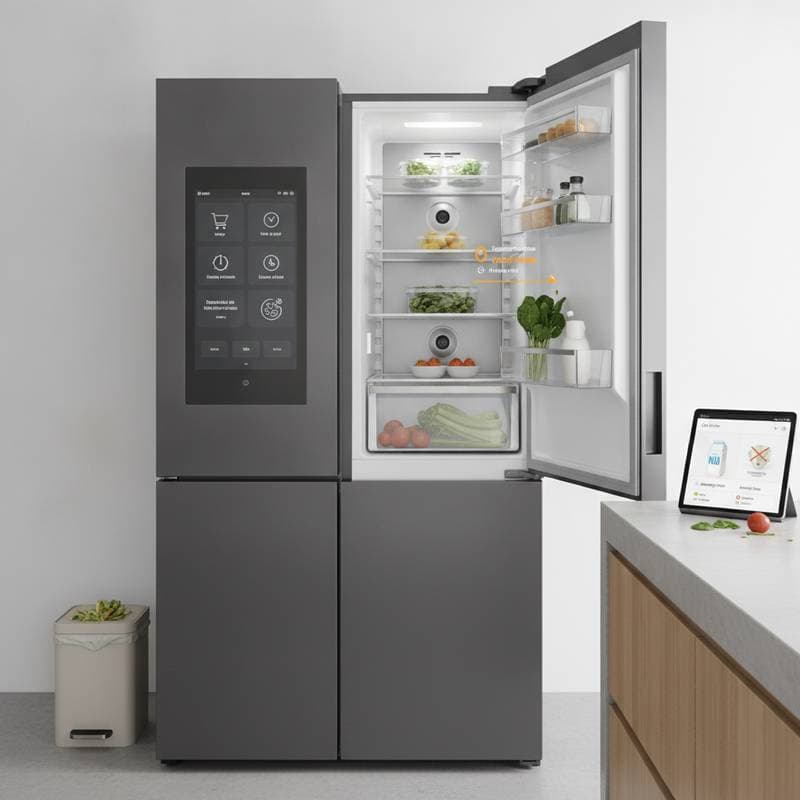
AI refrigerators employ internal cameras, weight sensors, and barcode readers to catalog and oversee contents. Connected to cloud software, they evaluate inventory and usage trends. The system adapts to your choices, noting preferences like oat milk over dairy, frequent depletion of spinach, or selection of low-sugar yogurt.
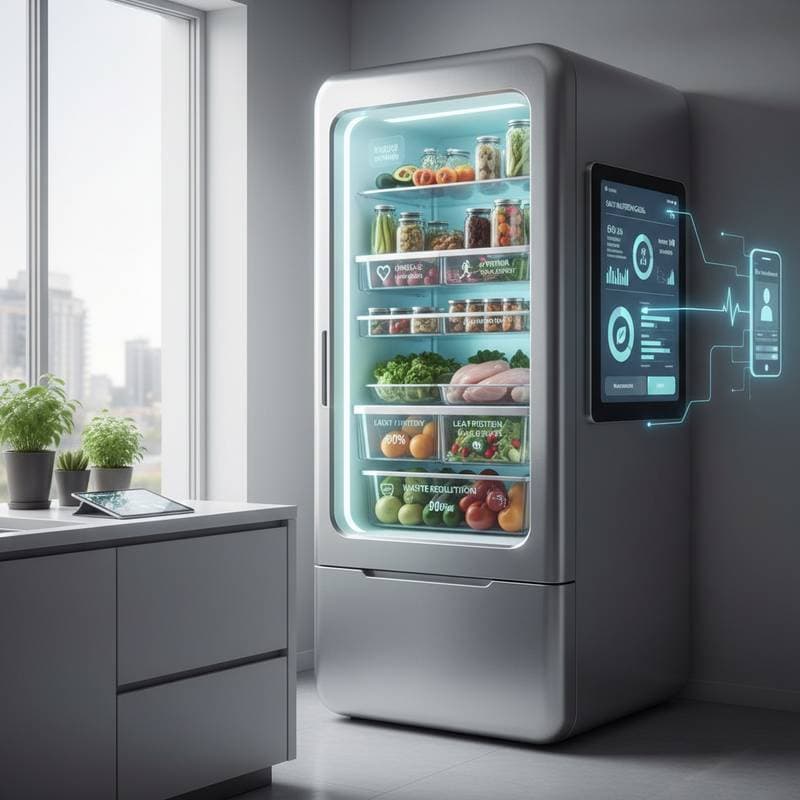
Integration with health platforms elevates the functionality. Synchronization with smartwatches or fitness applications enables suggestions and orders aligned with objectives. Increased activity prompts additions of protein-rich snacks; a low-carbohydrate regimen triggers corresponding adjustments.
Alerts for nearing expiration dates include recipe ideas to utilize items, thereby minimizing waste and enhancing meal diversity.
Process of Automated Grocery Ordering
- Inventory Monitoring: Cameras and sensors record additions and removals. Advanced models apply AI vision for identification without manual input.
- Data Integration: The refrigerator links to health applications or wearables to grasp dietary aims.
- Intelligent Suggestions: Drawing from meal records and targets, the AI proposes or inserts items into your retailer's digital cart.
- Confirmation or Automatic Purchase: Manual approval remains an option, or configure auto-orders for essentials below set levels.
- Delivery Coordination: Seamless connection with services ensures timely restocking.
This process creates an intuitive experience where the kitchen anticipates requirements.
Recommended AI Refrigerator Models
Select based on automation depth and ecosystem compatibility.
-
Affordable Choice: LG Smart InstaView Refrigerator (approximately $1,800). Features include interior cameras and application-driven inventory control. Compatibility with Amazon Alexa and Google Assistant supports voice-activated lists, with notifications and recipe guidance as foundational elements.
-
Intermediate Selection: Samsung Bespoke 4-Door Flex with Family Hub+ (approximately $3,300). Offers AI vision for food detection and Samsung Health linkage. Meal planning derives from preferences, with direct ties to Instacart or Walmart Grocery for replenishment.
-
Luxury Model: LG Signature Refrigerator with ThinQ AI (approximately $6,000). Adapts to routines, monitors freshness, and reorders via Amazon Dash Replenishment. A knock-activated light promotes efficient energy use.
Optimal performance arises within a unified smart kitchen network, incorporating ovens, assistants, and wearables.
Essential Setup Advice for Optimal Performance
Tech enthusiasts frequently miss initial calibration opportunities. Verify the first inventory scans manually to establish accurate preferences and prevent errors. For example, variable lighting may lead to confusion between almond and oat milk containers; early corrections refine the system's profile and avert future issues.
Update linked fitness applications immediately upon health goal changes. The refrigerator recalibrates ordering based on these inputs, maintaining relevance to shifting priorities.
Key Factors in Purchasing Decisions
These appliances impress, yet practical aspects warrant attention prior to acquisition.
- Investment: Prices range from $1,500 to $6,000 by capability. Premium features yield savings through waste reduction and streamlined planning.
- Network Reliability: Stable Wi-Fi supports updates and synchronization; poor connections disrupt operations.
- Data Security: Cameras and cloud processing necessitate privacy review. Brands typically encrypt information, but limit sharing as needed.
- Upkeep: Clean lenses and recalibrate sensors regularly for precision.
- System Fit: Confirm support for chosen grocery and health services, noting regional and model variations.
Installation proves simple, though professional assistance benefits water or ice features to prevent complications.
Benefits for Health and Environmental Impact
Beyond ease, AI refrigerators promote nutrition and curb waste. Inventory tracking visualizes eating patterns, fostering informed decisions. Persistent vegetable avoidance prompts recipe nudges or adjusted order quantities to encourage habits.
Sustainability gains from precise ordering, countering overpurchase as a primary waste source. Awareness of existing stock ensures requests match needs, reducing spoilage and ecological strain.
Certain models optimize energy via consumption tracking and cooling recommendations, positioning the refrigerator as an environmentally aware kitchen component.
Advancements in Tailored Nutrition
Future iterations will connect with metabolic devices and scales. Envision adjustments to portions and ingredients per nutrient status, alongside restocking.
Developments in predictive nutrition modeling forecast needs from schedules like workouts. Protein increases precede marathons; calories decrease in sedentary periods.
Such innovations accelerate the fusion of appliances and coaching roles.
Steps to Implement AI Refrigerators
Begin modestly with applications like AnyList or Samsung SmartThings Cooking to mimic automation and analyze patterns before hardware investment.
Establish a budget and automation preference: full autonomy or manual oversight. The resulting foresight delivers substantial relief.
Engage certified specialists for integration, particularly with multiple devices. The equilibrium of health, ease, and sustainability proves compelling.
Your kitchen transcends storage; it emerges as a wellness strategy hub, driven by adaptive intelligence.
Frequently Asked Questions
How does an AI refrigerator determine reordering needs?
Internal cameras, sensors, and algorithms monitor inventory and habits, aligning with linked grocery platforms.