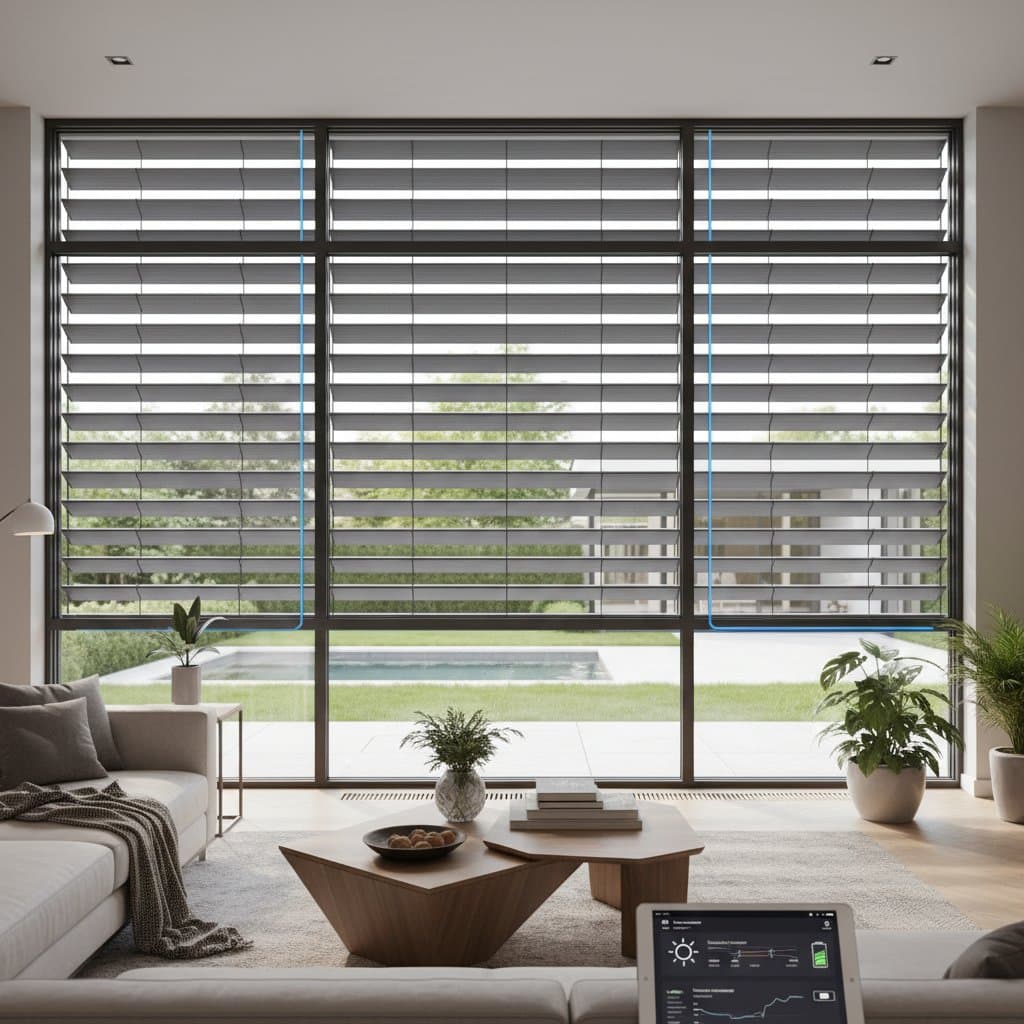
Envision Windows That Offset Their Own Energy Costs
Morning light enters softly through the blinds, balanced to avoid excess brightness or darkness. The home remains serene, but an innovative process unfolds. Those blinds capture sunlight and transform it into electricity that powers connected devices. Homeowners achieve more than glare reduction; they produce renewable energy in the process.
Solar smart blinds merge convenience with environmental responsibility. They regulate light, safeguard privacy, and decrease energy expenses, all while generating power unobtrusively.
Limitations of Conventional Blinds
Traditional blinds serve only a basic function. They control light entry or blockage without impacting overall energy consumption. During summer, they might retain heat, forcing air conditioning units to operate more intensely. In winter, they permit warmth to dissipate. Moreover, manual adjustments demand frequent attention, a task many neglect amid daily routines.
Automated smart blinds addressed these issues by responding to light intensity, temperature, or scheduled times. Solar smart blinds advance this further with built-in photovoltaic cells that produce electricity. The focus shifts from merely deflecting sunlight to capturing its potential.
Overview of Solar Smart Blinds
Solar smart blinds align with the Smart Energy and Sustainability sector. They unite light management and power production for enhanced comfort and resource preservation. Thin-film solar cells embedded in each slat or panel absorb sunlight and generate usable electricity.
This electricity powers the blinds, supplies small appliances, or integrates into the home grid via energy systems. When linked to a smart hub, the blinds synchronize with lighting, heating, ventilation, air conditioning, and security features.
Operational Mechanics
- Solar Film Embedding: Flexible photovoltaic films integrate into slats or fabric, capturing sunlight to produce direct current electricity.
- Power Conversion and Storage: Electricity flows to compact inverters or batteries concealed in the blind assembly.
- Intelligent Operation: Motors draw from stored energy for positioning, while wireless protocols like Wi-Fi or Zigbee enable hub communication.
- Energy Allocation: Surplus power routes to home circuits or charges items such as network routers or surveillance cameras.
Expert Recommendation
Certain high-end models detect sunlight angles and adjust positions to optimize capture. Dynamic tilt optimization boosts output by as much as 20 percent over basic smart blinds, though manufacturers promote it sparingly.
Selecting Appropriate Solar Smart Blinds
Purchasing solar smart blinds requires evaluating expense, efficiency, and system integration. Costs fluctuate based on construction, drive mechanisms, and solar performance.
Entry-Level Pick: SolarGaps Starter Series
Estimated cost: $600 per window
SolarGaps delivers a straightforward initial option yielding up to 100 watts per square meter. Built-in batteries store energy, and compatibility with Google Home or Alexa simplifies setup. DIY installation suits smaller windows, but experts advise professional assistance for extensive applications.
Intermediate Option: SolaRay Smart Blinds 2.0
Estimated cost: $900 per window
This series enhances solar conversion and reduces motor noise. It supports Apple HomeKit and incorporates sensors for angle adjustments tied to comfort levels. The dedicated application tracks energy production in real time, revealing daily contributions.
High-End Choice: LuxSense Photovoltaic Shades
Estimated cost: $1,400 per window
LuxSense employs superior fabrics and efficient solar films. Seamless connections to platforms like Control4 and Crestron suit comprehensive automation. These shades link directly to home solar inverters, augmenting larger renewable installations.
Integration and Expansion Considerations
Confirm model alignment with existing smart ecosystems during selection. Begin with primary areas, then extend coverage. Subsequent connections to heating, ventilation, air conditioning, and illumination create unified energy management for light, climate, and usage.
Installation Strategy and Execution
Solar smart blinds demand more preparation than standard coverings. Factors include wiring routes, secure fixtures, and ties to electrical networks.
Professionals handle installation to guarantee safety and functionality, particularly for grid contributions. Certified technicians verify adherence to regulations and fine-tune solar performance.
Expense Breakdown
Anticipate $600 to $1,500 per window, covering components, drives, controls, and labor. Initial outlay appears substantial, yet sustained reductions in bills and elevated home worth compensate over time.
Expert Recommendation: Utility providers sometimes extend incentives for solar window integrations. Inquire with local services or consultants prior to commitment, as these opportunities receive limited publicity.
Upkeep and Security
Maintenance remains minimal, but regular cleaning of solar surfaces preserves output. Employ soft fabrics and mild solutions. Prevent moisture in drive compartments. In dusty or pollen-heavy regions, clean biannually.
Accumulating Daily Advantages
Comfort emerges as the primary gain, with spaces maintaining cooler tones in intense sun and retaining heat overnight. Dependence on cooling or heating diminishes, trimming utility payments.
Energy autonomy follows closely. Daily output of several hundred watts sustains essentials like internet modems, audio devices, or low-energy bulbs, reducing purchased power needs.
Privacy and visual appeal improve next. Scheduled closures at specific sun positions maintain equilibrium without sacrificing daylight.
Insight into usage rounds out benefits. Applications reveal production, exposure, and patterns, illuminating home-sunlight dynamics and guiding efficiency adjustments.
Setting Realistic Goals
Solar blinds support energy objectives substantially but do not substitute large-scale panels. View them as components in multifaceted efficiency plans, enhancing other sustainable elements.
Synergy with Smart Home Networks
Solar smart blinds excel within expansive smart setups. Combine with:
- Intelligent Thermostats such as Ecobee or Nest for unified climate regulation.
- Automated Illumination like Philips Hue, where lights adjust alongside blind movements.
- Monitoring Platforms including Sense or Emporia for instant oversight.
- Voice Interfaces via Alexa or Google Home for effortless commands.
Central controllers like Samsung SmartThings or Hubitat enable tailored sequences. Program partial openings at dawn, full closures in midday heat, and evening reopenings to manage stored warmth.
Sustainability Contributions and Enduring Worth
Each kilowatt-hour from the blinds curtails emissions. House-wide setups offset hundreds of pounds of carbon dioxide across years. The setup fosters awareness, prompting optimized habits in illumination and equipment operation.
These blinds elevate resale potential. As automation integrates into contemporary residences, energy-capturing features distinguish properties. Agents note quicker sales and premium pricing for homes with embedded renewables.
Steps to Implement Solar Smart Blinds
Consider initiating with one sun-exposed window to assess performance. Examine data after weeks to gauge output and comfort impacts.
If results satisfy, outline expansions room by room. Engage installers versed in solar and automation via vetted directories. Free project listings facilitate quote comparisons and scheduling.