How Touchless Faucets Save 8,000 Gallons of Water Annually
Smart homes represent practical environments that simplify daily life while promoting safety and sustainability. Touchless faucets emerge as a key innovation in this landscape, offering a modest upgrade with significant impact. Data indicates that one such faucet conserves up to 8,000 gallons of water each year, demonstrating how automation in routine tasks yields substantial environmental and financial advantages.
These devices transcend simple convenience. They embody a transition to intelligent resource management and hygienic practices. As households integrate smart technologies, touchless faucets align with a broader emphasis on efficient, design-forward living.
Challenges Posed by Conventional Faucets
Water ranks among the most frequently utilized and squandered resources in residences. Conventional faucets depend solely on manual operation, leading to prolonged flows during activities like teeth brushing, vegetable washing, or hand cleaning. Research reveals that even brief daily overruns accumulate to hundreds of gallons wasted annually.
Such faucets also suffer from leaks, drips, and variable pressure. A minor leak alone dissipates several gallons per day. When coupled with the energy required to heat unused water, the overall ecological toll intensifies.
While the basic knob or lever design has persisted for generations, advancements in home automation now extend to faucets, bridging the gap in connected functionality.
Emergence of Sensor-Based Faucet Systems
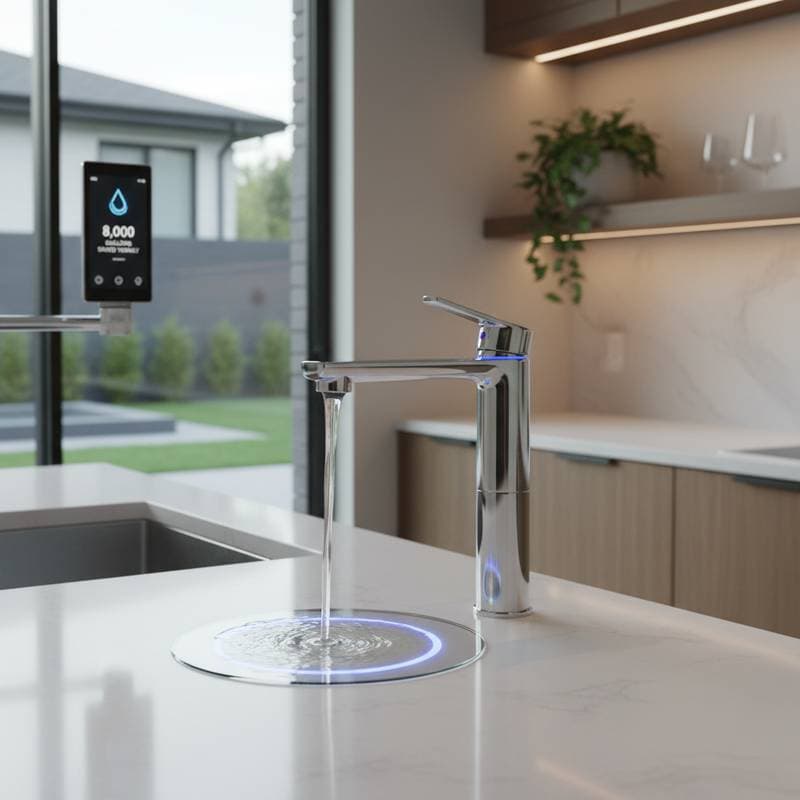
Touchless faucets employ infrared or motion sensors to activate water flow upon detecting presence beneath the spout. The mechanism operates intuitively: water dispenses when hands approach and ceases immediately upon withdrawal. This automation curtails excess usage without demanding user intervention.
Hygiene improvements accompany water conservation. Eliminating handle contact minimizes germ and bacteria transmission. Global hygiene awareness, heightened by recent events, has accelerated adoption; commercial spaces led the way, and residential applications follow suit.
Market analyses highlight increasing demand for touchless fixtures among consumers seeking blends of ease and eco-friendliness. The faucet evolves from a utilitarian item into an integral component of interconnected home systems.
Calculating the 8,000-Gallon Savings
This impressive conservation figure arises from aggregating minor efficiencies across routine activities. Consider twice-daily teeth brushing, dish washing, and produce rinsing, each involving multiple on-off cycles. Traditional faucets permit water to run idly during these intervals.
Sensor-equipped models activate solely during active use and deactivate promptly thereafter. This precision slashes idle flow, compounding to thousands of gallons saved yearly when applied consistently.
Savings extend to energy as well, with reduced hot water waste lowering heating demands. Consequently, utility costs decline, and carbon emissions decrease. Touchless faucets thus qualify as a highly economical smart home enhancement.
Enhancing Daily Comfort Through Intelligent Features
Efficiency pairs with elevated usability in these systems. Advanced variants feature tunable sensor sensitivity, preset temperatures, and compatibility with voice-activated assistants. Request warm water for dishes or cool for rinsing via simple commands, all hands-free.
Families with young children or seniors benefit particularly from this accessibility, as sensors obviate knob manipulation and enhance safety. Integrated timers and low-flow modes further safeguard against mishaps while preserving resources.
Envision concluding a baking project with sticky hands: a quick gesture triggers rinsing, streamlining the process. Such integrations epitomize smart living by eradicating minor disruptions.
Seamless Connection to Home Automation Networks
Contemporary touchless faucets integrate with comprehensive smart ecosystems encompassing lights, thermostats, and appliances. Protocols like Matter or voice platforms enable centralized oversight of water alongside other functions.
A kitchen interface might display usage metrics for daily or monthly review. Alerts for leaks, pressure anomalies, or irregular patterns facilitate early issue detection, a capability once limited to professional settings.
Unified management simplifies operations, eliminating fragmented app navigation. The faucet thus contributes to a cohesive, efficiency-oriented home environment.
Leading Product Innovations
Prominent manufacturers deliver reliable touchless solutions. Moen MotionSense and Delta Touch2O incorporate sensors with temperature controls and app connectivity, allowing usage tracking, flow customization, and voice operation.
Grohe and Kohler offer models compatible with extensive smart platforms. Kohler Konnect, for example, provides consumption analytics and upkeep notifications, empowering proactive management.
Commercial sectors, including eateries and healthcare facilities, have utilized touchless systems for hygiene and cost control. Declining prices and refined integrations propel residential uptake, positioning smart plumbing as an emerging norm.
Broader Ecological and Financial Impacts
Adoption of touchless faucets yields home-level and systemic environmental gains. Collective use could avert billions of gallons wasted nationwide, alleviating strain on water infrastructure and advancing conservation objectives.
Homeowners experience direct fiscal relief through diminished water and energy bills. These reductions occur without compromising functionality, with the initial investment recouped via ongoing savings.
This synergy of planetary and personal benefits accelerates market penetration, framing smart upgrades as prudent investments rather than extravagances.
Practical Considerations for Implementation
Prospective users should note installation expenses exceed those of standard faucets, alongside occasional sensor adjustments. Power sources, whether batteries or wired, demand periodic attention, though rechargeable options extend intervals.
Water hardness may necessitate regular descaling to sustain sensor efficacy. These maintenance aspects pale against long-term returns.
Ongoing manufacturer refinements enhance durability and reduce costs, broadening accessibility as the technology evolves.
Aesthetic Integration Driving Widespread Appeal
Design plays a pivotal role in acceptance. Modern iterations harmonize with contemporary interiors via refined finishes, streamlined shapes, and personalization options, balancing utility with visual elegance.
Design professionals incorporate these fixtures into eco-conscious renovations, aligning with sustainable principles that prioritize resource efficiency alongside user-friendly innovation.
Extending Applications Beyond Core Spaces
Touchless functionality extends to exterior and ancillary areas. Sensor-enabled outdoor spigots aid precise garden watering, avoiding continuous runs. In laundry zones, automatic shutoffs mitigate flood risks.
These adaptations illustrate the versatility of smart design, optimizing water management throughout the property.
Advancing Health Through Contactless Operation
Beyond conservation, touchless systems foster sanitation. Handles on manual faucets harbor contaminants from frequent handling, facilitating germ proliferation in communal settings.
Contact-free activation disrupts this cycle, mirroring commercial hygiene standards. Heightened domestic health focus amplifies the value, especially in high-contact zones like kitchens and bathrooms.
Insights from Market Trends
Surveys indicate consumer preference for appliances that streamline tasks while curbing waste. Water preservation emerges as a top eco-concern, with smart faucets providing an entry point to sustainable practices.
Plumbing sector growth reflects this shift, with diverse offerings from basic sensor units to advanced monitoring suites. This spectrum accommodates varying budgets and expertise levels, mainstreaming the technology.
Steps to Implement Efficient Water Management
Transitioning to a touchless faucet offers a straightforward efficiency boost. Begin by targeting frequent-use spots, such as kitchen sinks or bathroom vanities; a single replacement delivers prompt savings in water and energy.
Complement the change with complementary measures, including automated irrigation or leak monitors, to form a comprehensive conservation strategy. Each element reinforces a resource-aware home.
Embracing Resource-Conscious Innovation
Touchless faucets signal a paradigm shift in resource stewardship. Each conserved gallon supports global sustainability, while enhanced home control elevates everyday experiences. This integration of technology and responsibility paves the way for resilient, efficient living.