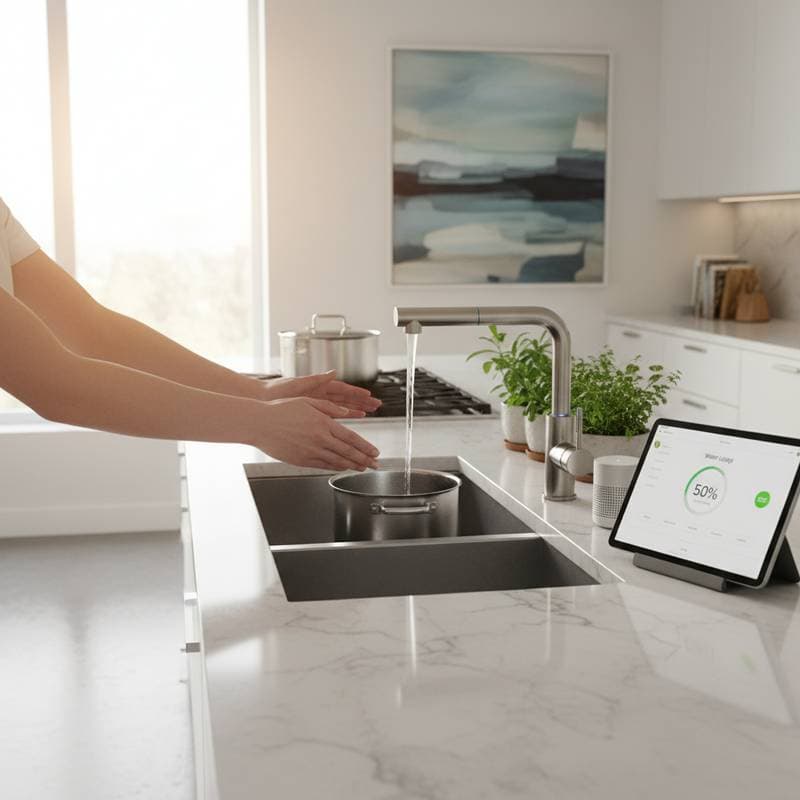
Touchless Faucets Reduce Kitchen Water Waste by Half
Picture hands coated in dough attempting to activate a faucet without spreading mess onto the handle. A nudge with the wrist starts the flow, yet by the time cleanup occurs, excess water drains unused. This routine happens in kitchens worldwide and leads to more waste than many recognize.
Advanced kitchen technology addresses this issue directly, with touchless faucets at the forefront. These devices offer more than convenience; they reduce water consumption by approximately 50 percent. The benefits extend past utility costs to include smoother integration into cooking and cleaning tasks, fostering a more hygienic and efficient kitchen environment.
Understanding Water Waste at the Kitchen Sink
Water waste often evokes images of extended showers or dripping pipes, but the kitchen sink plays a significant role. Tasks such as washing produce, rinsing dishes, or filling pots result in water running longer than necessary. Brief delays accumulate into substantial volumes over time.
Manual faucets demand physical interaction, where each adjustment or pause contributes to loss. In frequent cooking households, even minor efficiency gains yield substantial reductions. Touchless models activate and deactivate swiftly, providing the accuracy essential for conservation.
Mechanics of Touchless Faucets
Touchless faucets employ infrared or capacitive sensors to identify hand or object presence under the spout. Detection initiates water flow, which ceases upon withdrawal. Users adjust sensitivity via app or device settings to suit various applications.
Certain models feature temperature settings activated by gestures, such as one wave for warm water or two for cold. Integration with smart home systems enables voice directives through assistants like Alexa or Google Home. Commands such as filling a pot to a specific volume prompt precise dispensing, combining accuracy with automation for practical resource management.
Quantifying the Savings
Properly configured touchless faucets lower water usage by 40 to 50 percent relative to conventional types. Standard faucets maintain full flow during distractions, whereas touchless versions halt immediately upon disengagement. Monthly savings reach hundreds of gallons, reflected in lower bills.
Frequent cooking or multi-person households amplify these figures. Local utilities promote such devices through conservation programs, occasionally offering rebates for qualifying units. Contacting providers uncovers additional incentives.
Selecting an Appropriate Touchless Faucet
Options abound in the smart faucet market, spanning budgets and aesthetics. Consider these three recommendations:
-
Moen Essie Touchless Faucet
Price: approximately $180
Equipped with a base-mounted motion sensor and retractable spray head, this unit installs easily and suits contemporary kitchens. Response time proves responsive, although it omits app or voice features. -
Delta Trinsic VoiceIQ Faucet
Price: approximately $420
Merging motion detection with voice control, it pairs effectively with leading smart assistants and programs for exact volumes. Its streamlined appearance and consistent flow appeal to regular cooks seeking reliability. -
Kohler Sensate Smart Faucet
Price: approximately $700
Noted for rapid sensor activation and leak alerts, this model connects via Wi-Fi for updates and usage tracking through the Kohler Konnect app. Superior construction resists spotting and prints.
All incorporate aerators to sustain pressure at 1.5 gallons per minute, balancing output with efficiency.
Installation Considerations and Compatibility
Installation requires one to two hours for those familiar with basic plumbing. Units fit standard sink configurations and supply required components. Key variance involves power: batteries or outlet connections.
During kitchen updates, plan concealed outlets under the sink to avoid battery changes. Select models with manual override for uninterrupted use during power issues. This precaution prevents disruptions noted by initial users.
Hygiene Advantages Beyond Conservation
Touchless faucets enhance cleanliness by eliminating handle contact. In active kitchens, contaminants from raw proteins, dry ingredients, or residues transfer easily to surfaces. Non-contact operation minimizes these risks.
Commercial settings adopted such technology for sanitation, and residential adoption follows suit. The design promotes thorough rinsing without added steps, particularly beneficial for households with young children.
Seamless Integration into Smart Kitchens
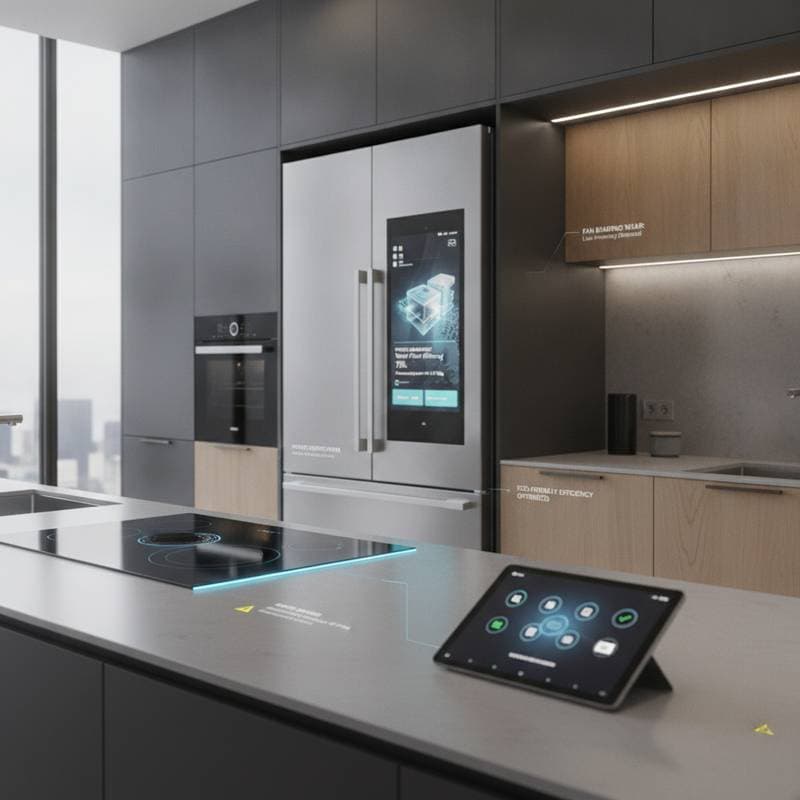
Contemporary kitchens function as interconnected networks of appliances. Touchless faucets align with smart dishwashers, cooktops, and refrigerators via Wi-Fi or Bluetooth. Apps track consumption patterns and enforce limits.
The Delta VoiceIQ, for instance, records daily usage to inform behavioral adjustments. Combined with soil-sensing dishwashers, this coordination optimizes overall operations. Some systems link to energy monitors, displaying per-gallon costs to reinforce mindful practices.
Financial Planning and Investment Return
Initial costs exceed basic faucets, yet returns materialize through reduced usage, efficiency, and rebates. Budget $150 to $800 based on specifications. Professional setup adds $100 to $200 for non-DIY approaches.
Renters benefit from spout attachments offering motion activation for about $60. Upkeep involves sensor cleaning and aerator flushing; alerts signal low batteries or blockages.
Ensuring Safe Installation
Shut off the main water supply prior to work and verify sink hole alignment. Older systems may require adapters, assessable by professionals. Electrically powered units adhere to code; expert wiring safeguards operation and warranty.
Steps to Upgrade Your Kitchen Faucet
Transitioning to a touchless faucet modernizes the kitchen with control, sanitation, and savings. Basic motion units or advanced connected versions deliver instant usability.
Envision preparing meals with marinade-covered hands activating flow effortlessly. This adjustment elevates kitchen functionality into a hygienic, intentional area valuing each resource.
Begin by assessing current fixtures and power availability. Evaluate models against routines and technology comfort. For extensive projects, connect with qualified installers through reliable platforms.
These faucets demonstrate accessible smart enhancements that embed sustainability into daily life.