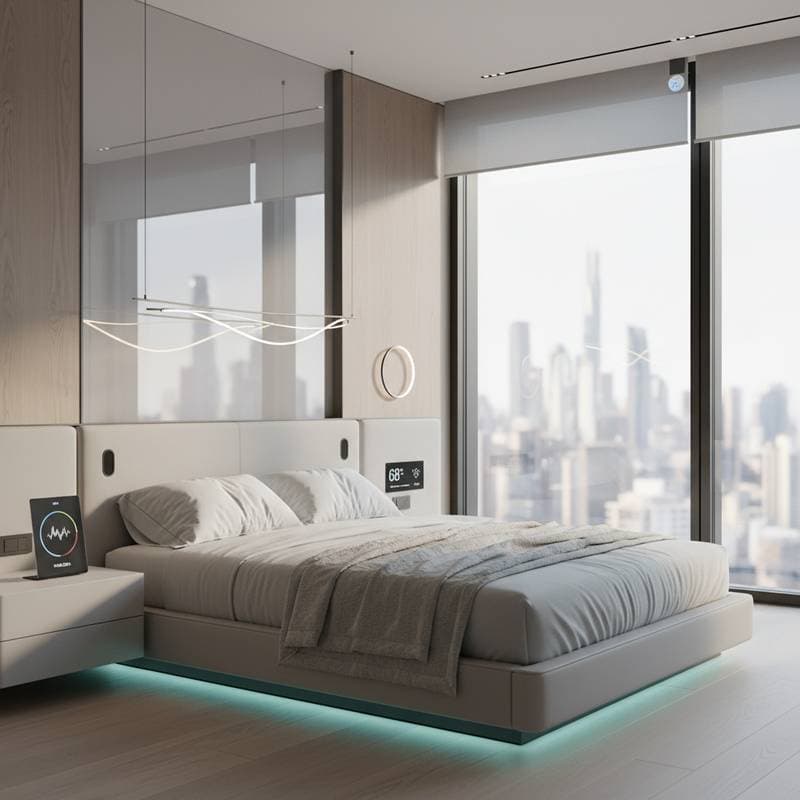
How Smart Sleep Technology Increases REM Sleep by 35 Percent
Smart homes continue to advance, with bedrooms emerging as highly sophisticated areas. Technology in these spaces now extends beyond basic lighting or temperature adjustments to influence sleep science directly. Connected smart sleep systems deliver tangible outcomes, enabling users to extend REM sleep by up to 35 percent. This development marks a pivotal advancement in rest management, where devices not only monitor sleep but also enhance nightly recovery processes.
The Emergence of Sleep Optimization
Sleep represents a key focus in wellness technology. Research indicates that over half of adults employ sleep tracking tools, such as wearables or intelligent mattresses. However, mere monitoring falls short in modern applications. Current advancements incorporate sensors, adaptive algorithms, and environmental adjustments to foster superior rest conditions. Rather than just documenting sleep quality, these systems modify surroundings to elevate performance on subsequent nights.
For individuals, this evolution shifts from observation to intervention. The intelligent bedroom functions as a customized sleep laboratory, blending data analysis with physical comfort while aligning automation with physiological responses.
1. Intelligent Mattresses That Adapt to Sleep Patterns
Contemporary intelligent mattresses surpass simple motion detection. Integrated sensors monitor heart rate, respiration, and body temperature, then modify firmness levels or thermal settings dynamically during the night. Should overheating occur, the mattress activates cooling mechanisms. As respiration indicates progression into deep sleep, it refines pressure distribution to minimize disruptions.
Such responsiveness prolongs deep and REM sleep phases. Developers of these technologies note that users achieve verifiable improvements in restorative sleep after consistent application over multiple nights. Consequently, the mattress personalizes to individual requirements, responding instantaneously to bodily signals for optimal support.
2. Integrated Lighting Systems That Align with Circadian Cycles
Light serves as a primary regulator of the circadian rhythm. Excessive blue light exposure prior to bedtime postpones sleep initiation, whereas soft warm illumination promotes melatonin production. Advanced lighting solutions now synchronize with sleep metrics, automatically calibrating color tones and intensity according to daily routines.
Consider bedroom lights that progressively fade as the system registers relaxation cues, then gradually intensify at the ideal awakening moment. This alignment enhances sleep depth and morning vitality. Manufacturers linking lighting with sleep applications deliver fluid, automated day-to-night transitions that integrate seamlessly into natural patterns.
3. Adaptive Climate Systems Synced to Sleep Phases
Core body temperature significantly affects sleep efficacy. Conventional thermostats hold steady temperatures, but intelligent climate controls now harmonize with sleep stages. These units learn user preferences, methodically lowering room temperature during initial sleep onset and subtly increasing warmth near wakefulness.
Certain models interface with wearables or mattress sensors, reacting to real-time body heat rather than fixed timers. This responsive modulation averts overheating, mitigates night sweats, and sustains extended REM periods. The outcome provides unobtrusive yet profoundly rejuvenating effects.
4. Dynamic Sound Environments and Personalized Sleep Guidance
Audio elements profoundly shape rest quality. Intelligent speakers and linked sleep devices now produce tailored soundscapes that counter ambient disturbances or physiological indicators. Upon detecting motion indicative of agitation, the system introduces soothing pink noise or subtle atmospheric sounds to facilitate reentry into sleep.
In addition to audio, these tools offer guidance derived from sleep analytics. They deliver targeted advice, such as optimal bedtime intervals or suggested limits on caffeine intake. Merging immediate sound interventions with customized recommendations positions these devices as evolving partners in sleep management.
5. Unified Platforms for Effortless Sleep Integration
Compatibility has historically posed difficulties in smart home setups. Emerging universal protocols and multi-device compatibility resolve these issues. Intelligent mattresses, climate units, lighting, and trackers now operate within cohesive networks. This connectivity supports automated sequences, such as evening routines that dim lights, adjust temperatures, and initiate calming audio through a single activation or biological trigger.
Once a sleep monitor confirms deep sleep entry, it instructs connected elements to silence alerts, halt notifications, or preserve optimal settings until dawn. This coordinated framework establishes a reactive habitat where bedroom components collaborate to elevate rest quality.
The Importance of REM Sleep
REM sleep, characterized by rapid eye movements, facilitates memory consolidation, emotional processing, and cognitive development. It also aids in mood stabilization and creative thinking. Numerous adults experience REM deficiencies due to stress, erratic timetables, or external interferences. By fine-tuning temperature, audio, and illumination to match sleep cycles, intelligent systems prolong and refine REM durations.
Evaluations by sleep technology creators demonstrate substantial REM extensions in adaptive setups versus conventional ones. Achieving a 35 percent uplift in REM allocation translates to mornings marked by heightened refreshment, concentration, and emotional equilibrium.
Addressing Challenges in Smart Sleep Integration
Despite evident advantages, individuals encounter hurdles in embracing smart sleep solutions. Initial expenses exceed those of standard items, and data privacy issues regarding biometrics linger. Nevertheless, as security measures strengthen and prices decline, uptake surges. Most users report that the enhanced sleep outcomes validate the commitment.
Efficiency in energy use further bolsters appeal. These systems curtail consumption by activating heating or cooling precisely when required. Environmentally aware consumers appreciate this dimension, enhancing the value of technology in daily rituals.
Practical Innovations in Action
Leading firms drive this shift. Intelligent mattress providers connect with voice interfaces and health ecosystems for holistic sleep analysis. Lighting specialists collaborate with wellness platforms to establish rhythm-aligned protocols. Even established bedding makers introduce embedded trackers that capture movement data without additional devices.
Emerging ventures explore aroma dispensers tied to sleep progression, emitting relaxing scents in lighter phases and invigorating ones upon rising. Additional efforts target noise-cancellation sound fields that neutralize urban sounds. These developments foster individualized, research-supported rest strategies.
Advancing Toward Optimized Sleep Environments
Future bedrooms may evolve into comprehensive wellness centers that oversee and refine not only sleep but holistic recuperation. Prototypes include air purification monitors, alignment-correcting pillows, and automated drapes responsive to dawn light. The emphasis lies in embedding technology unobtrusively, allowing it to operate silently for ideal conditions.
As familiarity with home automation grows, bedroom applications follow suit. Unlike overt interfaces, these solutions prioritize nuanced, metric-informed refinements. They merge empirical insights with tranquility to position rest as a deliberate element of self-improvement.
Implementing Smarter Rest Practices
Individuals seeking to elevate nightly recovery can begin with modest additions for substantial impact. Install adjustable color-temperature lights, deploy a responsive thermostat for automated cooling, or utilize a speaker for customized noise patterns to refine sleep.
The potential for a 35 percent REM enhancement underscores technological progress in addressing human physiology. Beyond the devices, the core value resides in tangible enhancements to well-being.