AI Robot Vacuums Triple Cleaning Speed by 2026
Nearly half of homeowners now own at least one smart cleaning device, and the next wave arrives faster than expected. Robot vacuums powered by advanced artificial intelligence will clean up to three times faster within the next few years. This development sets a new standard for automated home care. What once felt like a futuristic luxury rapidly becomes an everyday convenience, reshaping how people maintain their homes.
The Race Toward Faster Cleaning
Early robot vacuums proved clever yet often slow. They zigzagged through rooms and missed corners. The new generation differs significantly. Adaptive learning, improved sensors, and smart navigation evolve these machines into true household assistants. They understand not only where to clean but also how to perform the task efficiently.
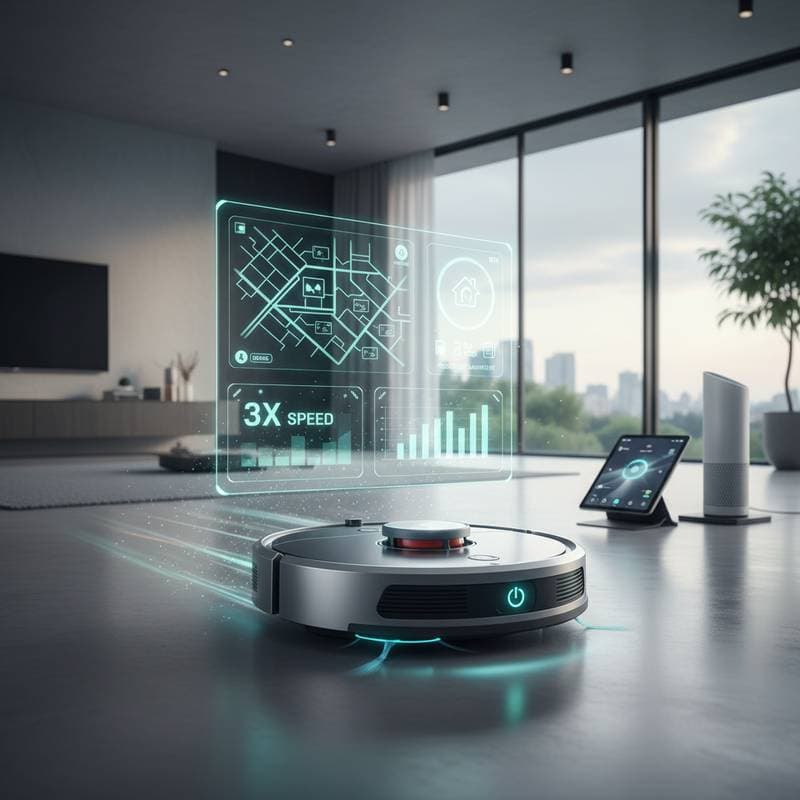
Manufacturers rethink suction systems, motor design, and path optimization. Advanced mapping replaces random movement. Vacuums identify zones, adjust speed, and follow precise patterns. This approach yields dramatic increases in coverage and speed. Some prototypes already achieve near-human efficiency.
1. Smarter Navigation, Shorter Cleaning Time
The biggest leap stems from enhanced perception. High-resolution sensors and object recognition algorithms enable vacuums to map rooms with near-human accuracy. Fewer collisions occur, routes shorten, and cleaning finishes faster.
This efficiency saves energy and reduces wear on components. Consumers gain the ability to schedule quick touch-ups before guests arrive or after meals. No longer do they wait hours for completion.
Brands like Roborock and Ecovacs integrate advanced visual mapping. Users set virtual boundaries through an app. Future models learn distinctions between spaces like hallways and living rooms. They adjust power levels automatically for optimal performance.
2. AI-Powered Dirt Detection
Speed alone falls short if cleaning quality declines. Intelligent dirt detection addresses this gap. Optical sensors and acoustic data identify high-dirt zones. Vacuums concentrate efforts precisely where needed.
Targeted cleaning allocates time unevenly across surfaces. Machines focus on problem areas, such as under kitchen tables or near entryways. This method boosts efficiency and extends battery life.
Dyson’s latest prototype employs real-time debris analysis. It adapts suction strength dynamically. iRobot’s software updates refine sensor interpretation of dirt density. These capabilities will become standard as AI models advance.
3. Multi-Floor Memory
Traditional robot vacuums struggled across floors or surfaces. Updated models store multiple maps and recognize levels automatically. This eliminates manual setup each time users carry the device upstairs.
Convenience drives smart home adoption. Multi-floor memory enables one device to manage an entire home. No repetitive programming or extra docking stations prove necessary.
A single unit cleans the living room in the morning. It navigates to the kitchen after lunch. The device remembers every rug and obstacle in both areas. Brands like Shark and Eufy introduce this autonomy now.
4. Predictive Maintenance and Self-Optimization
Next-generation vacuums clean faster and maintain themselves effectively. Embedded diagnostics alert users to worn brushes or clogged filters. Models run short recalibration sessions to adjust brush speed and suction for peak performance.
Self-monitoring reduces replacement part needs and extends lifespan. Users avoid unexpected performance drops from overlooked maintenance.
High-end prototypes generate reports on cleaning time, energy use, and maintenance requirements. This feature will become common as manufacturers develop fully self-sustaining devices.
5. Integration with Broader Smart Home Systems
Homes grow more connected, and robot vacuums sync with lighting, thermostats, and security systems. A vacuum starts cleaning when motion sensors detect departures. It pauses if a smart doorbell rings.
Integration exceeds optionality. Consumers expect seamless device cooperation. Connected vacuums foster unified home experiences.
Matter-compatible models link with major voice assistants. Users initiate cleaning via voice commands. Future phases introduce predictive routines. Vacuums learn household patterns and schedule accordingly.
6. AI Learning from Household Habits
The most exciting advancement involves machine learning. Upcoming vacuums adapt to user behavior rather than follow rigid programming. They recognize frequently needy rooms or least disruptive cleaning times.
Personalization elevates robots from gadgets to assistants. Devices learn and improve, minimizing manual input while tailoring results.
Consider a vacuum that cleans the kitchen each morning after breakfast. It notices recurring crumbs at that time. Several manufacturers test this adaptive intelligence, positioning it for standard adoption soon.
7. Sustainability and Efficiency Gains
Faster cleaning promotes smarter energy use. Tasks finish in less time, slowing battery drain. Vacuums spend more time docked for efficient recharging. Reduced consumption lowers household electricity costs and environmental impact.
Consumers seek effective, responsible technology. Next-generation vacuums incorporate recyclable materials, modular components, and optimized energy systems.
Samsung and LG explore eco-friendly packaging. Modular brush heads allow replacement without unit disposal. These choices minimize waste while sustaining high performance.
Achieve Effortless Home Maintenance
Robot vacuum evolution mirrors broader shifts toward anticipatory homes. Devices act without constant supervision to meet needs. What began as novelty now serves as essential tools for clean, organized spaces.
The future emphasizes quiet, effective self-management over buttons and schedules. AI advancements triple cleaning speed across short product cycles. Spotless homes require minimal effort and stand within reach.