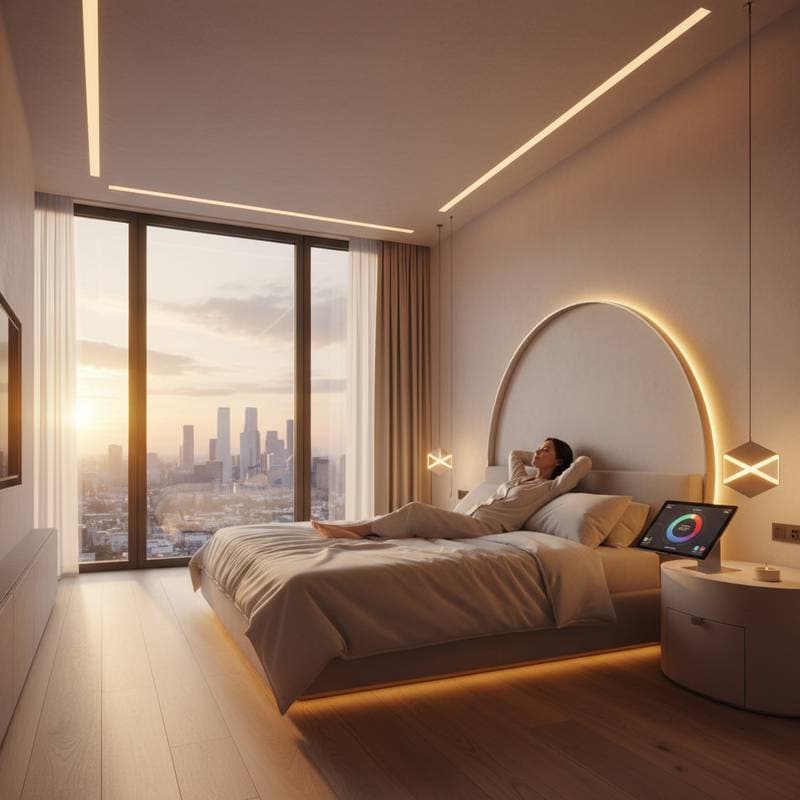
Smart Lighting Aligns with Your Circadian Rhythm for Optimal Health
Almost half of homeowners possess at least one smart device, signaling a transition toward residences that respond to individual needs and promote vitality. Smart lighting emerges as a particularly intimate and biology-supporting innovation in this landscape. This technology extends beyond mere convenience and cost reduction; it now integrates with human physiology by aligning with the circadian rhythm, reshaping daily patterns of rest, productivity, and emotional states.
Consider rousing to illumination that gradually intensifies, replicating the dawn's progression to foster natural wakefulness. As night approaches, lights transition to softer, warmer tones that invite tranquility and readiness for slumber. Such nuanced variations impact vitality and disposition profoundly. Circadian smart lighting unites cutting-edge engineering with physiological support, yielding living spaces that appear vibrant and attuned.
The Fundamentals of Circadian Lighting
The human body operates on an approximate 24-hour cycle that governs rest, vigilance, and hormonal release. Light exposure serves as the primary regulator of this cycle. Exposure to bright, cool-toned light indicates daytime activity, whereas subdued, warm light prompts the body to relax.
Conventional artificial illumination frequently interrupts this equilibrium, sustaining alertness during late hours and inducing lethargy upon rising. Circadian lighting employs adjustable color temperatures and intensities to emulate sunlight's daily arc. Through programmed shifts in hue and luminance, these setups reinforce robust sleep-wake patterns. Though rooted in science, the application emphasizes harmony between surroundings and personal physiology.
The Health Implications of Smart Lighting
Studies from health and illumination research centers demonstrate light's influence on disposition, efficiency, and repose. Inadequate lighting hampers melatonin synthesis, the hormone essential for rest, resulting in exhaustion or sleep disturbances. Circadian smart lighting sustains the body's innate tempo, elevating daytime vigor and facilitating restorative nights.
Residences evolve into comprehensive wellness domains, with lighting offering an uncomplicated entry point. Distinct from dietary aids or specialized rest devices, lighting functions unobtrusively, subtly guiding biological cues without deliberate intervention. This approach renders it an effective, user-friendly method for advancing routine health.
Trend 1: Dynamic Color Temperature Adjustments
A prominent attribute of circadian lighting involves varying color temperatures. Light with elevated blue components and cool whites enhances attentiveness, suiting morning rituals or professional areas. Conversely, evening amber tones promote ease and precondition the body for downtime.
Automated systems execute these changes via timetables or sensor inputs. Philips Hue and Nanoleaf, for example, provide modes that incrementally alter hues and intensities over the day. This automation yields fluid experiences akin to natural daylight, eliminating the need for constant oversight.
Trend 2: Seamless Integration into Health Networks
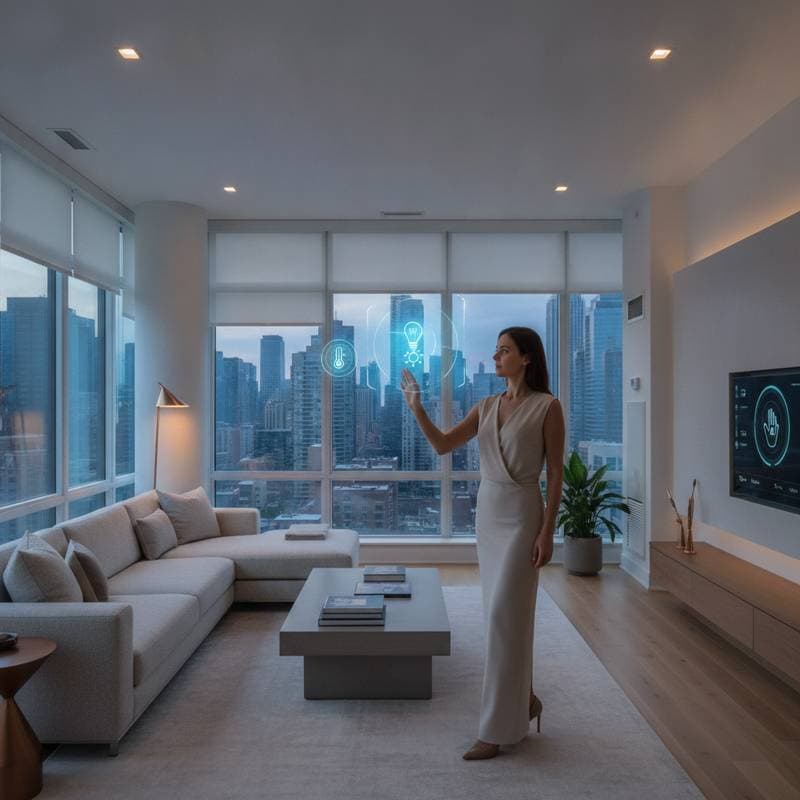
Circadian lighting extends beyond standalone use. It increasingly interfaces with expansive smart home frameworks, encompassing climate controls, window coverings, and rest monitors. Coordinated operations generate unified settings that align with diurnal phases.
Envision lights fading as the thermostat cools marginally and shades descend toward bedtime. At dawn, illumination activates prior to subtle audio cues or thermal shifts that facilitate awakening. Ecosystems such as Google Home and Apple HomeKit facilitate these connections, rendering wellness routines comprehensive and instinctive.
Trend 3: Tailored Illumination Schedules
Advanced smart lighting prioritizes customization. Rather than uniform timetables, platforms adapt to user behaviors and inclinations. Adjustments occur according to wake times, ambient sunlight penetration, or motion data from fitness trackers.
LIFX and Sengled develop algorithms that evolve with lifestyle nuances. For late-night professionals, evening fades postpone accordingly. For those with extensive outdoor exposure, daytime peaks compress. Such responsive configurations position lighting as an individualized health companion over a fixed element.
Trend 4: Lighting Optimized for Productive Workspaces
Circadian principles permeate professional settings, including offices and collaborative zones. Organizations acknowledge lighting's role in sustaining focus, morale, and mental acuity. Evidence indicates that dynamic illumination correlates with increased vigilance and diminished weariness among staff.
By emulating daylight fluctuations, workplace lighting bolsters sustained attention without excess arousal. Intelligent panels and overhead arrays deploy in business contexts to cultivate person-oriented atmospheres. Remote professionals benefit similarly through adaptive desk luminaires that modulate daily. The objective remains consistent: illumination that bolsters sensation and operation across environments.
Trend 5: Advantages in Energy Conservation and Ecology
Health gains notwithstanding, circadian lighting advances environmental stewardship. Intelligent controls calibrate output relative to presence and external light, minimizing excess usage. Integrated sensors for movement and natural illumination ensure activation only upon necessity.
Paired with efficient LED sources and strategic programming, these systems substantially decrease residential power demands. This confluence of vitality and ecological mindfulness attracts environmentally aware residents seeking harmony between ease and accountability.
Trend 6: Advancements in Biodynamic Illumination
Biodynamic lighting elevates circadian strategies by fine-tuning light spectra to replicate sunlight's physiological impacts. Emphasis transcends mere temperature or intensity; it encompasses spectral variations that affect hormonal balance and awareness.
BIOS Lighting and Ketra pioneer solutions for homes and enterprises, delivering light calibrated for biological efficacy. Grounded in insights from rest experts and physiologists, these innovations fuse engineering with bodily science. The core principle involves fostering innate cycles rather than opposing them.
Tangible Daily Advantages
Circadian lighting delivers practical outcomes beyond abstraction. Users frequently note enhanced repose, sharpened concentration, and steadier emotions. Awakening routines simplify with unambiguous optical signals for activation. Nighttime phases calm through transitional cues for decompression.
In households with children, consistent patterns aid in establishing reliable rest habits. For seniors, daytime clarity sustains engagement, while nocturnal depth improves recovery. Psychological well-being benefits too, as regular illumination mitigates mood fluctuations tied to reduced seasonal light.
Implementing Circadian Lighting Effectively
Initiating circadian lighting requires no extensive overhaul. Numerous bulbs and installations feature innate or wellness-oriented configurations. Commence by substituting pivotal room lights with adaptive bulbs capable of hue and intensity modulation. Target bedrooms and communal spaces, where effects on calm and rest prove most pronounced.
Connect to a central hub or voice interface for programmed sequences. Align shifts with personal rest cycles or synchronize with additional appliances. For precision, integrate with activity monitors or repose applications to calibrate cycles per actual data.
Individuals favoring minimal involvement may opt for comprehensive area systems with automatic daily adaptations. These incorporate distributed panels or overhead units for uniform coverage and gradual evolutions. Though upfront costs exceed basics, they afford immersive, intuitive circadian immersion.
Anticipating Future Developments
As illumination intelligence grows, anticipate enhanced ties to vitality analytics and remote customization. Emerging platforms could process repose metrics, pulse rates, or mobility to forecast and refine light requirements. Machine learning promises instantaneous optimizations for peak function and renewal.
Producers investigate adjustable surfaces that vary light spread and orientation temporally. Such features could heighten realism, approximating sunlight's positional changes. Upcoming progress aims to render artificial light nearly indistinguishable from natural sources.
Harmonizing Home with Natural Light Cycles
Circadian lighting's ascent underscores evolving residential priorities. Emphasis shifts from utility and visual appeal to holistic care. Illumination evolves into a nurturing element, shaping vitality and sentiments. When residential lighting complements physiological tempos, inhabitants experience greater equilibrium, acuity, and rejuvenation.