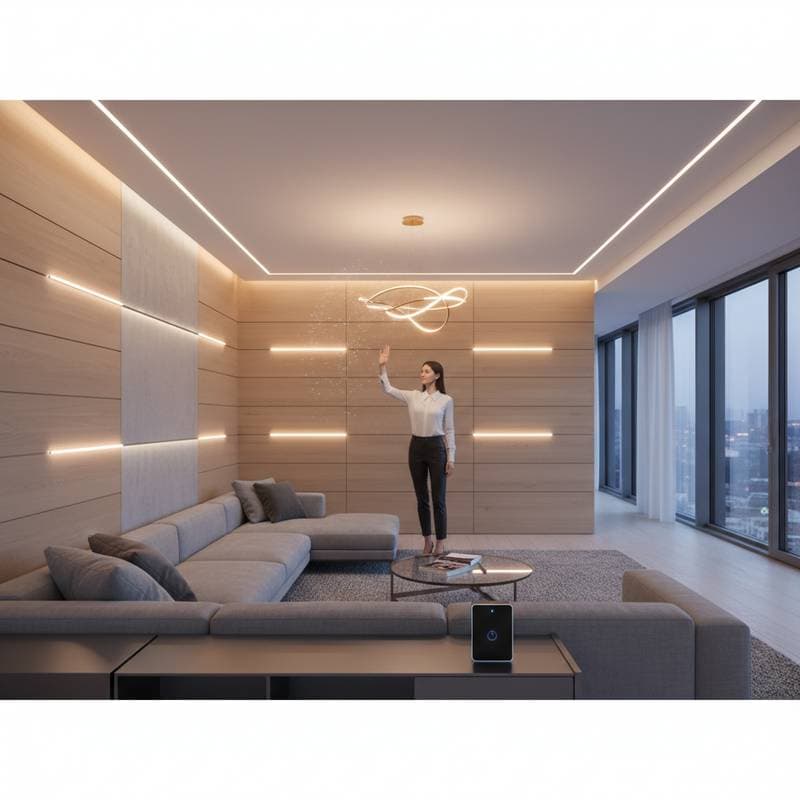
Gesture Control: The Future of Touchless Home Lighting
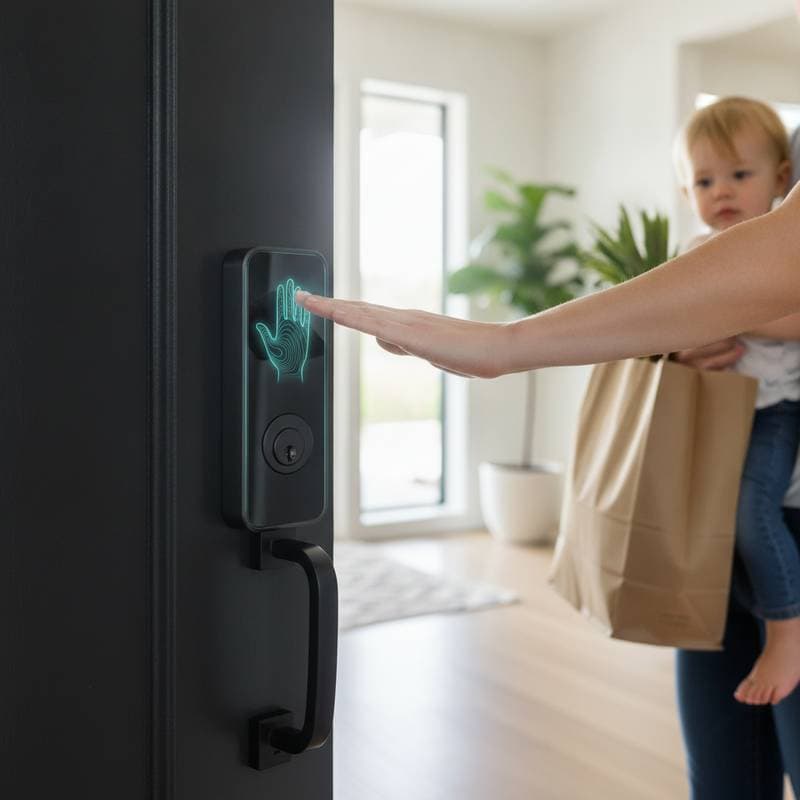
Picture entering your kitchen, arms laden with groceries. A simple wave toward the ceiling activates the lights without delay. This scenario eliminates the need for switches, prevents smudges, and avoids searching in dim conditions. Touchless lighting represents a practical advancement now common in contemporary residences.
The Evolution to Touchless Systems
Smart bulbs, voice assistants, and programmed schedules have paved the way for automated illumination. Gesture-controlled lighting advances these options by enabling command through natural hand motions. A wave turns lights on or off, a swipe adjusts intensity, and a circular gesture alters color tones. This method provides a hygienic and instinctive interaction with living areas.
Builders and remodelers incorporate gesture systems into designs, particularly in busy zones such as kitchens, bathrooms, and foyers. These areas often involve occupied, wet, or soiled hands. The underlying technology combines motion detectors, spatial analysis, and infrared cameras to ensure precise, immediate responses to user actions.
Understanding Gesture Recognition Technology
Gesture systems rely on sensors and software to process movements instantaneously. Infrared or radar sensors identify hand locations and trajectories. A swipe detected by the sensor executes the designated function.
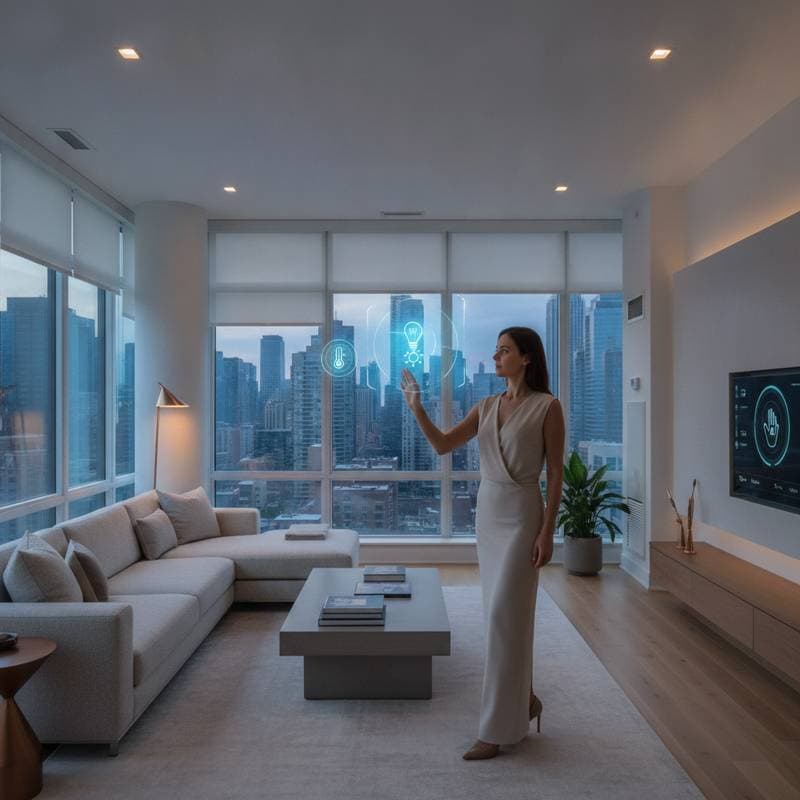
Advanced configurations employ spatial computing to outline room layouts and monitor activities within them. Such setups support intricate commands, like directing a gesture to activate fixtures in a specific zone. For instance, pointing at the living area illuminates grouped lights, while a clockwise rotation at the counter modifies brightness levels.
Consider this guidance: Entry-level systems use simple proximity detection, which may interpret unintended actions as commands. Higher-end models incorporate three-dimensional mapping to distinguish deliberate gestures and adapt to individual habits over time.
Implementing Touchless Lighting Solutions
Integration of gesture control requires no full home overhaul. Options exist for various budgets and technical preferences.
-
Begin with a basic sensor attachment. The Govee Glide Motion Sensor Kit, priced at approximately $65, mounts on walls or ceilings and pairs with common smart bulbs. Radar technology enables detection of straightforward motions.
-
Advance to a modular panel system. The Nanoleaf Lines Gesture Edition, costing about $150, features customizable light panels responsive to swipes. Wi-Fi connectivity allows integration with platforms like Apple Home or Google Home for scene programming.
-
Invest in comprehensive room mapping. The Leviton Decora Smart Gesture Hub, around $300, works with compatible controls and employs spatial analysis for full-room oversight. It handles diverse gestures to manage lights, shades, or audio.
These devices align with major smart ecosystems, including Alexa, Google Home, and Apple HomeKit. This compatibility permits combination with verbal instructions or routines for unified operation.
Key Factors for Successful Installation
Placement influences performance significantly. Position sensors at chest or head level with unobstructed views of gesture zones. Steer clear of windows or vents, as light and air currents may interfere with infrared readings.
Costs range from $50 to $500 based on system complexity. For new builds, involve electricians during planning to optimize wiring and minimize expenses. Retrofitting often uses wireless units that connect to standard outlets for straightforward deployment.
Prioritize safety in all setups. Professional installation is essential for components linked to electrical lines. Although many modules operate on low voltage, improper connections risk malfunctions, erratic behavior, or circuit harm.
Reasons Builders Adopt Gesture Technology
Property developers promote gesture lighting as a key attribute in new constructions. It conveys innovation, cleanliness, and ease of use. In food preparation areas, it avoids surface contamination. Bathrooms benefit from contactless activation during routines. Hallways gain from simple nighttime guidance.
Energy conservation emerges as a notable benefit. Systems deactivate or reduce output upon detecting inactivity, lowering consumption. Premium units adapt to natural light, balancing efficiency with user comfort.
Spatial systems prepare for Matter protocol compatibility. This development allows gestures to influence thermostats, window treatments, or security protocols through unified commands.
Daily Experience with Gesture-Controlled Lights
After setup, gestures integrate seamlessly into habits. Users often perform motions without conscious effort while navigating spaces. The responsive nature maintains engagement over time. Families find value in safe, reachable control for all ages, from children avoiding high switches to seniors preferring hands-free options.
Customization options include adjusting sensitivity or mapping motions to tasks. A double wave might initiate a cinematic ambiance, whereas a gradual upward sweep increases illumination progressively.
Steps to Integrate Gesture Lighting
Start implementation in one area, like a kitchen or entrance, to evaluate integration with routines. Expand based on positive results. For construction or renovations, engage smart home experts to embed systems into infrastructure.
Professional assistance is available through platforms like SavageTech Marketplace. Verified specialists handle placements, calibrations, and ecosystem linkages at no initial cost.
Gesture lighting extends beyond mere utility. It fosters intuitive home responses to human presence, streamlining daily interactions. This technology elevates living by making environments adaptive and effortless.
Frequently Asked Questions
What defines gesture-controlled lighting?
Gesture-controlled lighting employs sensors to recognize hand movements and convert them into actions like powering lights or varying intensity.
Does it pair with current smart bulbs?
Yes, compatibility extends to brands such as Philips Hue, LIFX, and Nanoleaf.
Is Wi-Fi essential for gesture lighting?
Wi-Fi supports configuration and remote management, though core operations function without connectivity.
Are these systems suitable around children and pets?
Yes, low-voltage designs ensure safety without physical contact. Calibration targets human-scale motions, minimizing pet activations.
What is the price range for gesture lighting?
Basic sensors start at $50, while complete spatial setups reach $500.
Can individuals install gesture lighting independently?
Wireless options suit do-it-yourself approaches, but wired systems demand licensed electrician involvement.
Does it integrate with voice assistants?
Compatibility includes Alexa, Google Assistant, and Apple HomeKit in most cases.
What developments await gesture lighting?
Integration with spatial computing and Matter standards will expand control to diverse smart functions.