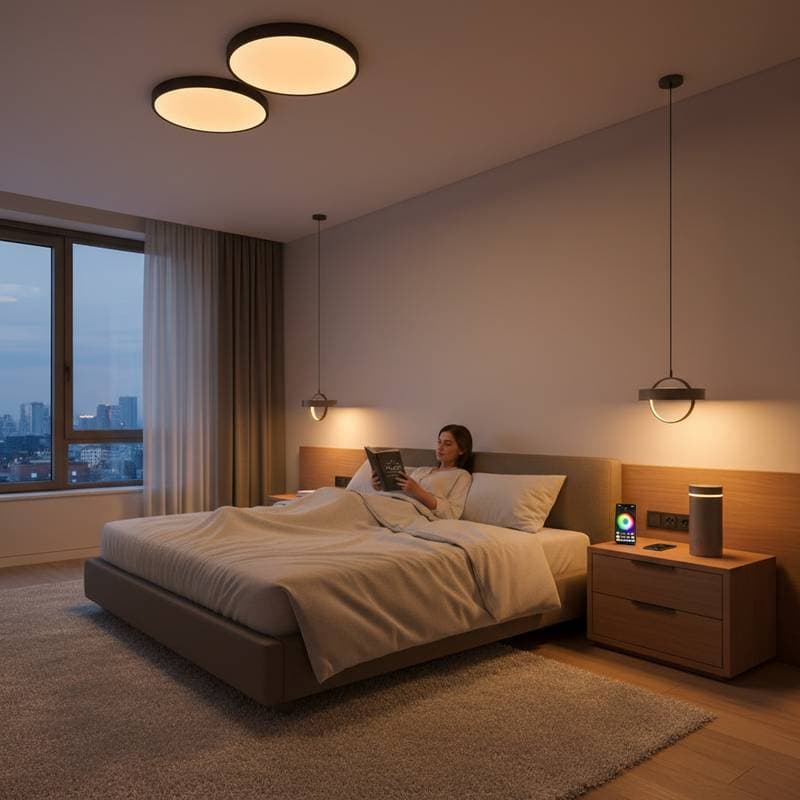
Harness Smart Lighting to Restore Your Natural Sleep Cycle
Imagine lying in bed, wide awake, scrolling through your phone, hoping sleep will finally arrive. The clock continues to tick, and you resolve that tomorrow you will retire earlier. Numerous individuals experience this scenario frequently. Sleep challenges often emerge subtly until nightly insomnia establishes itself as routine.
Consider the possibility that the solution resides not in pharmaceuticals but in your light bulbs. This concept may appear overly straightforward, yet substantial scientific evidence supports it. Appropriate lighting enables your body to reestablish its inherent rhythm, resulting in deeper and more rejuvenating sleep without the need for drugs.
The Disruption Caused by Contemporary Lighting
Artificial illumination has revolutionized daily existence, yet it has also interfered with sleep patterns. Exposure to bright, cool-toned white light during late evening hours deceives the brain into perceiving ongoing daylight. Consequently, production of melatonin, the hormone essential for initiating sleep, becomes inhibited. Even consistent warm lighting maintained at uniform brightness throughout the day can disorient your internal biological clock.
This discord between environmental light and physiological processes disturbs what specialists term the circadian rhythm, the mechanism regulating periods of alertness and drowsiness. Prolonged misalignment contributes to diminished sleep quality, emotional fluctuations, and lethargic awakenings. Understanding this interplay underscores the importance of aligning artificial light with natural cycles to mitigate these effects.
Implementing Smart Dynamic Lighting
Smart dynamic lighting addresses these issues by automatically modulating color temperature and intensity to emulate natural daylight variations. During morning hours, it bathes your environment in cool, invigorating illumination to promote wakefulness. As evening approaches, the system transitions to gentle amber hues that cue your body to relax and prepare for rest.
The primary advantage stems from its effortless integration into daily routines. Manual adjustments for dimming or color changes become unnecessary, as automation occurs via integrated sensors or programmed timetables. This setup effectively simulates sunrise and sunset phenomena within your living spaces, fostering a harmonious biological response.
Selecting Suitable Products
Initiate your upgrade modestly or comprehensively, depending on your preferences and resources. Below are three recommendations categorized by cost and functionality to suit diverse requirements.
-
Entry-Level Selection: Philips Wiz Smart Bulb (approximately $20 per unit)
These Wi-Fi-enabled bulbs allow scheduling of basic light cycles through a dedicated mobile application. They provide an economical introduction to circadian lighting principles, enabling users to test adjustments in targeted areas without significant investment. -
Intermediate Option: Nanoleaf Essentials A19 Thread Bulbs (approximately $35 per unit)
Featuring automated color temperature variations, these bulbs integrate seamlessly with Apple Home and Google Home platforms. Such compatibility enhances the overall immersion, allowing voice-activated control and synchronization with other smart devices for a cohesive home ecosystem. -
Advanced Choice: LIFX Clean Smart Bulbs (approximately $70 per unit)
These premium bulbs deliver exact control over color and brightness levels. A notable feature is their elevated color rendering index, which ensures room colors appear vivid and authentic, closely mimicking outdoor light perception to better support circadian alignment.
Prior to purchase, verify compatibility with your existing smart home hub. Certain protocols, such as Matter or Thread, facilitate optimal interoperability and automation across connected devices, preventing integration challenges.
Establishing an Effective System
Implementation proves simpler than anticipated, requiring minimal technical expertise.
-
Prioritize bulb replacement in primary zones, including the bedroom and living room. These locations facilitate the critical shift from active daytime pursuits to evening repose.
-
Configure schedules to replicate daylight progression. Many applications offer preset circadian protocols, which users can customize to accommodate personal schedules and preferences.
-
Incorporate motion sensors or intelligent switches for hands-free operation, eliminating the need to interact with your device manually.
-
Link with voice assistants to enable commands like "initiate bedtime mode," prompting a gradual fade to soothing warm illumination.
An effective strategy involves layered illumination approaches. Pair overhead installations with programmable lamps or LED strips to achieve nuanced blends of intensity and hue, yielding a more organic ambiance that avoids the starkness of single-source lighting.
Key Practical Aspects
Beyond sleep benefits, dynamic lighting influences operational costs and efficiency. LED smart bulbs draw considerably less electricity than conventional alternatives, translating to reduced utility expenses and extended service intervals.
Most installations require basic plug-and-play methods, but for embedded or recessed fixtures, engage a qualified electrician to ensure safety and performance. Confirm that your hardware accommodates dimmable LED technology to avoid issues like flickering or audible humming.
For comprehensive circadian design assistance, submit your requirements via the xavagetech.com Marketplace at no initial cost. This platform connects you with qualified professionals experienced in smart lighting configurations tailored to individual homes.
Adapting to Your Enhanced Lighting Environment
After installing the system, allow one to two weeks for physiological adaptation. Observable changes may include earlier onset of drowsiness or smoother morning transitions. These adjustments occur progressively as your neural and hormonal systems recalibrate to the consistent cues.
Continue refining color temperatures and brightness settings to optimize personal comfort. Emphasize reliability and ease over rigid ideals, recognizing that each living space possesses unique dynamics.
Synchronizing lighting with biological needs yields benefits extending past improved slumber. Mornings gain vitality, evenings promote tranquility, and overall home functionality aligns more closely with natural living patterns. This approach represents a meaningful enhancement to daily wellness, enabling true restoration and harmony within your environment.
Frequently Asked Questions
How does circadian lighting enhance sleep quality?
It bolsters the body's inherent rhythm through cooler morning illumination and warmer evening tones, facilitating melatonin release and restful transitions.
Is a hub necessary for smart bulbs?
No, numerous contemporary models connect directly via Wi-Fi or Bluetooth for standalone operation.
Must all bulbs be replaced immediately?
Begin with high-usage evening areas like the bedroom and living room to maximize impact.
Does smart lighting increase energy consumption?
On the contrary, LED variants consume less power than standard bulbs, often lowering bills.
Is dynamic lighting appropriate for children?
Yes, it aids in cultivating beneficial sleep routines and eases evening resistance.
What durability can users expect from smart bulbs?
Most models endure 20,000 hours or longer, varying with operational frequency.
Can lights be managed remotely?
Affirmative, application-based remote control permits adjustments from any location.
Where to source installation expertise?
Utilize the xavagetech.com Marketplace to pair with certified smart lighting specialists.