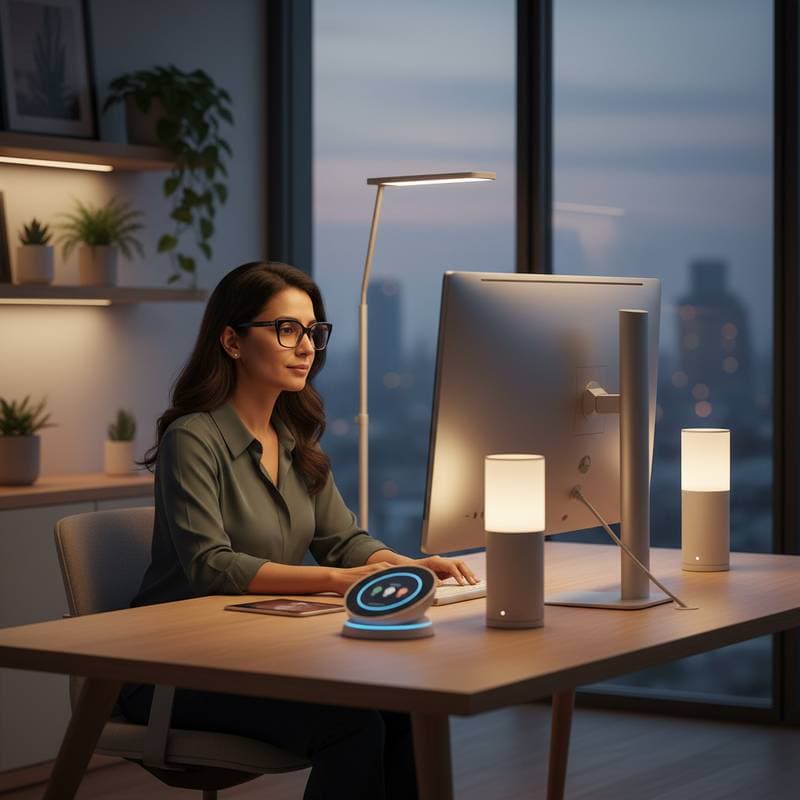
Alleviate Eye Strain with Smart Lighting for Remote Work
Remote work alters the rhythm of daily life. Professionals spend extended hours gazing at screens in spaces not originally intended for prolonged productivity. This leads to common issues such as eye strain, headaches, and fatigue. Smart lighting emerges as an underappreciated remedy, converting home offices into supportive areas that promote focus and overall well-being.
The Connection Between Lighting and Eye Health
Light extends beyond mere illumination. It affects alertness, visual clarity, and emotional state. Inadequate lighting produces screen glare or forces eyes to strain for focus. Excessive blue light in the evening disrupts sleep, while low light levels intensify visual effort. Research indicates that balanced, adjustable lighting diminishes visual fatigue and elevates concentration, particularly in home-based settings.
Conventional bulbs deliver unchanging light that fails to adapt to daily variations or tasks. Smart lighting employs sensors, timers, and color adjustments for automatic responses. Such systems cultivate visual comfort while harmonizing with the circadian rhythm, the body's internal regulator of sleep and wakefulness.
Circadian Lighting: Aligning Indoor Light with Natural Cycles
Circadian lighting stands out as a key advancement for remote professionals. It replicates the day's natural light progression by varying tone and intensity. Morning settings feature cool, invigorating hues; midday offers bright, neutral illumination; evenings shift to warm tones that encourage relaxation.
This progression sustains a balanced sleep-wake cycle. Individuals using circadian lighting frequently note increased daytime alertness and easier evening transitions to rest. Brands such as Philips Hue and Nanoleaf provide bulbs that automate these schedules, adjusting color temperature to the hour. Occupancy sensors in advanced models further refine brightness based on presence.
Adaptive Brightness to Minimize Glare and Fatigue
Smart lighting excels in adaptive brightness control. Systems monitor room light levels and modify output accordingly, rather than maintaining a constant setting. During peak sunlight, lights reduce intensity to avoid glare. In dimmer conditions, they increase output for steady visibility. This prevents eyes from repeated adjustments between contrasting light zones, a primary fatigue trigger.
Products like LIFX Clean and Wyze Bulb Color simplify this process. Users define brightness thresholds or enable full automation. Compatibility with voice assistants permits hands-free tweaks via commands. These features yield tangible comfort gains over extended work periods.
Custom Scenes for Personalized Workspace Control
Beyond automation, smart lighting emphasizes personalization through custom scenes. These presets tailor light for particular activities or moods. A focus scene employs bright, cool illumination to sustain energy in meetings. A relaxation scene dims intensity and filters blue light for breaks or after-hours tasks.
Apps for most systems allow quick scene creation and storage. Schedules can automate shifts between presets, ensuring seamless daily evolution. For those juggling professional and personal demands, this flexibility adds routine and ease without extra intervention.
Seamless Integration with Smart Home Ecosystems
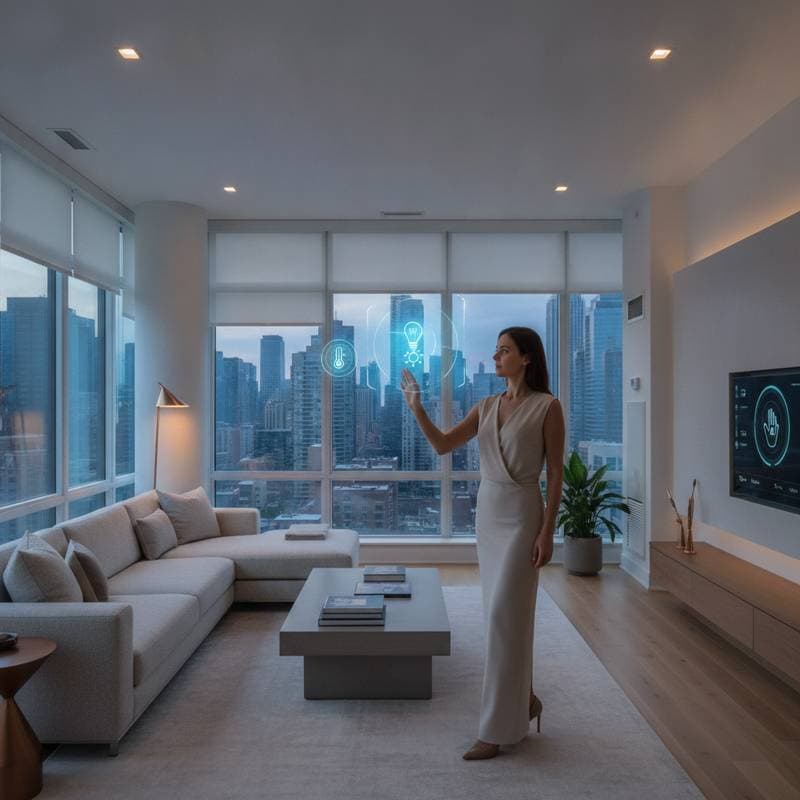
Modern lighting integrates with broader smart home networks for enhanced functionality. Connections enable responses to daily patterns, movement, or environmental factors. Consider these examples:
- Smart blinds coordinate with lights to balance natural and artificial illumination, curbing glare.
- Smart thermostats pair with lighting for efficiency, lowering output in vacant rooms.
- Voice assistants such as Alexa and Google Assistant activate scenes through voice prompts, streamlining management.
In a unified setup, adjustments flow intuitively. Workspaces adapt to support daytime output and nighttime recovery, minimizing the need for manual oversight.
Scientific Insights on Light's Role in Productivity
Studies on work environments reveal strong ties between lighting and output. Exposure to cool, intense morning light correlates with greater alertness and quicker responses. Evening warm light aids decompression and preserves sleep quality.
Remote setups often erode these natural divides. Smart lighting reestablishes them by emulating outdoor cycles. This synchronization not only eases discomfort but also amplifies focus, drive, and vitality across work hours.
Steps to Implement Smart Lighting for Optimal Remote Performance
Establishing an effective lighting arrangement requires no major overhaul. Follow these targeted actions:
- Select adaptable smart bulbs capable of varying brightness and color temperature. This range proves vital for eye comfort in diverse tasks and times.
- Position fixtures strategically to diffuse light evenly, steering clear of screen reflections. Desk lamps or overhead units work best for uniform coverage.
- Implement automation for gradual color shifts. Consistent programming eliminates frequent manual input.
- Develop and test custom scenes to identify ideal settings for concentration or downtime.
- Link lighting to existing routines and devices for effortless mode transitions between work and leisure.
These measures elevate a basic home office into an responsive hub attuned to personal needs and schedules.
Build a Balanced Remote Work Environment
Smart lighting transcends novelty; it addresses core human requirements in modern spaces. Remote workers gain reduced eye strain, improved rest, and steadier daily patterns. Future developments promise even smarter adaptations, learning from user behaviors to optimize settings proactively. A setup that detects weariness and softens light, or ramps up for calls, lies ahead. With remote work entrenched, smart lighting provides an accessible path to sustained comfort and efficiency.