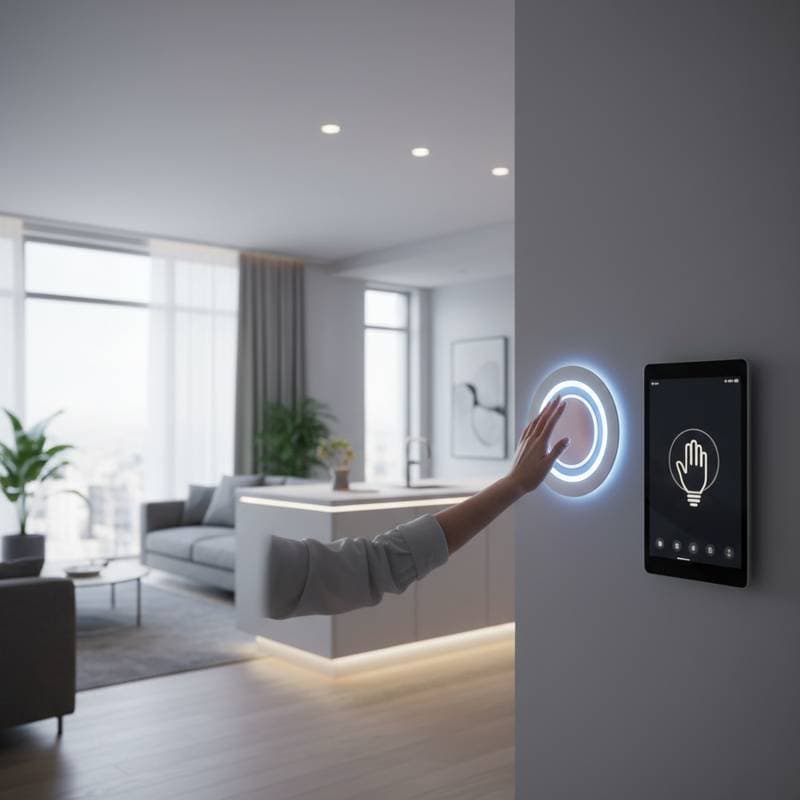
Imagine Effortless Illumination Without Touching Switches
Picture entering your kitchen with arms laden with groceries. The lights activate instantly with a simple hand wave, eliminating the need to search for a switch or leave marks on the wall. This seamless experience defines gesture-controlled lighting, a technology gaining traction in smart homes worldwide.
For generations, the standard wall switch served as the main method to control light. As residences evolve into intelligent environments, touchless options redefine spatial interactions. The core advantage rests in lights that react to presence and gestures rather than requiring physical engagement, resulting in enhanced cleanliness, speed, and accessibility at a reasonable cost.
The Growing Appeal of Gesture Control
Gesture-controlled lighting extends beyond mere innovation to address practical challenges. Situations such as handling sticky ingredients in the kitchen, working on dirty tasks in the garage, or navigating hallways at night simplify dramatically with automatic responses. Motion and gesture sensors remove the necessity to extend toward switches, fostering a fluid interaction that blends futuristic elements with everyday usability.
Convenience and sanitation drive much of the interest. With heightened awareness of hygiene in recent years, minimizing contact points throughout the residence represents a significant improvement. This technology also promotes inclusivity for individuals with mobility limitations, rendering lighting control universally approachable.
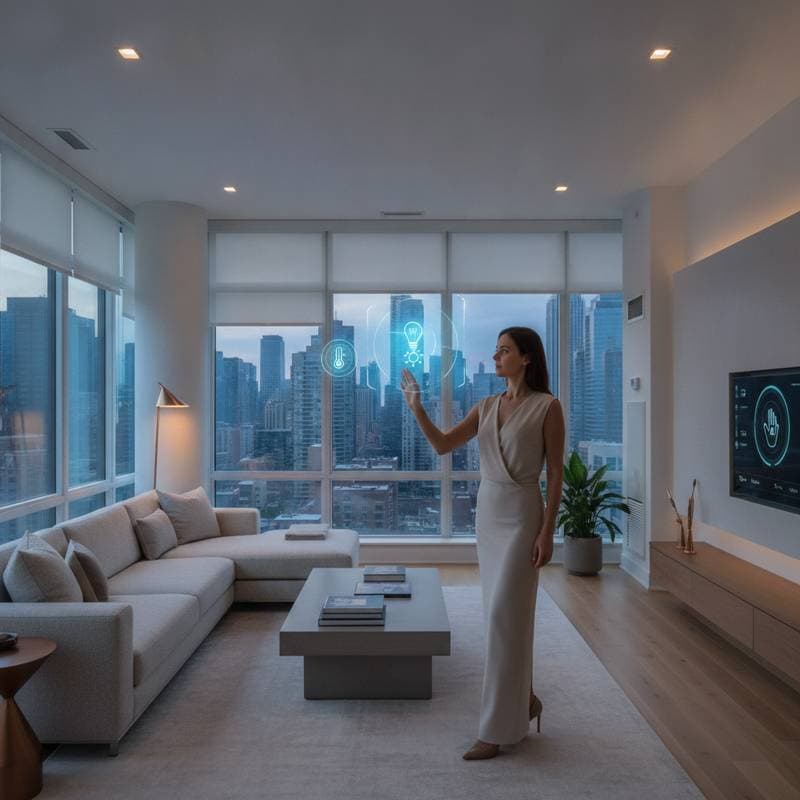
Integration with expansive smart networks adds further value. When linked to central hubs such as Amazon Alexa, Google Home, or Apple HomeKit, lights execute complex instructions. A basic wave might illuminate a space, whereas a deliberate gesture adjusts intensity or hue.
The Mechanics of Gesture-Controlled Lighting
These systems combine sensors and processing algorithms to identify hand movements and nearness. Infrared, radar, or camera-based detectors commonly interpret actions within a set distance. A predefined gesture prompts the sensor to issue a corresponding directive.
Consider a vertical swipe to increase room brightness or a horizontal motion to deactivate lights. Advanced setups discern varied directions or pair gestures with voice inputs for combined operation.
For superior performance, opt for millimeter-wave radar in high-end sensors over standard infrared. Such technology penetrates thin barriers like glass or cloth, suiting hidden placements or design-oriented fixtures.
Leading Gesture-Controlled Lighting Solutions
Select from diverse gesture systems based on financial constraints and automation depth.
Budget Option: Aqara FP2 Presence Sensor ($80 to $100)
This small device leverages radar for precise motion and occupancy tracking. Compatible with Apple HomeKit, Alexa, and Google Home, the FP2 monitors room segments to activate lights in targeted zones as users navigate. It suits compact living spaces or temporary setups without electrical modifications.
Mid-Tier Choice: Govee Glide Wall Light Panels ($200 to $250)
These adaptable panels react to motion and gestures, providing extensive color options. Swipe to shift shades, wave to power down, or synchronize with audio via the Govee Home application. They excel in professional workspaces or leisure areas where illumination enhances atmosphere.
High-End Selection: Nanoleaf Skylight Modular Ceiling Panels ($450 to $500)
Mounted overhead, these panels deliver expert-level gesture functionality. Built-in sensors detect oriented movements to modify brightness or tones. They interface with primary smart platforms and automate routines tied to schedules, usage, or biological rhythms.
Ensuring Compatibility and Smooth Integration
Assess current infrastructure prior to implementation. Gesture lighting thrives alongside matching networks. For users of Philips Hue or Lutron Caseta, seek gesture-compatible add-ons for direct compatibility instead of overhauls.
In fresh constructions or renovations, pair low-voltage setups with gesture controllers. Companies like Legrand and Orro offer discreet wall sensors that harmonize with aesthetics, including fallback manual options.
Advanced enthusiasts can leverage Home Assistant or SmartThings for gesture expansion. Position a wave near a designated sensor to influence temperature settings or initiate surveillance views.
Step-by-Step Installation Guide
Implementation proves straightforward.
- Select optimal positions. Place sensors along natural pathways like entrances, corridors, or work surfaces. Steer clear of sunlit areas or fluttering drapes to prevent erroneous activations.
- Pair with the smart hub. Adhere to app directives from the producer to connect via Wi-Fi or Zigbee.
- Customize gestures. Assign meanings to movements, such as toggling with a wave or fading with a circle.
- Verify and refine. Modify responsiveness to achieve reliable operation minus accidental triggers.
- Link to routines. Merge with supplementary functions, like a gesture initiating a cinematic setup that softens lights and adjusts shades.
Electrician involvement remains uncommon, though essential for wired integrations or embedded lights to uphold safety and guarantees.
Expenses, Upkeep, and Durability
Prices span $80 for supplementary sensors to exceed $1,000 for multi-zone arrays. Typical setups for homeowners range from $250 to $400, yielding effective connectivity.
Maintenance demands stay low. Wipe sensors periodically to clear dust affecting detection, and apply firmware enhancements for sustained precision. Lacking mechanical components, these solid-state devices outlast conventional switches.
Prioritize models with wireless updates during selection. Producers routinely refine recognition software, allowing systems to evolve without hardware swaps.
Advancing Toward Comprehensive Touchless Environments
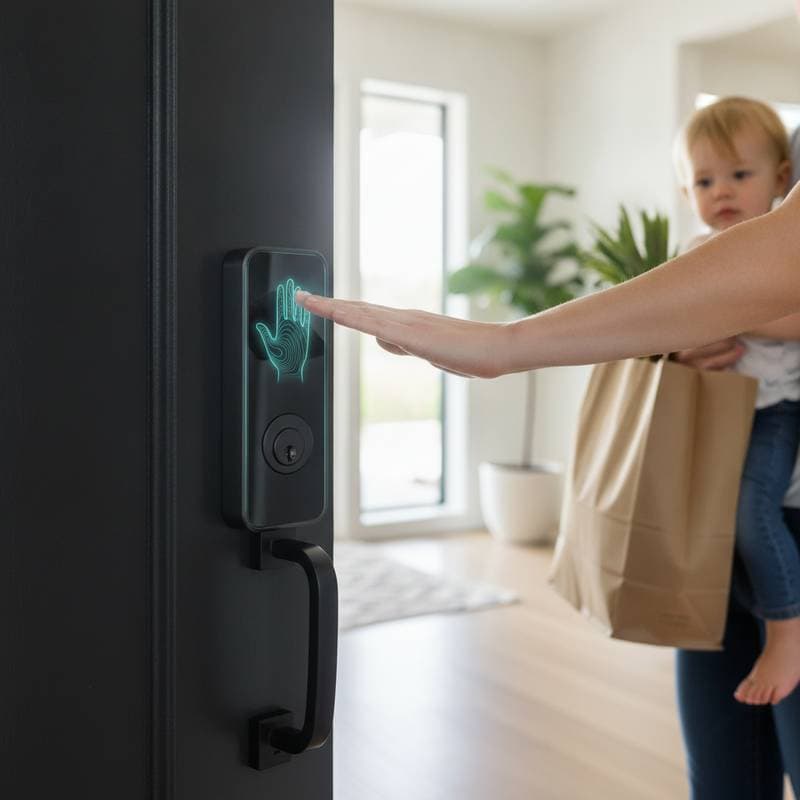
Gesture lighting forms one element in the progression to contact-free residences. Similar approaches appear in plumbing fixtures, entry mechanisms, and climate controls. The overarching pattern minimizes daily obstacles.
Contemporary design views lighting as a tool for ambiance, health, and optimization. Gestures elevate these aspects by aligning with instinctive actions, such as summoning a soothing dusk ambiance or energizing a work area.
Efficiency gains emerge through occupancy-aware sensors. Lights remain active solely during actual presence, curbing waste. Paired with efficient bulbs and timers, this approach lowers power consumption substantially.
Addressing Privacy and Protection
Camera or radar elements in certain systems raise data concerns. Radar variants process only motion patterns without visuals, enhancing security. For optical sensors, confirm local storage or secure cloud handling.
Examine producer policies on data management. Bolster confidence by restricting external access or enforcing rigorous controls in the smart ecosystem.
Overcoming Typical Hurdles
Pets or daylight may provoke unintended responses. Mitigate by tuning sensitivity or relocating units. Initial gesture interpretation might vary; recalibration in stable conditions resolves this.
Frequent errors warrant app-based resets and retraining. In multi-sensor homes, label areas distinctly to avoid interference.
Bringing Gesture Control to Your Home
This technology transitions from concept to viable enhancement for most dwellings. It suits minimalist designs sans visible controls or routines seeking added ease.
Begin modestly with a hallway or garage sensor. The intuitive operation encourages broader adoption. For complex wiring, engage certified specialists via professional networks focused on intelligent illumination.
As contactless trends expand, gesture control emerges as an organic advancement in human-space dynamics. Lights mirror motion as dialogue echoes speech, yielding residences that respond intuitively, individually, and vibrantly.