Boost Productivity 35% with Smart Room Lighting
Nearly half of remote workers report that lighting influences their daily focus levels. This connection becomes clear when considering light's impact on mood, alertness, and energy. Proper lighting sharpens concentration, whereas inadequate lighting saps motivation. Smart room lighting extends beyond mere convenience; it serves as a practical tool to enhance work efficiency and overall well-being.
Picture entering your workspace where lights automatically transition from energizing bright white in the morning to soothing warm tones in the evening. This dynamic adjustment aligns with a trend known as circadian lighting, which research indicates can increase productivity by up to 35%.
Understanding Circadian Lighting
Circadian lighting systems align artificial light with the body's innate sleep-wake cycle. Humans have adapted to the sun's varying intensities and hues, which cue activities like waking, eating, and sleeping. Modern smart bulbs and fixtures replicate these patterns through customizable brightness and color temperatures.
Practically, this involves lights simulating morning daylight for activation, cooler midday tones for sustained attention, and warmer evening shades for relaxation. Such adjustments maintain the body's internal clock, profoundly affecting energy and cognitive sharpness.
How Lighting Shapes Productivity
Light regulates melatonin production, the hormone governing sleep and wakefulness. Insufficient or mismatched light disrupts this balance, leading to tiredness, eye discomfort, and diminished mental performance. Smart lighting synchronizes the environment with physiological demands, promoting alertness during tasks and calm during downtime.
Studies in office settings reveal that dynamic lighting elevates energy and focus among employees. This outcome stems from the integration of biological principles with technological precision.
Advanced Features of Smart Bulbs
Smart bulbs form the core of circadian systems, linking to smartphones or voice assistants for control over intensity, hue, and schedules. Advanced models analyze user routines to automate changes, responding to daily patterns or external conditions like sunlight.
Brands such as Philips Hue and Nanoleaf provide preset scenes that evolve with the day, while Sengled options incorporate motion detection to illuminate spaces upon entry. The emphasis lies on purposeful lighting that supports specific activities.
Morning Routines with Energizing Light
Morning exposure to cool, blue-tinted light signals the body to awaken fully. Natural sunlight achieves this by inhibiting melatonin and heightening vigilance. Smart systems duplicate this in enclosed areas, ensuring consistent activation regardless of natural light availability.
Program bulbs to emit bright, cool white from sunrise until mid-morning. This practice accelerates entry into a productive state, often surpassing the effects of caffeine alone.
Sustaining Afternoon Performance
Midday lighting requires sustained brightness with a subtle shift toward warmer tones to prevent visual fatigue. Excessive intensity causes glare and stress, while low levels induce sleepiness. Automated systems fine-tune these elements to follow circadian progression.
Incorporate gradual color adjustments every few hours to mirror fading daylight. This method preserves concentration and eases the body toward evening without abrupt drops in alertness.
Evening Transitions for Recovery
Evening lighting prioritizes warm, amber hues to encourage melatonin release and promote unwinding. Prolonged exposure to cool whites can interfere with sleep onset, particularly for late workers. Smart setups enable smooth dimming to facilitate rest.
Schedule fades over 30 to 60 minutes before bedtime. Improved sleep from this routine enhances next-day readiness and performance.
Evidence from Practical Applications
Workplace trials demonstrate substantial gains from circadian lighting. One initiative reported enhanced focus and reduced headaches among participants. Another showed superior cognitive results for students in variable light versus fixed setups.
Remote professionals experience similar advantages, with better task precision and less exhaustion. Smart lighting democratizes these improvements, requiring minimal setup for broad accessibility.
Selecting an Optimal Smart Lighting System
Assemble a circadian setup starting with versatile smart bulbs spanning full color spectra. Prioritize these capabilities:
- Adaptive modes that alter temperatures automatically
- Customizable schedules aligned to personal routines
- App or voice interfaces for on-demand tweaks
- Compatibility with ecosystems like Alexa or Google Home
Test various intensities and hues to personalize. Target low-focus periods with targeted boosts for maximum effect.
Extending Benefits Throughout the Home
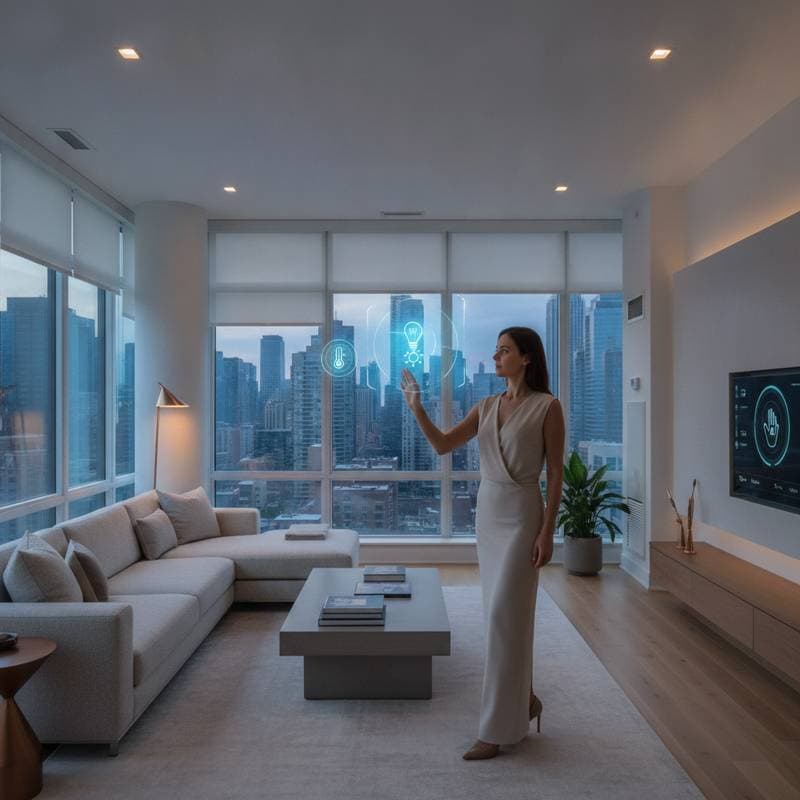
Circadian principles apply beyond desks to all living areas. Kitchen fixtures that intensify mornings aid awakening. Evening living room illumination fosters relaxation while preparing the mind for sleep.
A unified home system minimizes disruptions from mismatched lighting, stabilizing energy and reducing daily strain.
Leveraging Automation for Seamless Control
Automation elevates smart lighting through sensors that respond to movement or ambient conditions. Systems adapt brightness to weather changes, maintaining uniformity. Over time, they refine based on usage data.
For instance, overcast detection prompts slight increases to counteract dimness. These effortless modifications enhance comfort and efficiency.
Addressing Adoption Challenges
Potential users often cite complexity or cost as deterrents. Basic bulbs install simply in standard fixtures via Wi-Fi, with intuitive apps easing operation. Initial learning curves flatten quickly.
Security concerns arise with connectivity, yet trusted manufacturers employ robust encryption and local options. Preset standalone bulbs deliver core functions without broader networks.
Achieving Efficiency and Savings
Smart lighting conserves energy by dimming unused areas or powering down automatically. LED efficiency surpasses traditional bulbs, amplified by intelligent management.
Monthly bills often decrease post-adoption, offsetting costs while amplifying productivity returns.
Aligning Technology with Human Needs
Circadian lighting resonates because it honors innate biology over gadgetry. Environments tuned to internal clocks promote equilibrium, sharpness, and satisfaction.
This harmony boosts creativity, mood, and relationships. In teams, it eases tensions; at home, it nurtures restorative balance.
Implement Circadian Lighting Today
Begin by assessing your current setup and identifying key zones. Acquire compatible bulbs and configure initial schedules via the companion app. Monitor adjustments over a week, refining for optimal results. This investment yields sustained focus, health, and output gains.