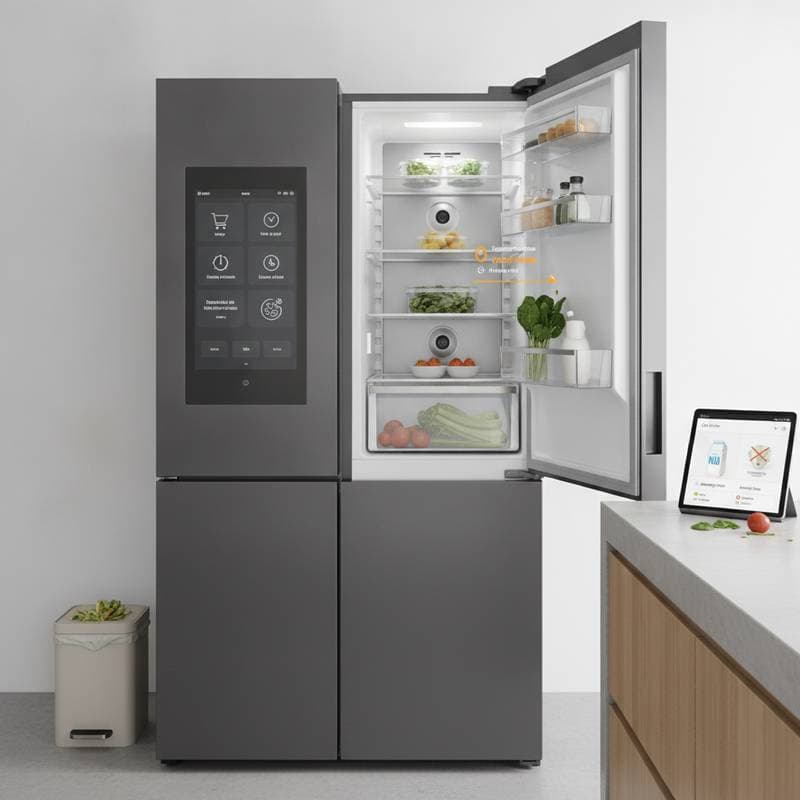
Smart Kitchens Prevent Food Waste Using AI Tracking
Smart homes evolve from optional features to essential components of daily life, with the kitchen serving as a prime example. This space, traditionally dedicated to meal preparation, now functions as a connected center that manages food inventory, minimizes waste, and controls expenses. Artificial intelligence drives this change by monitoring food freshness, consumption patterns, and storage conditions to avert spoilage. Such advancements reshape cooking practices and foster a mindset centered on sustainability and efficiency.
The Scale of the Food Waste Problem
Global households discard substantial quantities of edible food weekly. This waste often stems from overlooked refrigerator contents or ignored expiration dates. An average family loses hundreds of dollars annually on spoiled groceries, incurring financial strain and environmental harm through excess resource consumption and landfill contributions.
People do not intend to waste food; the issue arises from inadequate tracking and organization. Prior to recent technological developments, inventory management relied on human memory and physical inspections. Smart kitchen solutions address this gap with sensors, cameras, and automated systems that provide precise oversight of available items and usage timelines.
The Rise of AI-Driven Food Monitoring
Contemporary refrigerators and kitchen appliances integrate cameras, barcode readers, and analytical software to maintain detailed records of stored goods. These tools identify products upon placement, record expiration information, and propose recipes featuring items nearing the end of their shelf life. Users access this data via applications, eliminating the need to manually assess fridge contents for meal decisions.
A prominent refrigerator manufacturer launched a model employing internal cameras and machine learning algorithms to detect everyday foods. The device alerts users to low milk supplies or produce at optimal ripeness. As it gathers data on household habits, such as consumption rates for specific items, the system refines notifications to match individual routines, transforming basic storage into a responsive aid.
Why This Matters for Everyday Living
AI-enabled food monitoring delivers tangible improvements to routines. It preserves funds by limiting spoilage incidents. It streamlines planning processes, conserving time. It promotes wellness through prompts to consume fresh items promptly. Additionally, it advances sustainability by curbing excess discards.
In demanding family settings, these technologies function as unobtrusive allies. A mobile alert about impending strawberry spoilage, paired with recipe options, converts potential loss into a prepared dish. The system further enhances shopping efficiency by compiling lists of depleted items, preventing redundant buys.
How the Technology Works
Smart refrigerators rely on an array of sensors and computational models beneath their exteriors. Cameras photograph contents for analysis that classifies food types. Paired with scanned packaging details or user entries, this information forms a comprehensive digital catalog.
Predictive algorithms then forecast spoilage based on variables like temperature, humidity, and standard shelf lives. Certain setups link to e-commerce services for automated restocking of essentials. Integration with recipe databases matches on-hand ingredients to suitable preparations, reducing oversight of hidden items.
Real-World Examples of Smart Kitchen Innovation
Major appliance producers lead advancements in this field. Refrigerators equipped with expansive touchscreens display internal views without door access. Select models feature adjustable transparency panels for effortless content checks. Voice-activated systems facilitate list additions or cooking advice drawn from existing supplies.
One widely adopted fridge pairs with an application that monitors dates and issues timely prompts. Another synchronizes with energy controls to fine-tune cooling, thereby decreasing spoilage and power usage. Emerging companies offer compact units that barcode-scan or measure produce weight to gauge viability, fostering interconnected, waste-averse environments.
Overcoming Adoption Barriers
Potential users may resist AI tracking due to high initial costs or surveillance worries. Advanced refrigerators demand significant investment, and internal imaging raises privacy issues. Companies counter these by enhancing encryption, introducing disable options for cameras, and delivering longevity-boosting firmware.
Device compatibility presents another challenge amid diverse market offerings. Standardized protocols and integrated platforms enable fluid interactions among fridges, ovens, and shopping tools. Enhanced cohesion amplifies usability, broadening appeal to everyday consumers.
The Broader Impact on Sustainability
Smart technology's role in waste reduction extends beyond homes to planetary benefits. Less discards translate to reduced demands on production, distribution, and disposal systems. Experts project that modest household gains could avert millions of tons of annual waste.
This aligns with rising demand for seamless green practices. Individuals seek impactful changes that integrate into existing habits. Automated tracking and guidance convert intention into practice incrementally, meal by meal.
Integrating AI into Your Kitchen Routine
Future kitchens will actively oversee food rather than passively contain it. They anticipate requirements, prioritize usage, and eliminate manual reminders. Households gain command over provisions, cutting losses and optimizing expenditures.
To implement these features, evaluate compatible appliances that suit your space and budget. Start with app-linked devices for inventory basics, then expand to full systems. This progression builds toward effortless, eco-conscious meal management that enhances daily well-being.