The Rise of Automated Cooking in Smart Kitchens
Smart homes evolve rapidly, and the kitchen stands at the forefront of this change. Once primarily a space for manual preparation, the kitchen now integrates intelligence through connected devices. Ovens preheat based on detected ingredients, while robotic systems handle stirring and plating. This evolution extends beyond convenience to include waste reduction and enhanced creativity for home cooks.
Surveys indicate that connected appliances rank as essential for efficiency and energy conservation among homeowners. Early innovations like smart lighting paved the way, but current advancements enable appliances to manage cooking, cleaning, and inventory autonomously. Machine learning, sensors, and interconnected systems allow devices to communicate seamlessly, such as a refrigerator alerting an oven to low stock or a coffee maker syncing with a daily schedule.
Intelligent Ovens and Cooktops
Smart ovens serve as the core of automated kitchens. Equipped with cameras, temperature sensors, and recipe libraries, these devices identify ingredients and adjust cooking parameters for optimal results. Remote control and voice integration further enhance usability.
This technology eliminates variability in outcomes. Households benefit from time savings, minimized waste, and consistent quality without supervision. For instance, June ovens scan food items to set precise temperatures for roasting or baking, while Tovala models pair with meal kits for guided preparation.
Robotic Cooking Assistants
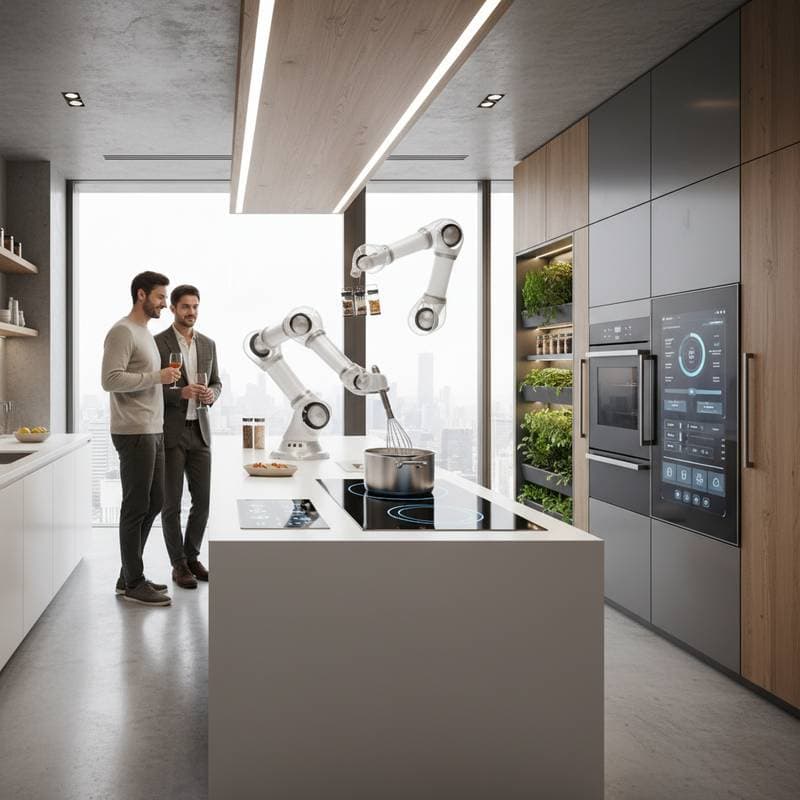
Robotic systems bring professional techniques to everyday use. Compact arms perform tasks like stirring, flipping, and portioning, often mimicking expert motions captured through motion data.
Such automation democratizes complex recipes for all skill levels. It shifts focus from labor to family interaction. Moley Robotics offers a complete system with overhead arms that execute recipes from a digital archive, including self-cleaning functions.
Smart Refrigerators for Inventory Management
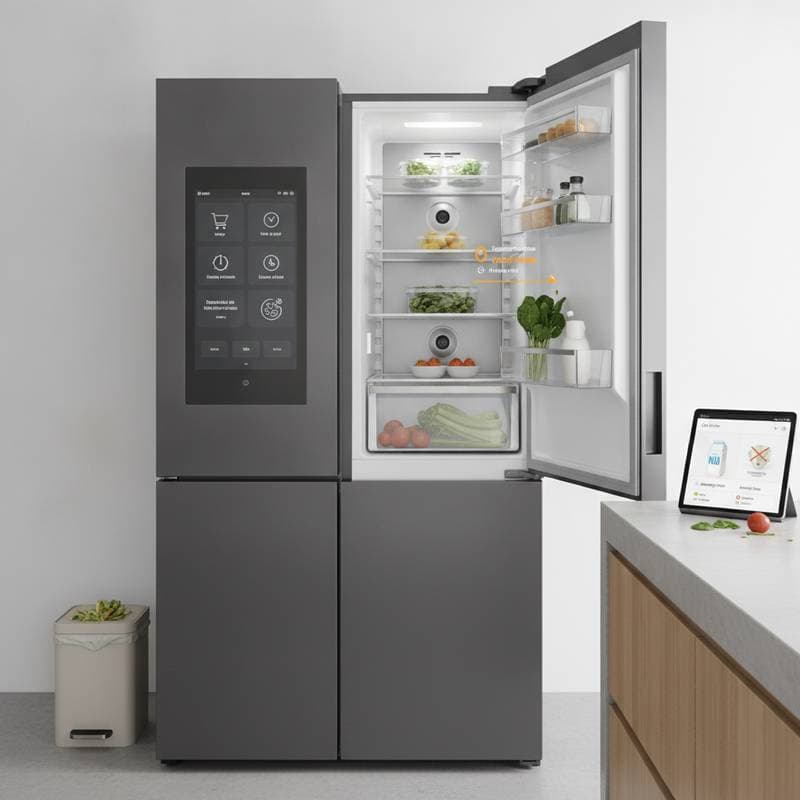
Modern refrigerators function as central hubs with internal cameras, touch interfaces, and tracking algorithms. They generate recipe ideas from available items, monitor expirations, and automate reorders.
These features address food waste, a common challenge. Better tracking optimizes purchases and promotes nutritious planning. Samsung Family Hub models link to apps for remote inventory checks and calendar-based meal suggestions.
Hands-Free Voice Control in Cooking
Voice assistants integrate naturally into kitchen workflows. With hands occupied, commands adjust timers, temperatures, or recipe steps effortlessly.
This accessibility supports diverse users, including those multitasking or with mobility limitations. It improves safety and efficiency. Amazon Alexa or Google Assistant pairings enable instructions like preheating an oven or activating a blender via simple voice prompts.
Precision Tools and Connected Cookware
Digital thermometers and smart pans provide real-time adjustments through app connectivity. They maintain exact conditions for techniques like sous-vide.
Home cooks gain reliability in timing and heat management. These tools build skills over time. The Anova Precision Cooker, for example, holds steady water temperatures and offers app-guided recipes for restaurant-level results.
Automated Stations for Beverages and Meals
Compact devices handle beverages and snacks using portioned pods and preference algorithms. They customize outputs for coffee, cocktails, or nutrition shakes.
Personalization meets speed in daily routines. Users track habits for tailored recommendations. Keurig brewers connect for flavor profiles, while Bartesian systems mix drinks based on stored preferences.
Integrated Cleaning Solutions
Smart dishwashers assess load soil levels to optimize cycles. They coordinate with cooking devices to begin operations post-meal.
Efficiency reduces effort and resource use. Connected bins manage waste sorting. Bosch models notify via apps about cycle completion or supply needs, and Townew bins automate bag sealing.
Energy Optimization in Connected Systems
Interconnected appliances coordinate to minimize consumption. They schedule operations during low-demand periods and scale power dynamically.
Households achieve cost savings and environmental benefits. Usage analytics inform habits. App-based dashboards display consumption patterns for strategic cooking decisions.
Nutrition Tracking and Health Synergy
Devices log ingredients and sync with wellness apps to monitor intake. They support goals like balanced diets or calorie control.
Cooking aligns with health objectives seamlessly. Integrated scales and blenders calculate nutritional data automatically, fostering informed choices.
Unified Ecosystems for Seamless Operation
Standards like Matter enable cross-brand compatibility. Devices form cohesive networks for synchronized actions.
This integration creates a unified intelligent space. Users combine products without compatibility issues, enhancing overall control.
Balancing Automation with Creative Cooking
Automation streamlines routines, yet human ingenuity drives the kitchen. Devices handle precision tasks, freeing time for flavor innovation and presentation.
Social elements thrive as technology supports rather than supplants. A robotic stir-fry allows hosts to engage guests fully, while notifications ensure timely readiness.
Addressing Adoption Challenges
Cost, data privacy, and setup complexity deter some users. Manufacturers counter with user-friendly designs, secure protocols, and offline options.
Falling prices and educational resources broaden access. These kitchens augment skills, not replace them, through intuitive guidance.
Everyday Impacts and Broader Applications
Adopters report up to one hour daily saved on meals and cleanup. Healthier habits emerge with less waste and more enjoyment.
Commercial settings apply similar tech for scale. Industrial systems track vast inventories, boosting efficiency industry-wide.
Extending Connectivity to Home Life
Kitchens influence surrounding spaces. Lighting dims for ambiance, climate adjusts to cooking heat, and music enhances dining.
The ecosystem anticipates needs, from grocery alerts to health-informed recipes. This adaptability personalizes living, making technology a supportive partner.