Introduction
Picture opening the refrigerator door after a hectic week to find wilted produce and outdated leftovers. The items were purchased with good intentions, yet daily demands led to oversight. This scenario results in unnecessary tossing of food, which proves frustrating, expensive, and environmentally harmful.
Smart refrigerators address this common issue effectively. These appliances extend beyond basic cooling to incorporate sensors, cameras, and advanced software. They monitor contents, predict expiration, and suggest meal options, integrating smoothly into daily routines to conserve time, resources, and effort.
Understanding Food Waste in Households
Food waste typically arises unintentionally through overbuying or neglecting existing stock. Produce becomes obscured by other items, leftovers fade from memory, and expiration dates arrive unexpectedly. For active families, maintaining precise inventory amid routine tasks presents a significant challenge.
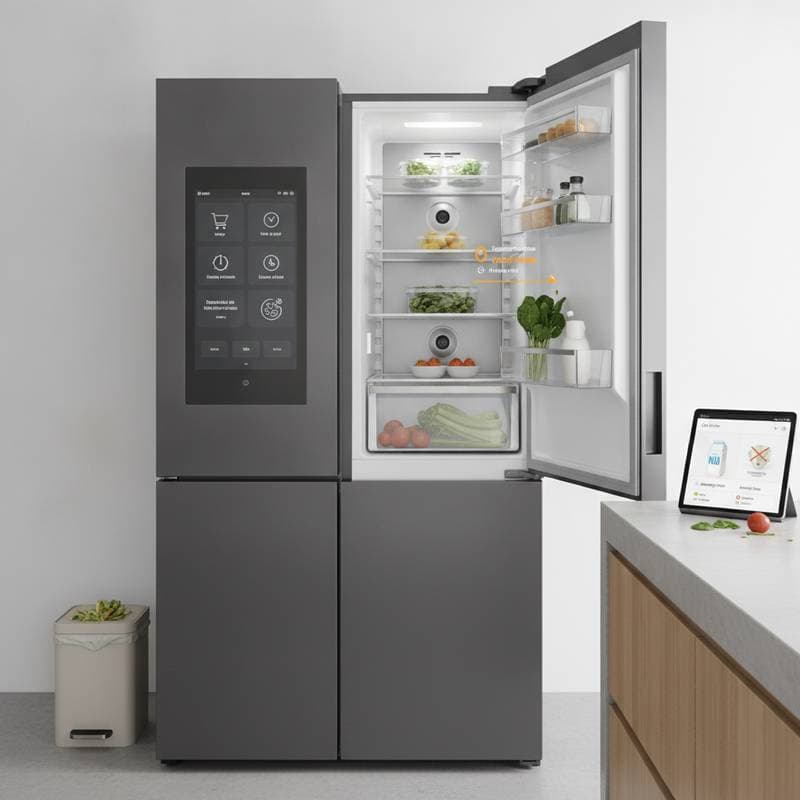
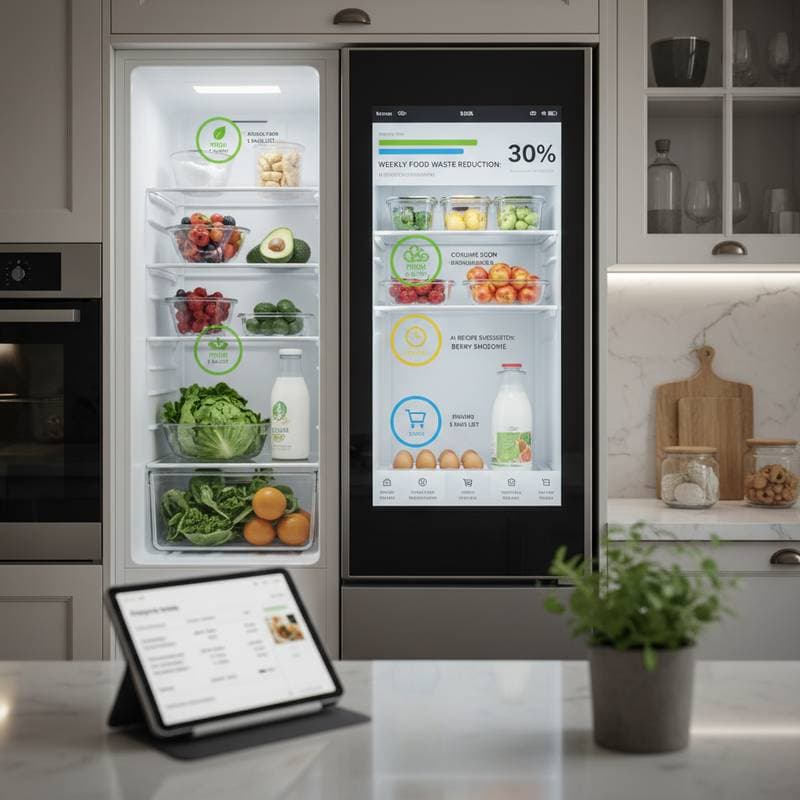
Smart refrigerators tackle these issues comprehensively. Internal cameras detect items, temperature sensors preserve optimal conditions, and integrated software issues timely reminders. Certain models link to recipe applications, utilizing available ingredients to ensure nothing remains unused.
Mechanisms for Waste Reduction in Smart Refrigerators
Inventory Monitoring with Precision
Advanced models, such as the Samsung Bespoke 4-Door Flex with Family Hub, employ internal cameras for remote content viewing via smartphone. At the grocery store, users verify existing supplies to prevent redundant buys. The system supports manual or app-linked automatic tagging of expiration dates.
Advanced models learn purchasing patterns over time. They forecast depletion of frequent items and propose restocking accordingly. This predictive capability refines itself through ongoing interaction, enhancing the appliance's intelligence progressively.
Notifications for Expiration and Freshness
Devices like the LG InstaView ThinQ provide push alerts as items approach expiration. The associated application sorts contents by shelf life, prioritizing urgent usage. Such prompts avert spoilage of overlooked dairy or vegetables.
This functionality proves invaluable for family settings. Meal planning aligns with impending expirations, avoiding unexpected discoveries of spoiled goods.
Personalized Recipe Suggestions and Planning
High-end units connect to recipe libraries, tailoring recommendations to current inventory. The GE Profile Smart Refrigerator stands out here, generating ideas from soon-to-expire components to facilitate dinner preparation without additional purchases.
Beyond ease, this approach curbs waste and extends budgets. The refrigerator functions as a culinary advisor, directing users toward efficient daily choices.
Optimized Cooling Zones
Effective temperature regulation often receives insufficient attention in spoilage prevention. Smart refrigerators feature independent compartment controls for prolonged freshness. The Samsung Bespoke series, for instance, permits customization: colder settings for fish, milder ones for vegetables to retain texture.
Frequent door access induces minor temperature shifts that shorten shelf life. Select premium units incorporate adaptive systems, anticipating usage patterns and enhancing compressor output to sustain even conditions.
Selecting an Appropriate Smart Refrigerator
Choice hinges on family size, culinary preferences, and financial constraints. The following overview aids in evaluation.
Entry-Level: Hisense Smart Counter-Depth Refrigerator ($1,200–$1,400)
This affordable option offers Wi-Fi access, simple cameras, and app-controlled temperatures. It suits compact homes desiring essential smart capabilities without excess expenditure.
Intermediate: LG InstaView ThinQ ($2,300–$2,800)
This balanced selection includes a responsive door interface, voice integration, alerts, and recipe tools. Energy savings complement the technology, appealing to family users.
High-End: Samsung Bespoke 4-Door Flex with Family Hub ($3,800–$4,200)
Fully equipped with AI tracking, cameras, and expansive displays, this model syncs with home systems. Users handle lists, entertainment, and security from the unit itself.
Prioritize compatibility with ecosystems like Google Home, Amazon Alexa, or Samsung SmartThings. Such alignment facilitates seamless operation with voice controls and allied devices.
Key Factors to Consider Prior to Purchase
-
Network Stability
Smart features demand reliable Wi-Fi. Enhance coverage in deficient areas with mesh systems or extenders. -
Dimensional Fit
Verify measurements meticulously. These units often require space for broader doors and interfaces. -
Update Protocols
Firmware enhancements mirror those of mobile devices. Enable automatic processes for ongoing improvements. -
Privacy Protections
Data on consumption may be gathered. Examine policies to grasp handling and retention practices. -
Cost and Efficiency
Initial prices exceed traditional models, yet waste reduction and energy savings recoup expenses. Energy Star ratings further lower utility bills.
Broader Advantages for Daily Life
Waste minimization represents a core gain, yet additional enhancements elevate living standards. Displays handle lists, calendars, and instructional videos. Families exchange messages or timetables directly on the surface.
The kitchen evolves into a central command point. Functionality extends from storage to fostering connections and organization.
Steps to Implement Your Upgrade
Begin by identifying priorities: recipe support, remote access, or alerts. Evaluate models against lifestyle and requirements.
For setups needing plumbing or wiring, engage qualified professionals. Retailers frequently provide installation services to guarantee optimal performance immediately.
Smart refrigerators advance kitchen technology by merging efficiency, customization, and environmental responsibility. Thoughtful grocery oversight converts potential waste into financial and practical gains.
From aspiring tech enthusiasts to waste-conscious individuals, these appliances deliver. Strategic selection and setup yield a harmonious blend of vitality, vigilance, and innovation.
Frequently Asked Questions
Do smart refrigerators effectively reduce food waste?
Yes. Inventory oversight, expiration warnings, and recipe prompts ensure timely ingredient use.
Can these units automatically identify all food types?
They recognize staples like milk, eggs, and fruits reliably. Packaged or unique items may require manual input.
Is the investment in a smart fridge justified?
For frequent users, recovered costs from reduced waste and energy often balance the premium within years.
Do smart refrigerators function offline?
Core cooling operates independently, though smart tools necessitate internet access.
How can data privacy be maintained?
Assess settings and deactivate unnecessary data-sharing options.
Is retrofitting possible for existing refrigerators?
Basic add-ons like sensors exist, but comprehensive AI demands a dedicated smart model.
What if app support ends?
Leading manufacturers sustain updates long-term; verify compatibility beforehand.
Do these fridges enable voice interaction?
Yes. Integration with Alexa, Google Assistant, or SmartThings supports commands and inquiries.