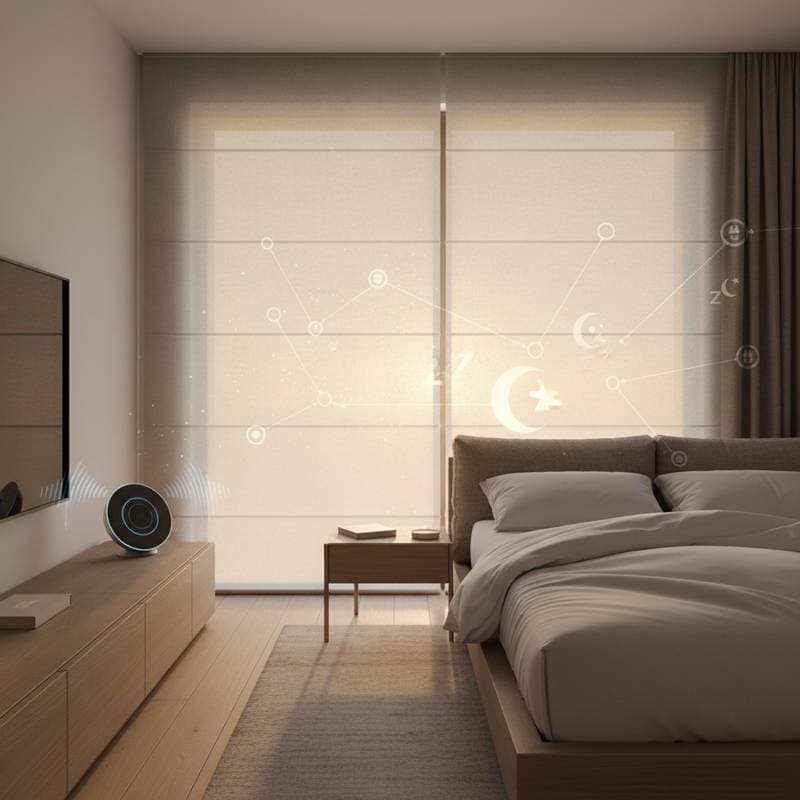
Smart Blinds That Align with Your Circadian Rhythm
Connected homeowners increasingly incorporate smart lighting into daily routines. The evolution now extends to windows, where smart blinds adjust to individual sleep patterns. These devices enhance rest, waking, and daily energy levels. They integrate with natural body rhythms to promote faster sleep onset, gentler awakenings, and sustained vitality without requiring lifestyle changes.
Understanding Light's Influence on Sleep Cycles
The circadian rhythm regulates human sleep over approximately twenty-four hours. Light serves as its primary cue. Morning exposure to bright light promotes alertness, whereas evening dimness stimulates melatonin production for rest. Manual blinds rely on user input, but smart versions automate adjustments to align with biological needs rather than external schedules.
Consider a gradual increase in morning light that replaces abrupt alarms. Envision blinds that lower automatically at dusk to encourage relaxation. Such precise light management improves mood, sleep depth, and daytime energy. Studies on circadian lighting demonstrate enhancements in concentration, reduced exhaustion, and strengthened mental well-being through consistent cycles.
Mechanisms for Learning Personal Sleep Patterns
Smart blinds employ sensors, wearable data, and app integrations to adapt in real time. They monitor typical sleep onset, duration, and wake times. Patterns emerge over weeks, enabling predictive adjustments.
Integration with sleep trackers or home hubs amplifies functionality. For instance, a smartwatch identifying light sleep near wake time signals partial blind opening. Natural light then eases the transition from rest. Shifts in routines prompt recalibration, maintaining harmony with current habits.
Environmental responsiveness adds versatility. Weather forecasts influence operations; overcast mornings trigger wider openings for added brightness. Intense midday sun prompts partial shading to minimize glare and heat.
Advantages Extending to Daily Life
Beyond sleep optimization, these blinds elevate comfort, efficiency, and security.
Energy Savings
Automation optimizes solar gain to lower utility bills. Blinds open during mild mornings to capture warmth, then close in peak heat to preserve coolness. This approach pairs with thermostats for even temperatures, eliminating frequent interventions.
Enhanced Privacy and Security
Automatic movements simulate occupancy during absences, discouraging intruders. App-based remote access allows monitoring and control from anywhere, fostering security without effort.
Improved Comfort and Design Integration
Available in diverse fabrics and styles, these blinds blend into contemporary spaces. Silent motors ensure discreet operation. Synchronization with lighting creates seamless transitions, from invigorating daytime settings to soothing evenings.
Leading Innovations in Smart Blinds
Brands pioneer sleep-adaptive features.
- Somfy connects to popular platforms, with schedules that follow solar cycles.
- Lutron Serena Shades support voice commands and coordinate with illumination systems.
- IKEA Fyrtur offers budget-friendly options via intuitive apps for routine automation.
- Hunter Douglas PowerView employs learning algorithms to refine preferences over time.
Advancements emphasize behavioral response over basic remotes, accelerating category growth.
Core Technologies Enabling Adaptation
Sensors for light, temperature, and motion underpin operations, linked via robust protocols to hubs. Algorithms process data for fluid responses.
Machine learning refines accuracy; repeated manual overrides update models to reflect user intent. This evolution positions blinds as intuitive allies.
Broad compatibility extends value. Pairing with climate controls, illumination, or media setups yields holistic automation. Movie initiation closes shades for immersion, while alarms coincide with openings and ambient sounds for refreshed starts.
Enhancing Effects Through Circadian Lighting
Combining blinds with circadian systems mimics outdoor cycles indoors. Morning routines feature cool-toned lights alongside rising shades. Evenings shift to warm hues as blinds descend, curbing disruptive blue light.
This synergy fosters superior sleep practices and vigilance. Users note steadier routines and diminished need for caffeine or jarring wake-ups.
Addressing Common Challenges to Adoption
Initial costs and setup deter some, though accessibility improves. Wireless designs and app-guided installations simplify processes. Battery options bypass electrical work, and open standards ensure broad compatibility.
Affordability rises with market expansion; savings in energy and well-being recoup expenses swiftly. Renters benefit from retrofit controllers on existing shades, enabling gradual upgrades.
Implementing a Personalized Sleep System
Tailor windows to rhythms with these steps:
- Evaluate Room Dynamics. Identify sun exposure patterns; east-facing bedrooms gain from dawn automation.
- Select Integrated Hardware. Choose blinds compatible with existing ecosystems or assistants.
- Establish Rhythm-Based Timings. Test progressive openings and timely closures to reinforce internal clocks.
- Incorporate Lighting Layers. Apply cool mornings and warm evenings for comprehensive circadian support.
- Review and Refine. Use trackers to assess sleep, then tweak operations for ongoing alignment.
This framework builds an evolving setup for sustained rest and vitality.
Emerging Trends in Rhythm-Responsive Homes
Sleep-tuned blinds signal a wellness-centric home shift. Intuitive designs leverage data for subtle enhancements to health.
Anticipated developments include spectrum-filtering materials, stress-responsive sensors, and dynamic transparency. Health and habitat converge, with technology nurturing equilibrium.
Harmonizing Daily Life with Natural Light
Adaptive smart blinds transcend convenience to foster biological alignment. They elevate waking, productivity, and relaxation through thoughtful light stewardship.
Incorporate them into smart upgrades to unlock profound daily improvements.