Imagine Your Fridge Handling Grocery Shopping
You return home after a demanding day and open the refrigerator to prepare dinner. The milk has expired, and the vegetables show signs of wilting. This common annoyance leads to unplanned shopping trips. Advanced smart refrigerators now monitor contents, issue warnings about spoilage, and initiate online orders for replacements.
These appliances integrate sensors and predictive software to create efficient kitchen environments. They minimize food waste, organize inventory, and streamline routines. The result is a refrigerator that functions as an intelligent partner in household management.
The Role of Smart Fridges in Connected Kitchens
Smart refrigerators belong to the Smart Kitchen and Appliances category. They serve as central hubs for monitoring temperature, tracking expiration dates, and automating grocery tasks. Key benefits include enhanced convenience, environmental sustainability, and financial savings over time.
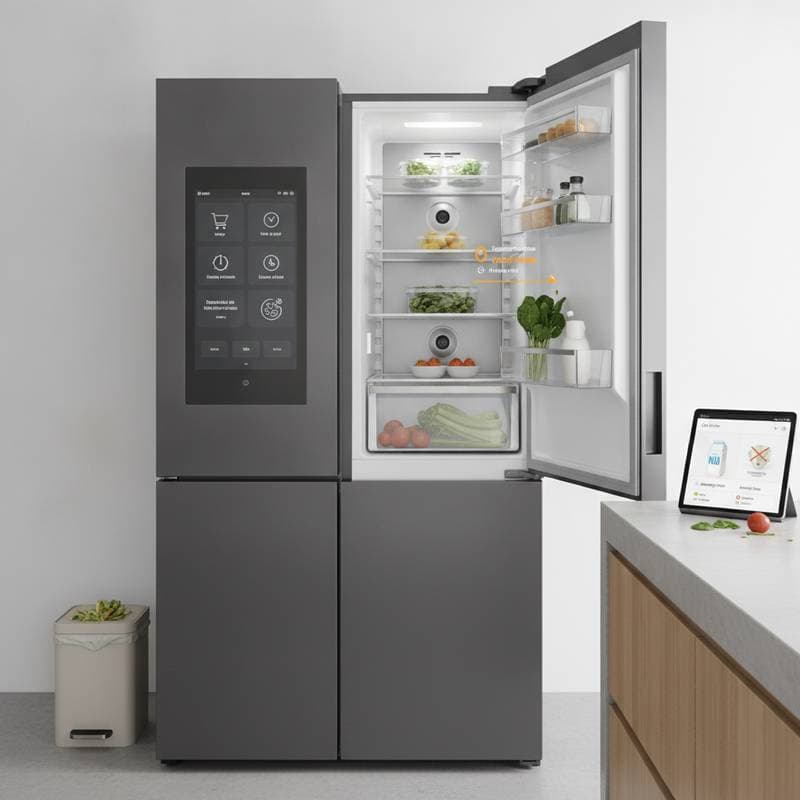
Beyond basic cooling, these units employ internal cameras, barcode scanners, and cloud algorithms to catalog items and forecast shelf life. Advanced models analyze consumption patterns to anticipate shortages. When linked to delivery services, they populate shopping carts or complete purchases based on user settings.
How Smart Fridges Forecast Food Expiration
Machine learning algorithms form the foundation of expiration prediction. Upon loading groceries, cameras capture barcodes or identify items visually. The system records details like product type, brand, and standard shelf life, then adapts based on household usage rates.
Temperature and humidity sensors provide additional data for precise estimates. For example, if strawberries spoil prematurely, the algorithm updates projections accordingly. Notifications appear via a companion app, such as an alert stating that strawberries will expire the next day and recommending immediate use.
Appliance engineers emphasize the importance of stable temperatures for reliable predictions. Frequent door access can disrupt accuracy, so premium models feature multi-zone cooling to segregate areas and support consistent monitoring.
Streamlining Automated Grocery Orders
Smart fridges interface with platforms like Amazon Fresh, Walmart+, or Instacart to facilitate restocking. Low stock levels trigger list creation or direct orders aligned with predefined preferences.
Users establish rules for automation levels:
- Notification mode: Receive alerts for low stock and approve orders manually.
- Semi-automatic mode: Generate orders for final confirmation.
- Full automation: Execute purchases when items fall below set quantities.
This approach allows oversight while delivering effortless replenishment. Families benefit from consistent access to essentials without manual intervention.
Notable Smart Fridge Models
Options range from affordable to high-end, each with distinct capabilities. Consider these selections:
Budget-Friendly: LG Smart InstaView ($1,199 to $1,399)
This unit includes a transparent touch display for viewing contents without opening the door. The LG ThinQ app enables inventory tracking and expiration alerts. It supports Amazon Dash Replenishment for automatic restocking of select items like beverages.
Mid-Range: Samsung Bespoke 4-Door Flex ($2,499 to $2,799)
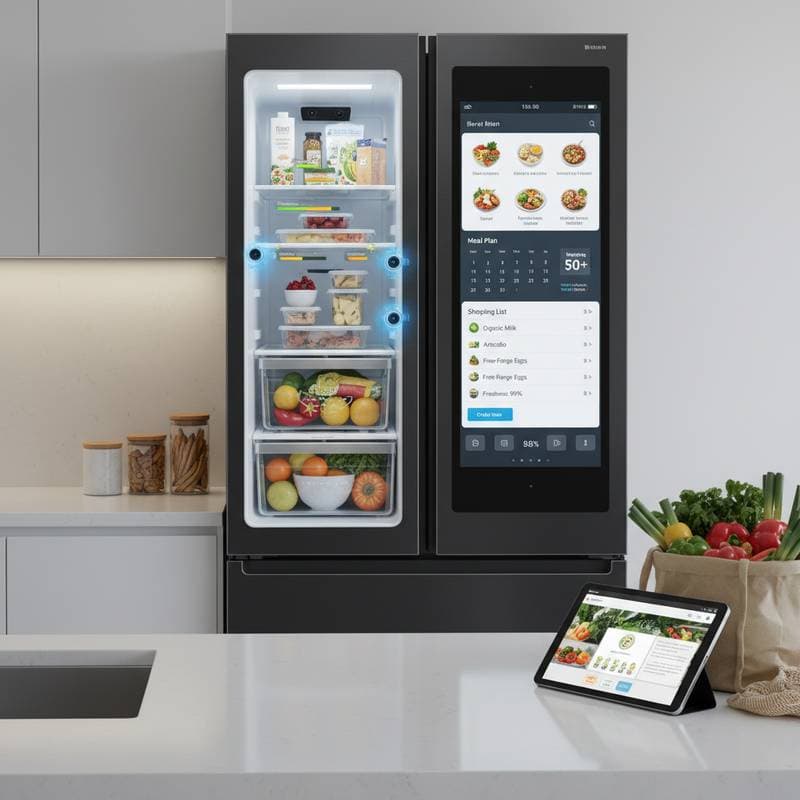
Equipped with internal cameras and a Family Hub screen, it identifies items, monitors expiration, and proposes recipes from available ingredients. Integration with grocery services supports semi-automated ordering. The flexible design permits converting sections between fridge and freezer modes.
Premium: Bosch Home Connect Refrigerator ($3,999 and up)
This model offers engineering precision and broad connectivity. The Home Connect app handles item recognition, freshness forecasting via adaptive algorithms, and links to delivery networks. Micro-climate cooling extends produce longevity, enhancing prediction reliability.
All models pair with mobile apps for remote access and voice assistants like Alexa or Google Assistant for status queries.
Addressing Food Waste Through Predictive Features
Food waste poses significant global challenges for the environment and economy. Smart fridges counteract this by promoting effective meal planning. They prompt use of items like leftover chicken before new purchases or generate recipes for nearing-expiration produce.
Emerging image-based analysis involves periodic photos to detect changes in color or texture. This method improves early detection over date-based tracking alone. Households using such systems report 10 to 15 percent reductions in grocery costs through better inventory control.
These savings can recoup the appliance investment within years.
Steps for Effective Implementation
Prepare carefully when adopting a smart fridge:
- Assess Wi-Fi strength: Ensure reliable coverage for cloud interactions; add extenders if needed.
- Select a compatible service: Verify alignment with local delivery options.
- Set up profiles: Define dietary needs, brand preferences, and stock thresholds in the app.
- Activate alerts: Enable notifications for expirations and restocks via phone or voice devices.
- Trial automation: Begin with semi-automatic settings to evaluate performance.
Key Factors in Purchasing Decisions
Evaluate these aspects before buying:
Budget and Durability
Prices span $1,000 for entry-level to over $5,000 for sophisticated versions. Confirm kitchen compatibility for power and water lines, especially for units with dispensers.
Energy Use
Contemporary models meet rigorous efficiency standards with inverter compressors that modulate based on demand. Seek Energy Star labels to minimize electricity costs.
Data Security
Cloud connectivity raises privacy questions. Manufacturers apply encryption and data anonymization; adjust app settings to limit sharing as desired.
Upkeep
Routine tasks include coil cleaning, filter replacement, and sensor wiping. Firmware updates enhance prediction capabilities; alerts often signal maintenance needs.
Achieving Balance in Automation
Automation enhances life without overwhelming it. Set boundaries, such as unrestricted ordering for staples but approvals for perishables. This maintains budget control and quality standards.
Predictive tools also aid meal preparation by suggesting dishes from existing stock. Integration with smart ovens can initiate preheating, bridging storage to cooking seamlessly.
Emerging Innovations in Refrigeration
Future models will incorporate embedded vision for barcode-free recognition and nutrition data access for ingredient breakdowns. Family dashboards will enable shared inventory views to avoid duplicates.
Dynamic shelf sensors may optimize placement for uniform cooling and extended freshness.
Ensuring Safe Integration
Professional installation is essential for units with water or electrical connections to avoid risks like leaks. Secure Wi-Fi with robust passwords and perform regular firmware updates.
For smart home expansions, certified experts can integrate devices without conflicts.
Weighing Investment Against Benefits
Initial costs appear high, yet reduced waste, decreased expenses, and time efficiencies provide strong returns. The organized kitchen reduces stress from forgotten items or meal indecision.
Your refrigerator evolves into a supportive element of daily operations.
Taking the Next Step
Identify priorities like expiration tracking or ordering integration. Explore showrooms or online sources for comparisons. For comprehensive setups, engage specialists to unify kitchen systems.
These refrigerators foster sustainable practices and effortless management, making advanced food handling accessible today.
Frequently Asked Questions
How do smart fridges detect impending expiration?
They rely on barcode scans, cameras, and algorithms that factor in product details and storage conditions.
Can smart fridges place grocery orders independently?
Yes, with compatible services; configure for approval or full autonomy.
Do these appliances prioritize security?
They employ encryption and secure storage; maintain updates and strong credentials.
What if an item is misidentified?
Manual corrections in the app refine future accuracy.
Will smart fridges lower costs?
They curb waste and redundancies, yielding savings.
Are all delivery apps supported?
Support depends on brand and location; confirm prior to purchase.
Is auto-ordering reversible?
Yes, switch to manual oversight anytime.
What is the expected durability?
They last over a decade with maintenance and updates.