Why Smart Refrigerators Surpass Grocery Delivery Apps
Smart homes evolve from optional features to essential components, with the kitchen emerging as the central hub of intelligence. Connected appliances proliferate, yet the smart refrigerator distinguishes itself as a pivotal innovation. Grocery delivery apps have streamlined shopping processes, but smart refrigerators reshape daily life. These devices extend beyond basic cooling to oversee inventory, minimize waste, conserve resources, and initiate grocery orders in advance of shortages.
This progression toward automated food management transcends mere ease. It signifies a fundamental change in consumer relationships with nutrition, technology, and routines. As households adopt interconnected systems, dependence on delivery apps appears increasingly obsolete. Smart refrigerators establish the foundation for an advanced domestic economy, where the kitchen anticipates requirements proactively.
The Emergence of the Self-Managing Kitchen
Individuals familiar with discovering spoiled produce or overlooked remnants in their refrigerator understand the irritation of inadequate food oversight. Grocery delivery apps facilitate procurement, yet they necessitate human vigilance. Users must recall necessities, compile lists, and authorize purchases. Smart refrigerators eliminate such intermediaries.
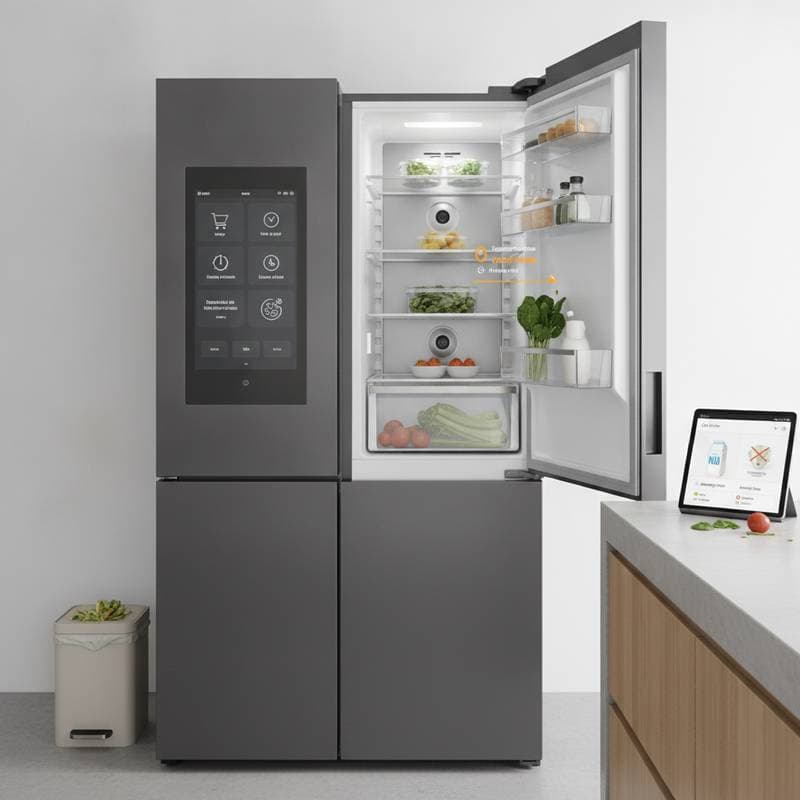
Contemporary designs incorporate interior cameras, sensors, and AI-based identification to monitor contents dynamically. These systems register diminishing milk supplies, identify expiring products, and propose recipes utilizing available items. For demanding families, outcomes include reduced impulsive acquisitions, fewer overlooked components, and substantially decreased waste.
Research from industry experts indicates that households employing smart refrigerators experience markedly reduced food waste alongside stabilized grocery expenditures. The appliance functions not merely as storage but as an administrator. The concept of an autonomous kitchen transitions from speculative vision to practical implementation.
Key Advantages of Smart Refrigerators Over Grocery Delivery Apps
Grocery delivery apps revolutionized retail interactions, yet they fail to address the exhaustion associated with meal preparation and stock oversight. These platforms operate reactively: users detect a deficiency, launch the application, navigate selections, and coordinate delivery timings. Smart refrigerators function proactively, discerning requirements ahead of awareness and facilitating automated restocking via linked platforms.
Examine the primary reasons these appliances deliver superior practical benefits.
1. Real-Time Inventory Tracking
Grocery applications lack visibility into refrigerator contents and depend on fallible recollection. Smart refrigerators sustain an instantaneous digital catalog. Placement of items triggers logging by cameras and sensors; removal prompts immediate updates.
Pioneering brands such as Samsung and LG equip models with smartphone-accessible remote monitoring. Users view shelf contents from a supermarket aisle or during virtual shopping. This transparency eradicates uncertainty and averts redundant buys.
2. Seamless Automated Replenishment
Delivery apps demand user verification for each transaction. Smart refrigerators interface directly with e-commerce providers to execute reorders independently. Detection of low juice reserves or egg supplies initiates purchases through services like Amazon Dash or retailer interfaces.
This mechanism establishes a fluid supply-demand continuum governed by the kitchen. Essential items remain available without interruption, and logistical deliberations diminish. The refrigerator evolves into an engaged household overseer rather than inert equipment.
3. Tailored Suggestions from Usage Patterns
Delivery platforms generate recommendations from broad trends or promotional content. Smart refrigerators analyze personal behaviors, monitoring purchase frequencies, consumption rates, and spoilage tendencies. Insights inform optimized buying decisions or recipe proposals aligned with individual preferences.
For instance, observation of recurring vegetable remnants might prompt a stir-fry suggestion or adjusted portion recommendations. Such iterative guidance proves unattainable with conventional apps, which disengage post-delivery.
4. Enhanced Energy Use and Environmental Responsibility
Smart refrigerators demonstrate excellence in ecological considerations. Advanced units adjust cooling operations according to activity levels, curbing unnecessary power consumption. Additional capabilities track expiration timelines and alert users to impending spoilage.
While delivery apps accelerate fulfillment, they overlook subsequent waste. Smart refrigerators foster accountable usage, resonating with increasing emphasis on sustainability and deliberate consumption.
5. Harmony Within Expanded Smart Home Networks
Contemporary residences revolve around interconnected device arrays. Smart refrigerators synchronize with voice assistants, illumination systems, and climate controls for cohesive functionality. A directive to append orange juice to a list receives confirmation from the refrigerator regarding necessity.
Inter-device dialogue positions the kitchen as a command center. Delivery apps persist as solitary utilities, whereas smart refrigerators integrate into comprehensive, networked existences.
Envisioning Tomorrow's Kitchen
Future smart refrigerators promise expansions beyond grocery automation. They may serve as hubs for dietary monitoring, meal orchestration, and power management. Consider a unit that interfaces with wearable health trackers to recommend nutrition-aligned dishes or coordinates with schedules for expedited evening preparations.
Experts forecast that refined compatibility protocols will yield fully synchronized kitchens. Refrigerators will interface with ovens, pantry detectors, and suppliers, establishing an enclosed consumption cycle. This framework enhances efficiency in food interactions.
Balancing Automation with User Oversight
Automation appeals, yet some individuals remain cautious about delegating food procurement to appliances. Widespread acceptance hinges on preserving command options. Prominent systems enable adjustments to reorder limits, supplier selections, and budgetary caps.
This equilibrium between independence and guidance ensures comfort while providing efficiency gains. It reflects prevailing smart home dynamics, prioritizing customization. Devices must foresee demands yet honor decisions.
Addressing Initial Hurdles
Initial expenses and network reliability pose obstacles. Smart refrigerators command higher prices than standard models, with efficacy tied to consistent internet access. However, expanding markets and uniform technologies lower costs progressively. Efficiency improvements and waste reductions compensate over time.
Grocery providers increasingly support appliance linkages for uninterrupted transactions. Enhanced interoperability amplifies consumer advantages.
Practical Illustrations of Superiority
Observe routine situations highlighting distinctions between apps and smart refrigerators:
- Busy Mornings: Preparation for breakfast reveals absent milk. An app arranges later arrival, but the refrigerator preempts the shortage days prior.
- Dinner Decisions: Uncertainty about evening meals prompts the refrigerator to offer a pasta option from existing stock, averting external orders.
- Expense Monitoring: Rather than estimating costs, refrigerator data reveals frequent purchases and waste patterns for informed adjustments.
- Household Synchronization: Family members contribute to shared lists via the refrigerator interface or mobile access en route.
These instances demonstrate extensions from utility to tangible enhancements.
Transformative Effects on Daily Life
Delivery apps allure with time efficiencies, yet demand ongoing involvement. Smart refrigerators provide unobtrusive support, managing operations discreetly to liberate cognitive resources.
This evolution aligns with anticipatory habitation trends. Residences shift from problem resolution to prevention. The refrigerator's advancement from container to advisor illustrates technology's profound integration into habits.
Maturing systems will inform supply networks through aggregated data, enabling precise forecasting, inventory optimization, and automated packaging. Consumers gain access to superior freshness and availability, tightening commerce-kitchen connections.
Steps to Integrate a Smarter Kitchen
To advance kitchen capabilities, prioritize the core appliance. Select smart refrigerators featuring auto-reordering, interior imaging, and compatibility with favored services. Evaluate remote access, culinary prompts, and efficiency metrics against personal needs.
The objective extends automation to partnership. As connectivity advances, smart refrigerators transcend extravagance, emerging as essential for organized, eco-conscious, and prepared households.